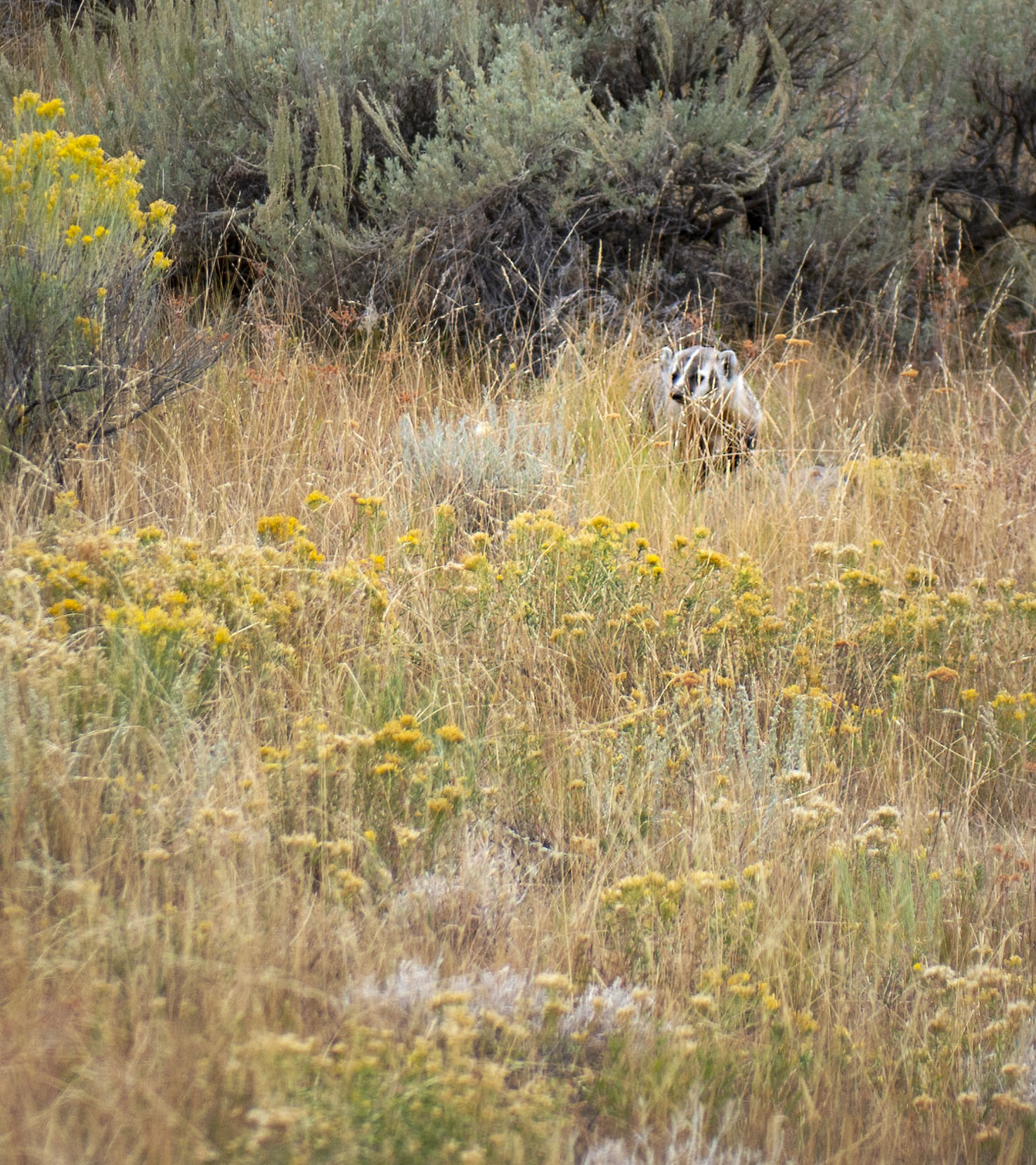
Out on a hike amongst the fully blooming rabbit and sage brush we noticed numerous holes along the trail. Were they Marmot or perhaps Badger. Finally near the end of the hike the question was answered when we spotted this Badger off in the distance.

It was nice to see this Badger out foraging.
Badgers dig after and feed on ground squirrels and pocket gophers, and also eat toads, frogs, birds, snakes, insects and insect grubs, wasps, bees, and worms. They sleep through most of the winter in a den, spending about 29 hours at a time in a state of torpor, rousing briefly, and then sleeping again. In torpor, which is not true hibernation, the Badger’s heartbeat slows to about half the normal rate and its temperature drops.

Even with this great camouflage the Badger is at risk mostly from human activities such as habitat loss as well as hunting and trapping.

Enjoy your winter Mr. badger and we will see you after your Torpor.
 nature has no boss
What a great sighting. I gather their existence is debated, but I find them quite special. All wildlife deserves our respect.
LikeLike
I agree, all life deserves respect and as time passes we will come to understand the role of each living being in the web of life.
LikeLike
Agreed.
LikeLike
I did not know there were American badgers. What a lovely sight – thanks for the education!
LikeLike
Hi, yes we do have these guys in North America and they are quite wonderful animals.
LikeLiked by 1 person
Do they mostly hunt during the day?
LikeLike
Hi Alex, it is my understanding that Badgers are crepuscular and hunt in evening and near dawn.
LikeLiked by 1 person
Thank you. Our badgers over in the UK are more nocturnal. Although can be seen in daylight during the summer months.
LikeLike
Hi Alex, ours do hunt into the night but are most commonly seen at dusk and dawn.
LikeLiked by 1 person