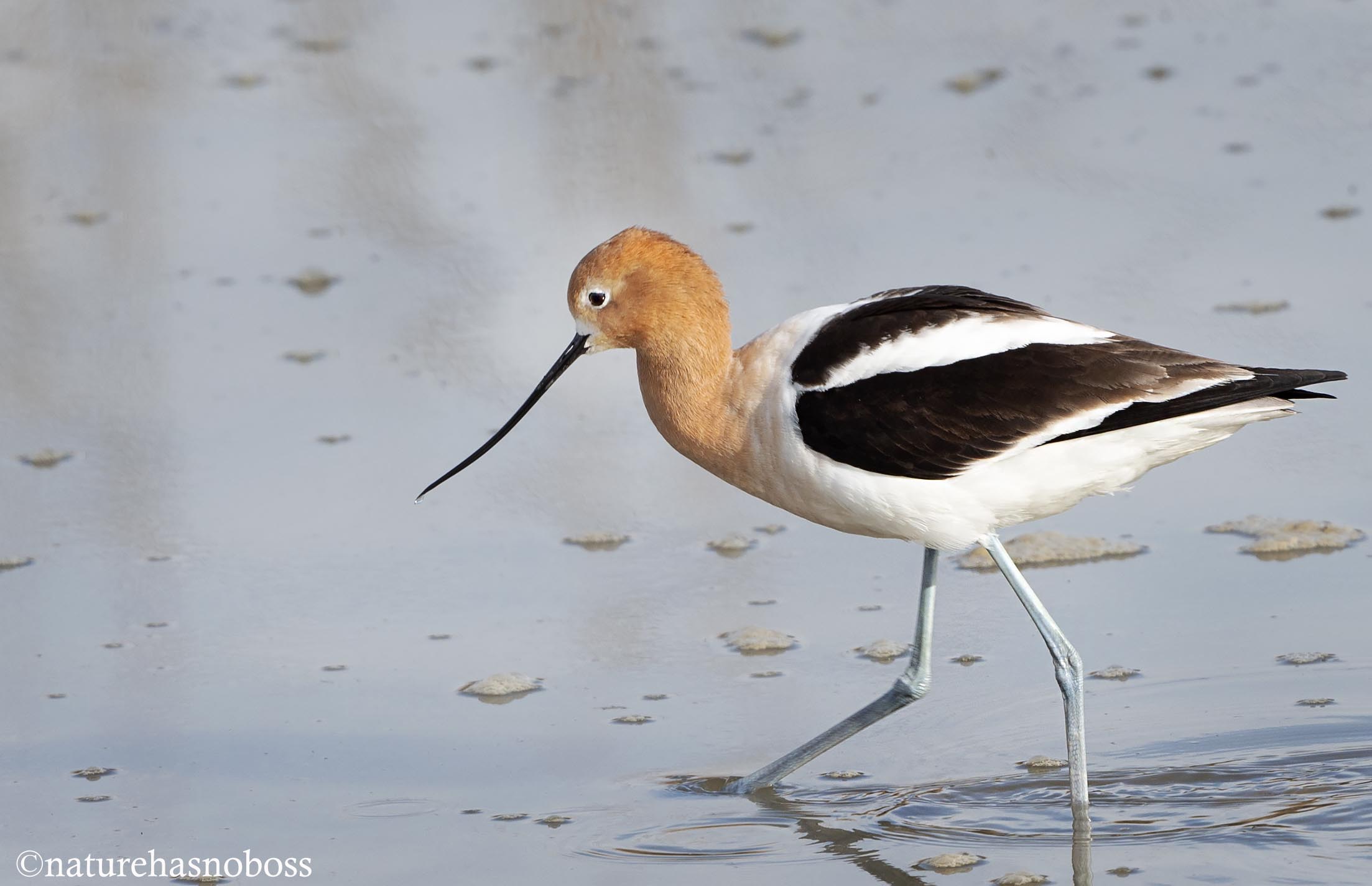
Always looking delicate and elegant and with those beautiful blue legs in full display and American Avocet wades through a shallow poll in search of a meal earlier this spring.
It’s hard to believe many wading birds will soon begin the perilous journey back south for the winter. Given this summers heat wave across the American west we hope some the the pools and ponds these birds rely on for their fall migration have not dried up to the point of leaving them high and dry. Migration is a dangerous business and climate change is making it more dangerous every year.
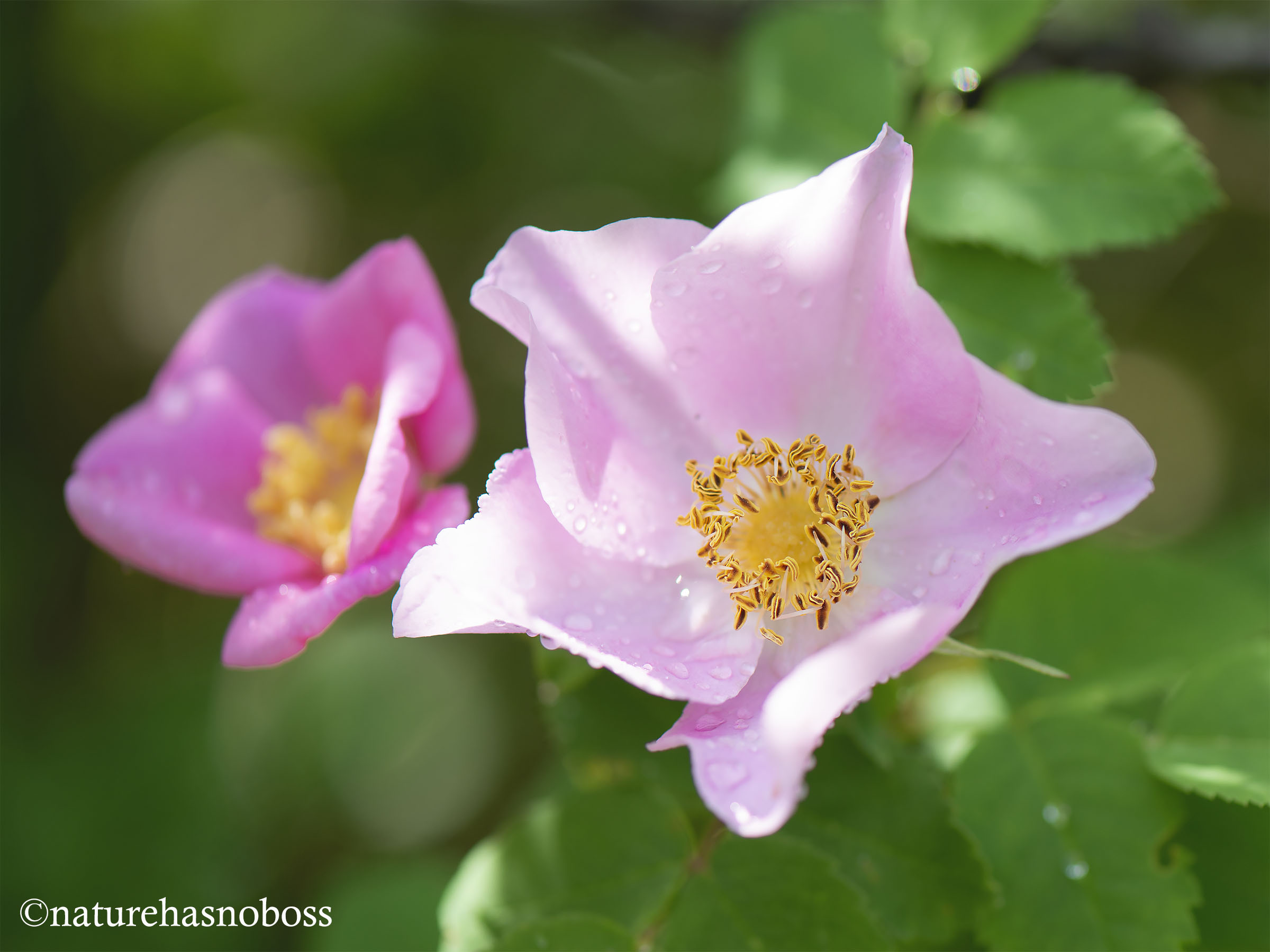
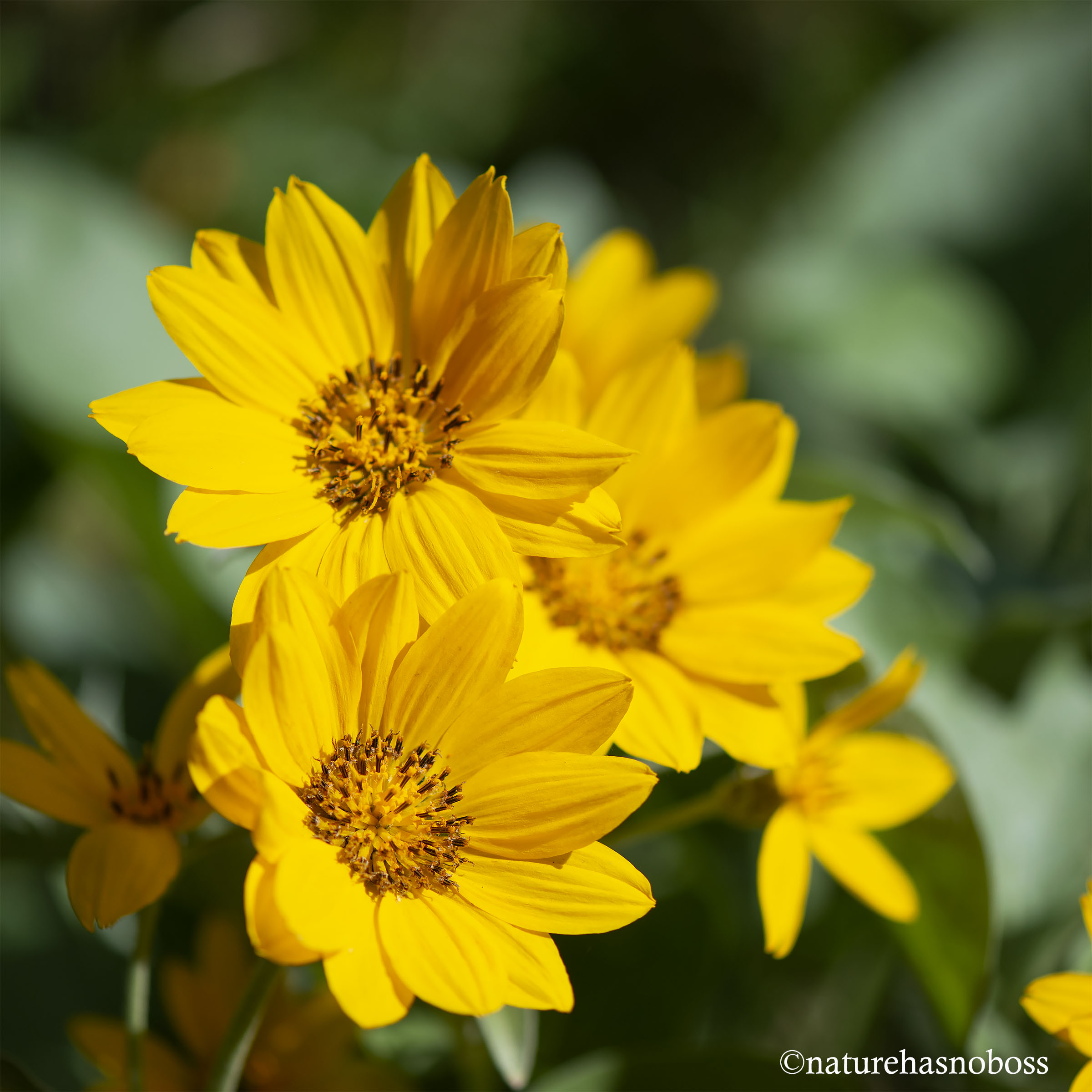
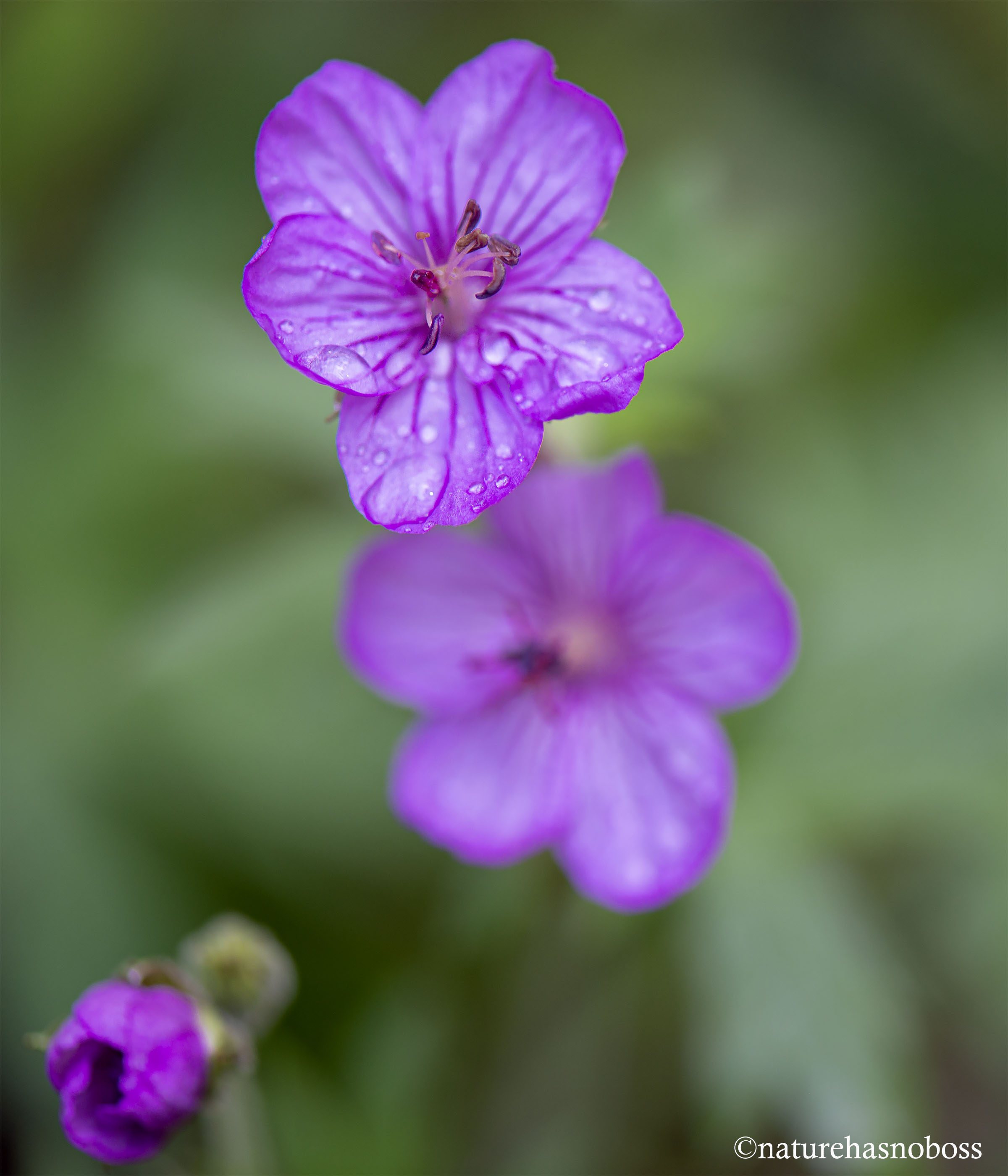
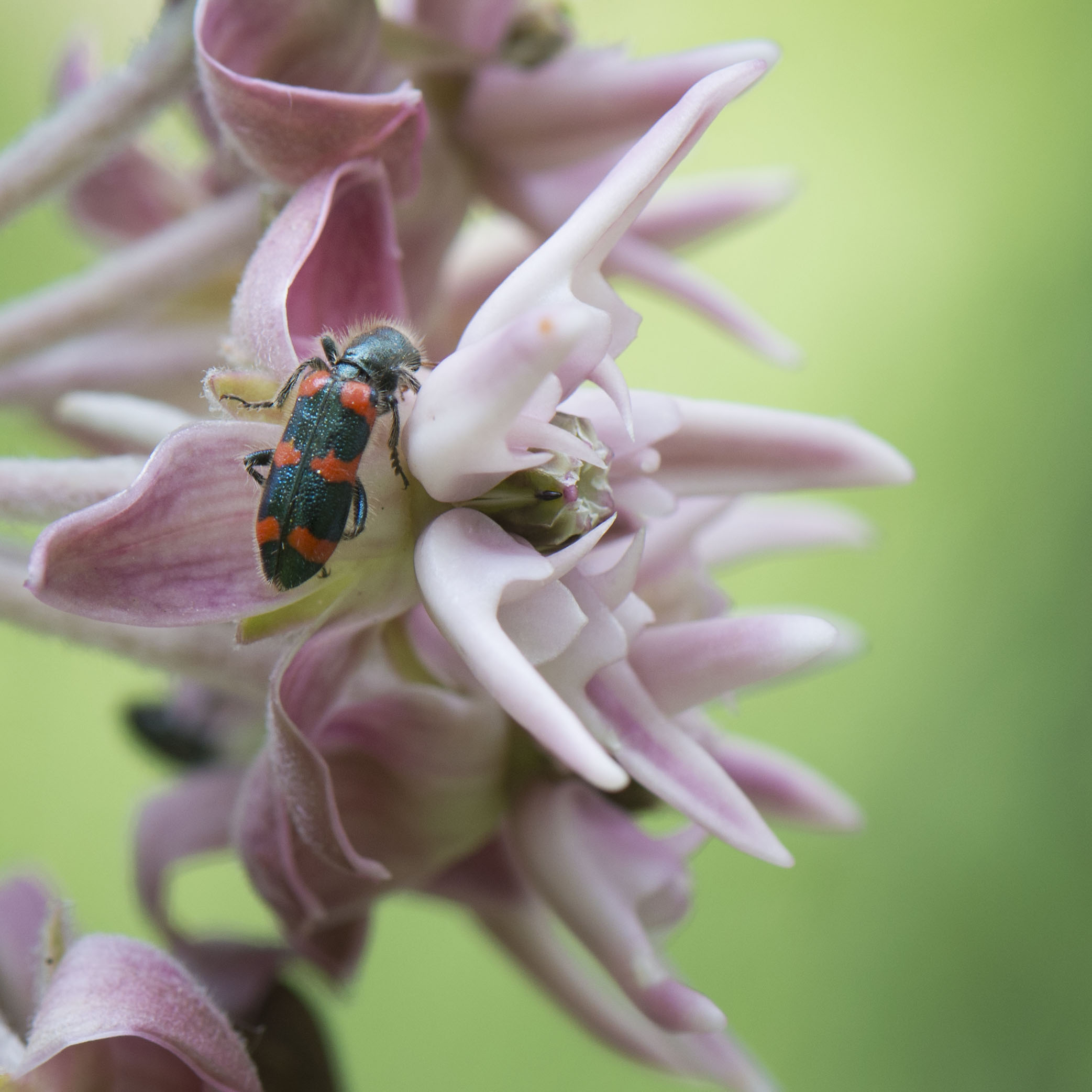
With summer chugging along at breakneck speed a small bouquet of wildflowers, picked via camera, from a recent mornings walk feels a fitting way to start another week.
oh, and don’t forget to stop and smell the roses. They just don’t last that long.
Lupine, Wild Rose, Arrowleaf-Balsamroot and Sticky Geranium.
Up high in the mountains where the snow is just melting the Glacier Lilies are starting to appear. The dark green background made for a fun conversion to BW as the sunlight gently illuminates the petals of this wonderful flower.
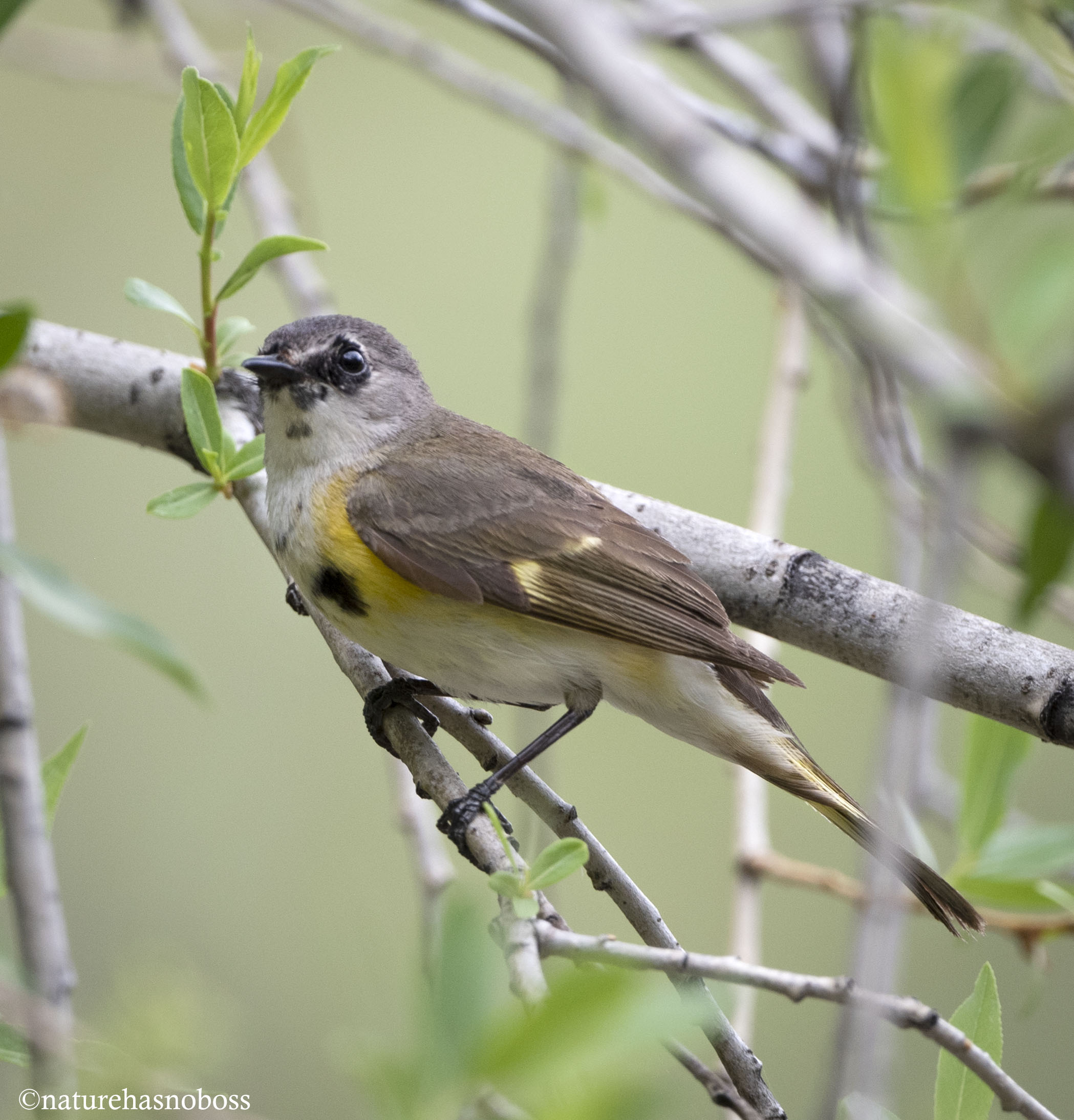
On the opposite side of a field in which we were watching two coyotes prowling we heard the singing of the American Redstart. It had been quite some time since we have seen this unique little black and red warbler so we skedadled over to a thick stand of willows where thought the singing was coming from.
But low and behold, it was not an adult male making all that wonderful noise, it was an immature male hanging out deep in those willows.
Young male American Redstarts have gray-and-yellow plumage, like females, until their second fall. Yearling males sing vigorously in the attempt to hold territories and attract mates. Some succeed, but most do not breed successfully until the following year when they develop black-and-orange breeding plumage.
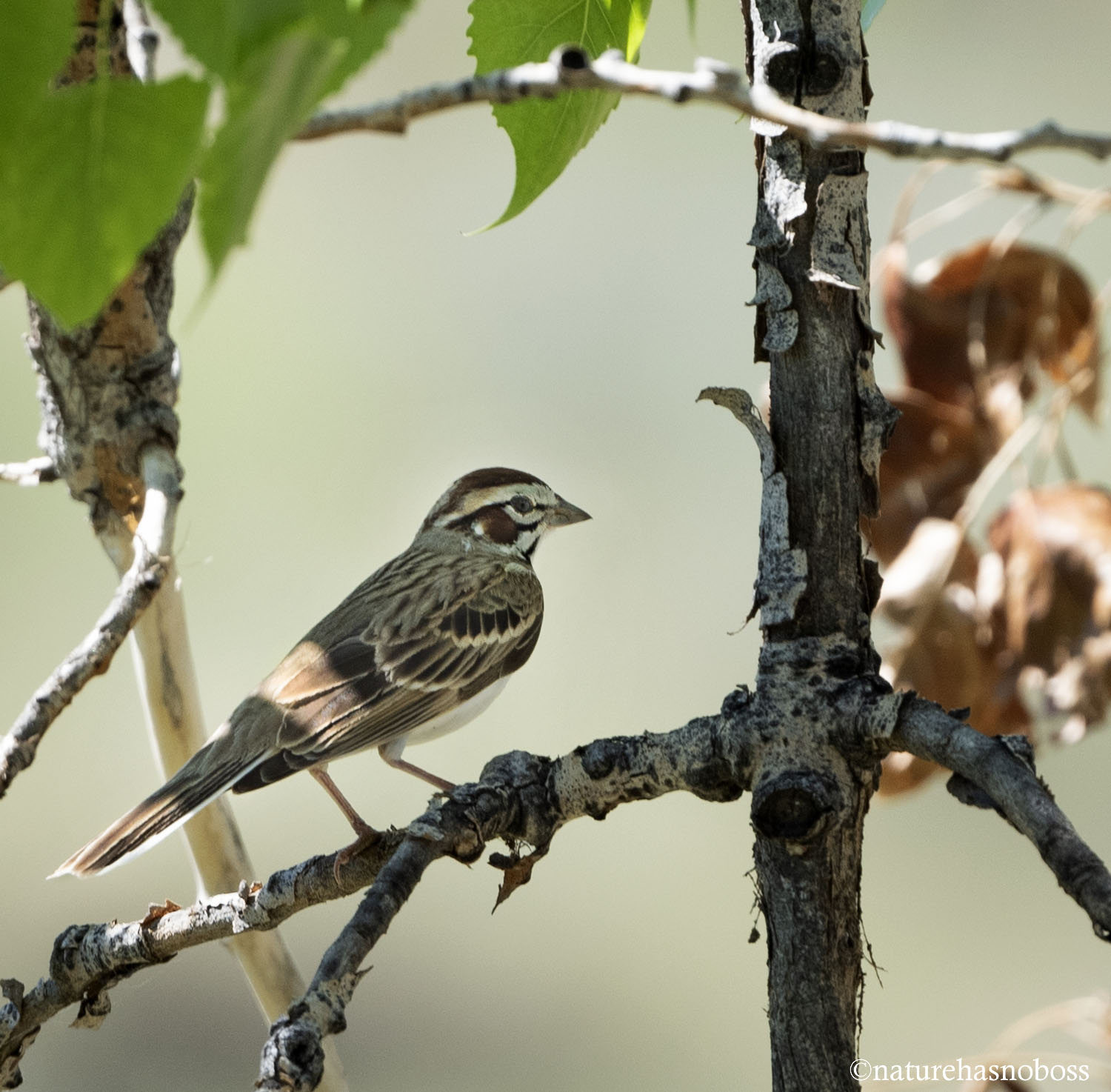
At least there is one sparrow that is always easy for us to identify.
The Lark Sparrow.
This large sparrow may be brown, but its harlequin facial pattern and white tail spots make it a standout among sparrows. Males sing a melodious jumble of churrs, buzzes, and trills reminiscent of an Old World lark. Their courtship is also unusual, involving a hopping and crouching display unlike other sparrows. Lark Sparrows occur in the West and the Great Plains in prairies, grasslands, and pastures with scattered shrubs. In winter, look for them in small flocks in brushy areas.
Getting a nice long look at Lark Sparrows always makes the long drive out to visit to the grasslands and prairies complete.
However on a more serious note, prairie and grassland birds and their habitats are perhaps the most threatened birds and ecosystems in North America. A recent article in Forbes, yes Forbes, brings this problem to light and how one major bird conservation group is working to address it.
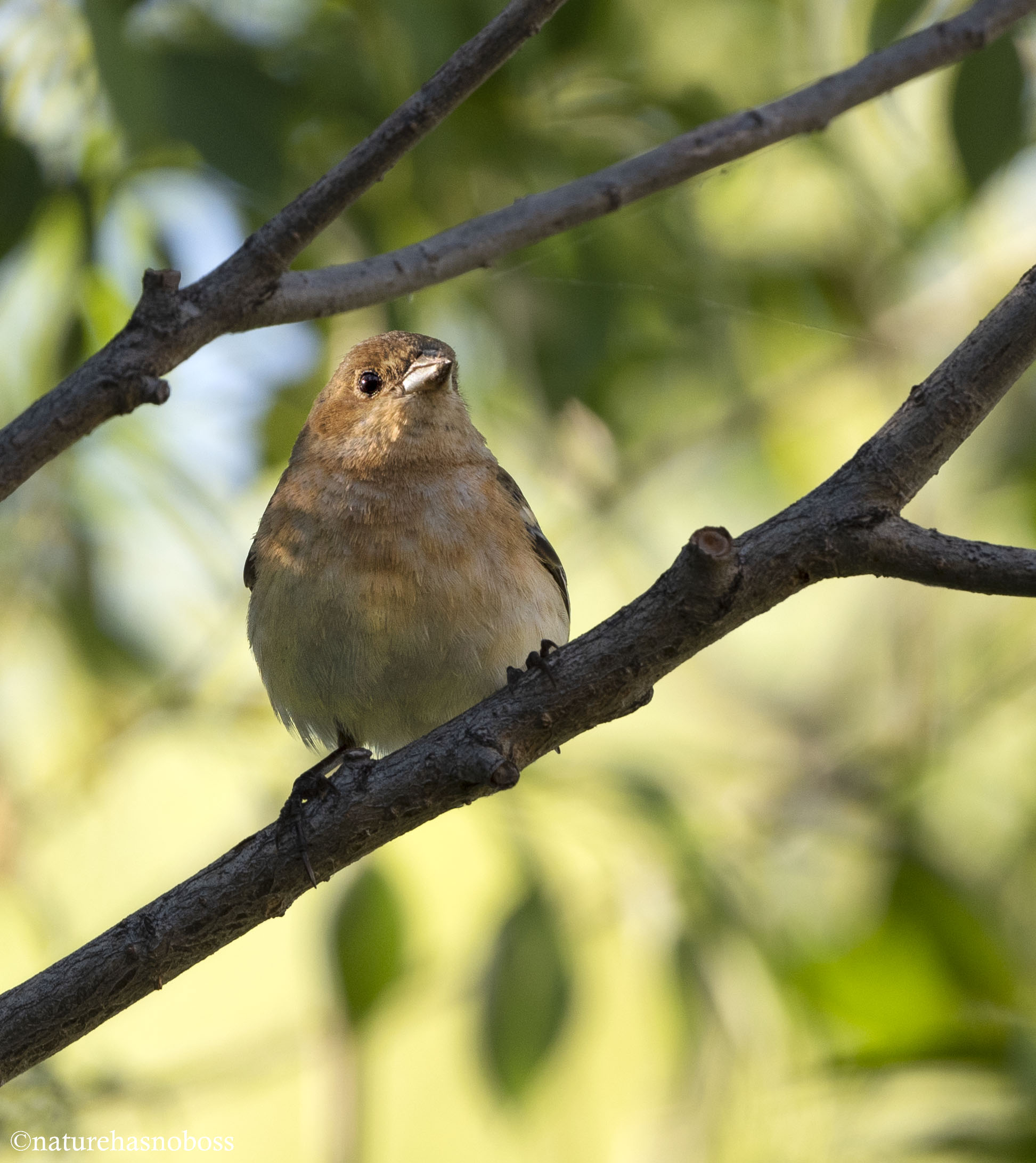
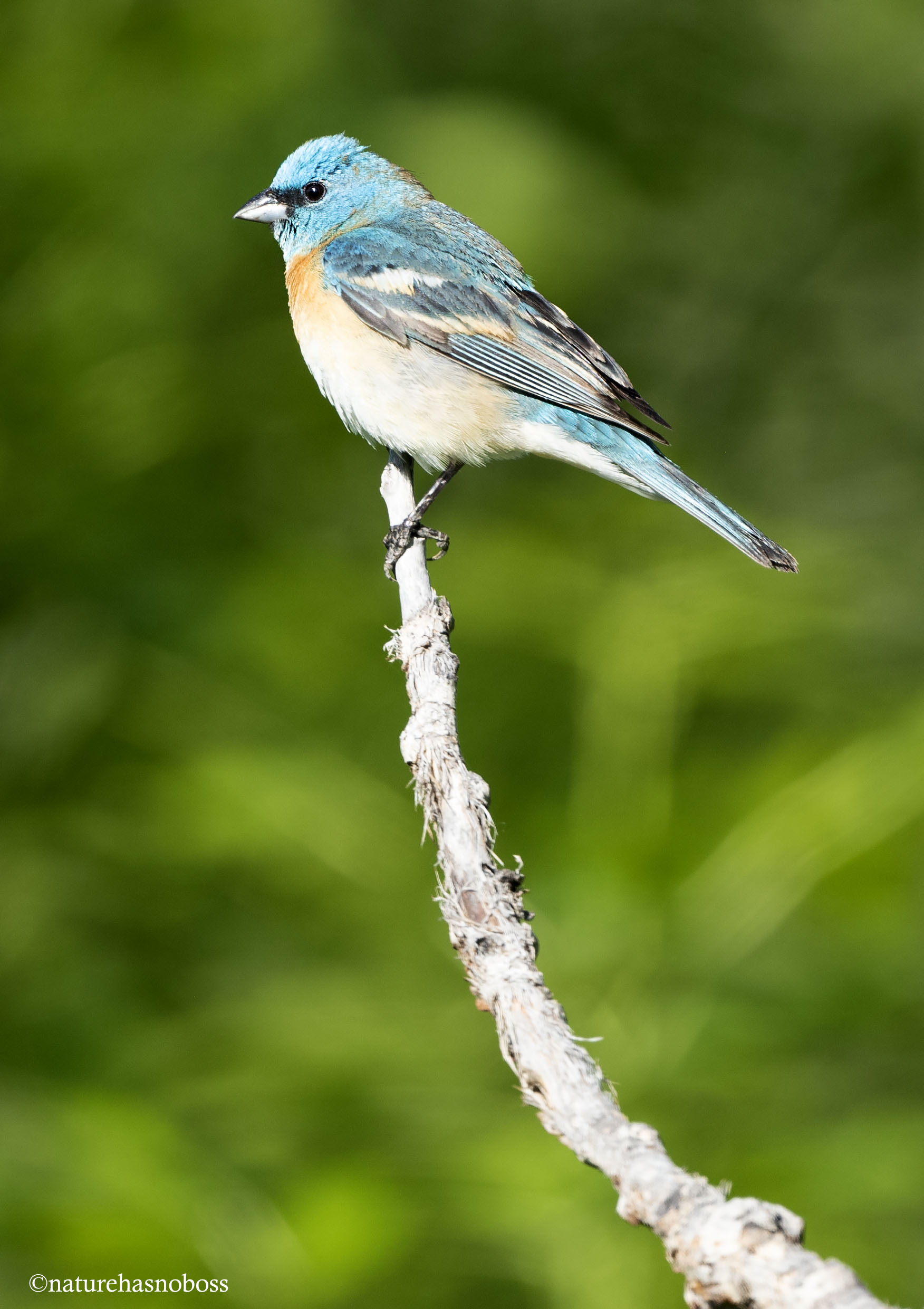
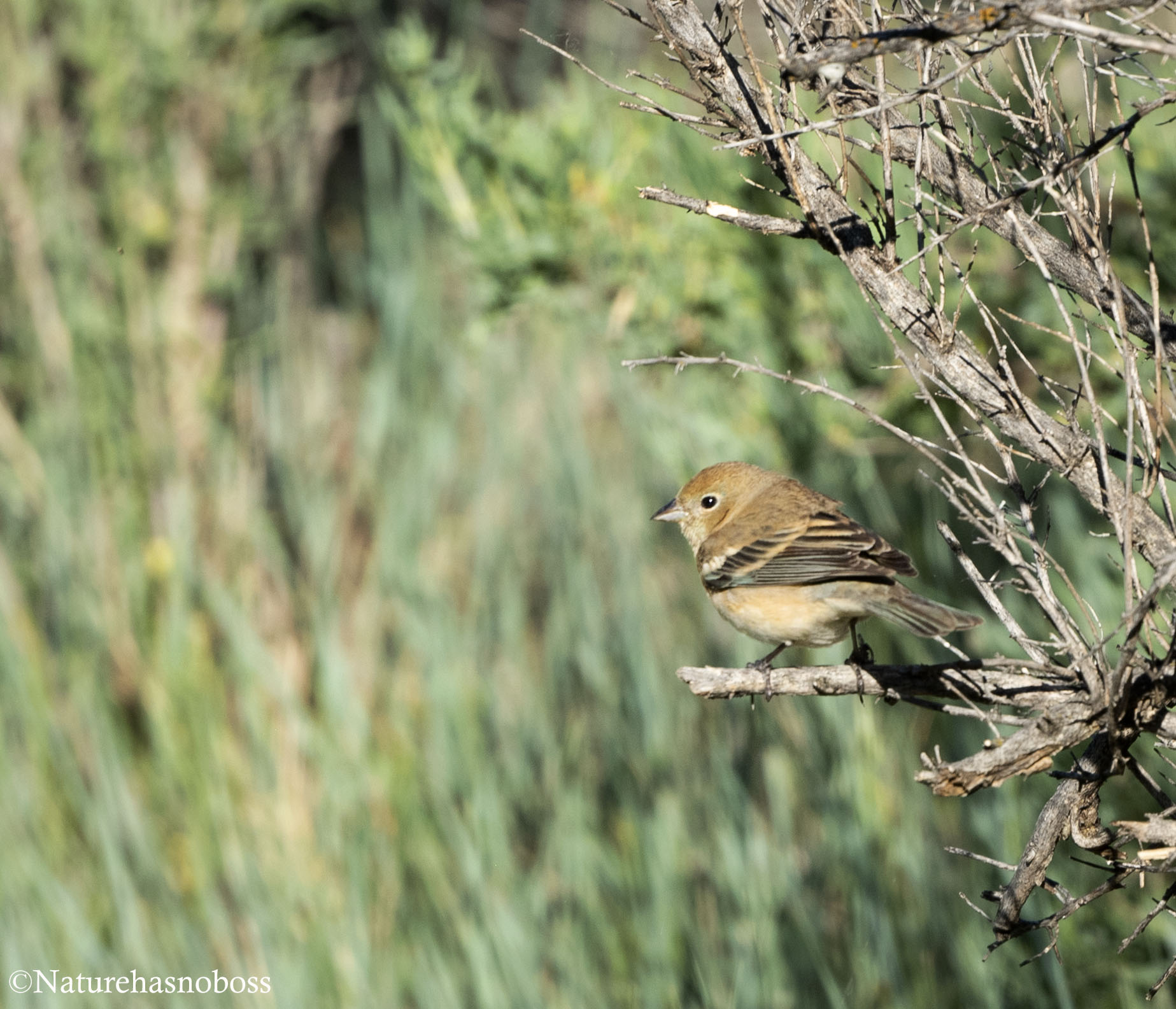
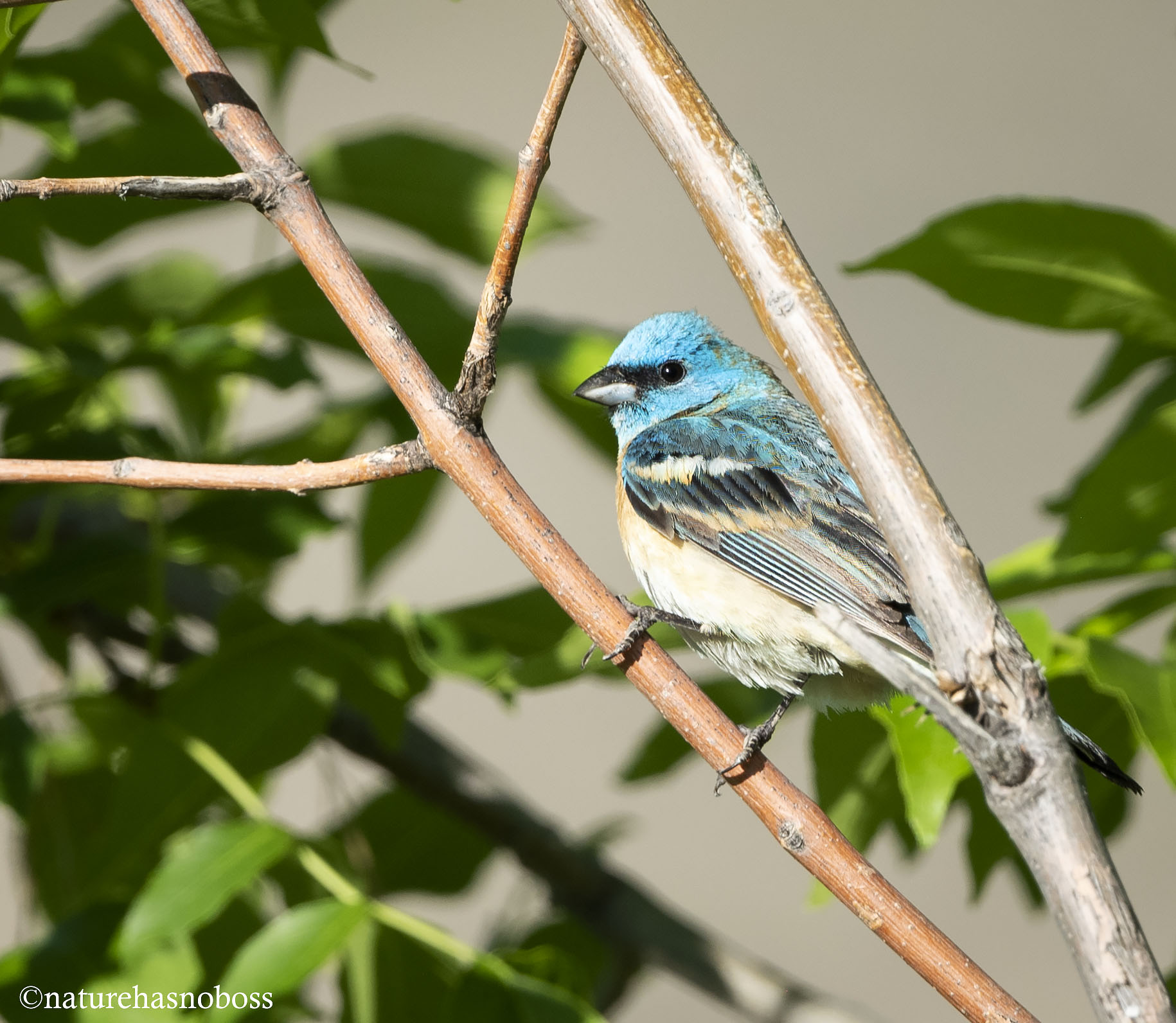
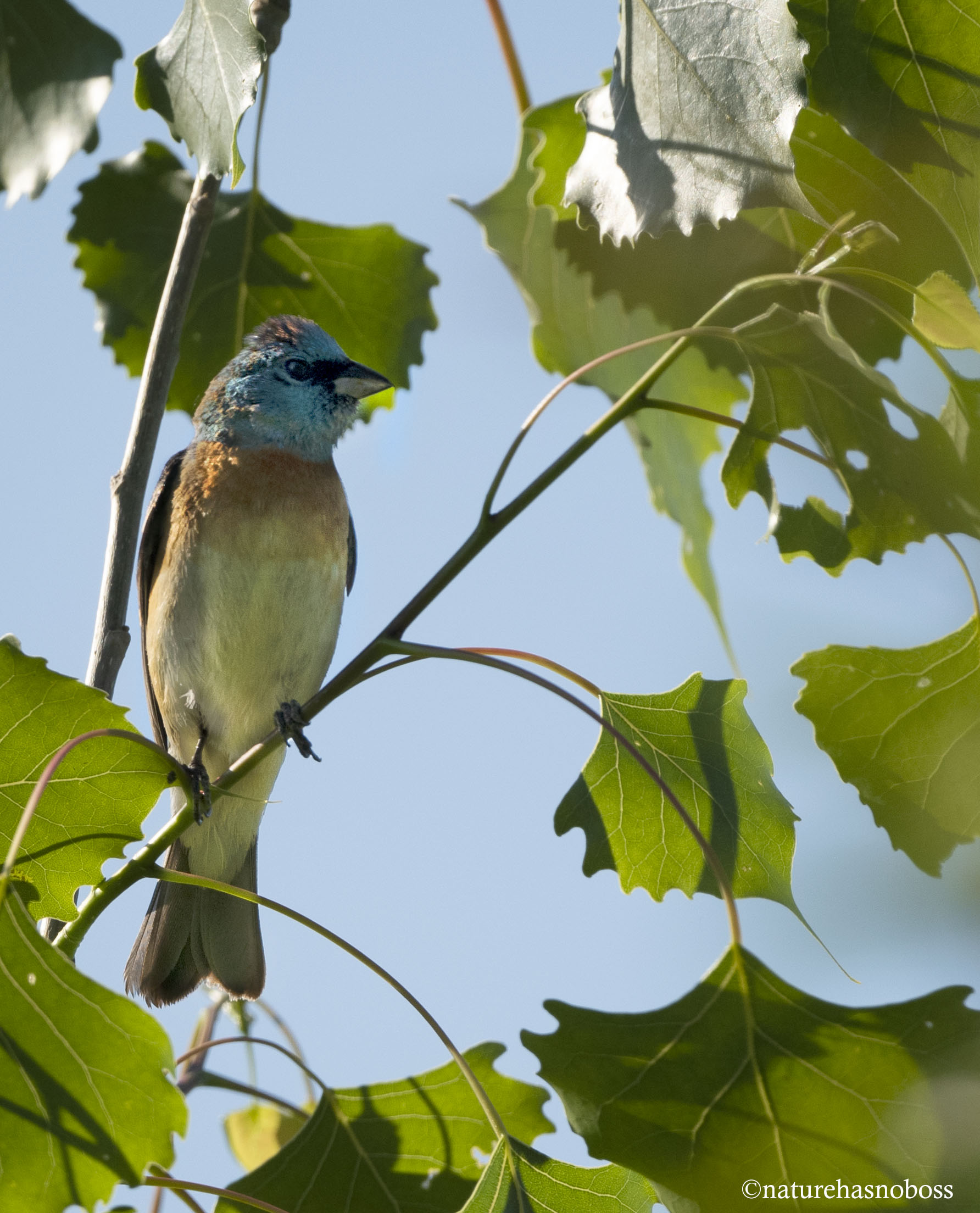
While we regularly see and hear the brightly colored male Lazuli Bunting singing his somewhat squeaky song from the tops of bushes and trees at the edge of open fields we see and have had the opportunity to photograph the female only on rare occasion. Softly colored with a light cinnamon breast the female was quietly hanging out in dense foliage listening as a nearby male sang his heart out.
The beauty of the Lazuli Bunting did not escape the early naturalist who named it Passerina amoena, meaning beautiful sparrow.
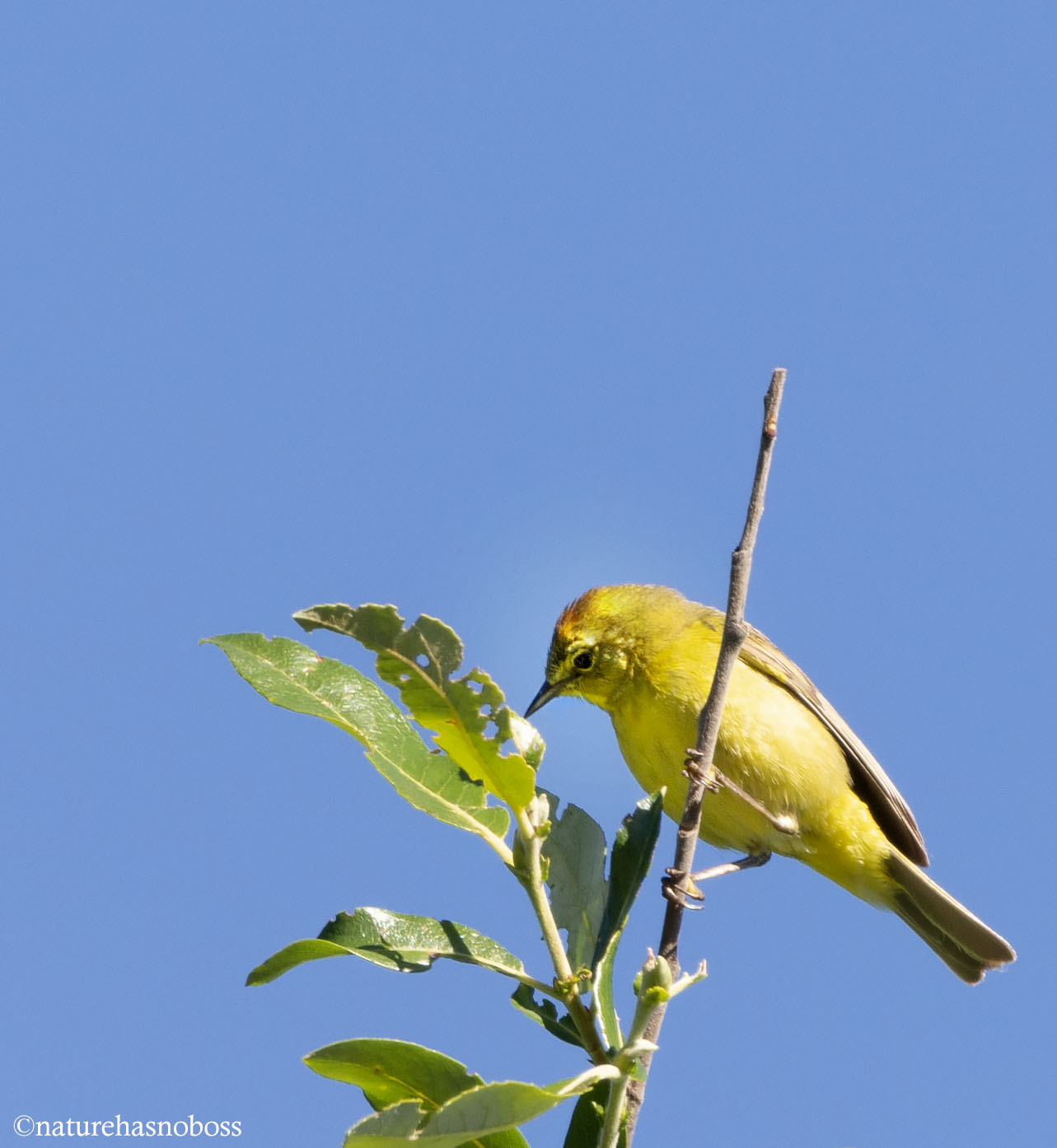
An Orange-crowned Warbler with orange crown actually showing forages high up in a stand of shrubs with nothing but a blue sky behind.
These grayish to olive-green birds vary in color geographically and have few bold markings. There’s rarely any sign of an orange crown, which is usually only visible when the bird is excited and raises its head feathers. They might have you scratching your head until you recognize their slim shape, sharply pointed bill, and warmer yellow under the tail.
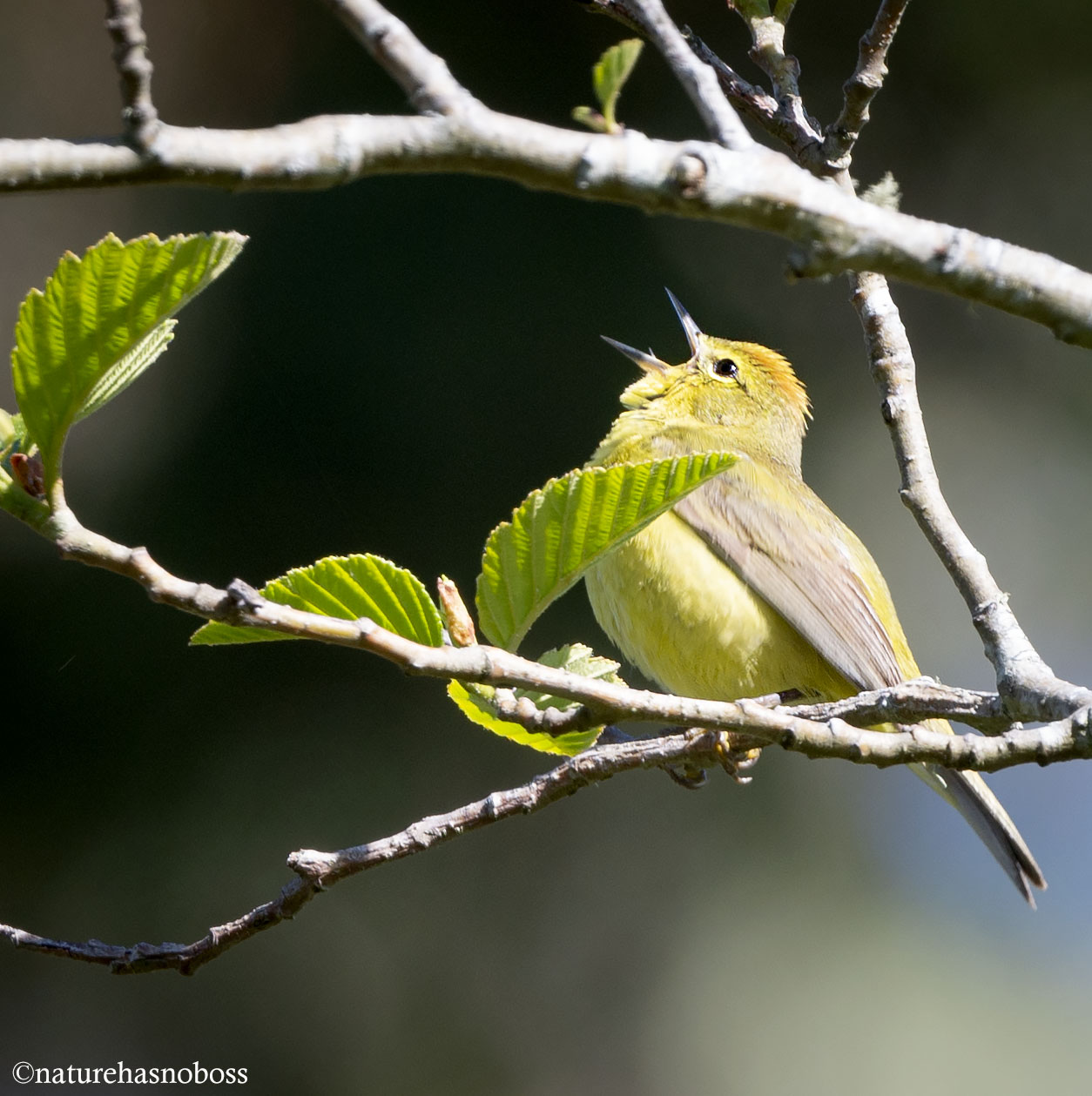
An excited male sang this morning moving from shrub to shrub and tree to tree as we intently listen and tried to learn his song.
The male Orange-crowned Warbler’s song is far more variable than that of other wood warblers—so much so that the males can be told apart by their distinctive song patterns. Breeding males often form “song neighborhoods,” where two to six birds in adjacent territories learn and mimic each other’s songs. These “neighborhood” songs can persist for years.





 nature has no boss
You must be logged in to post a comment.