C is for Comma

COmma_1

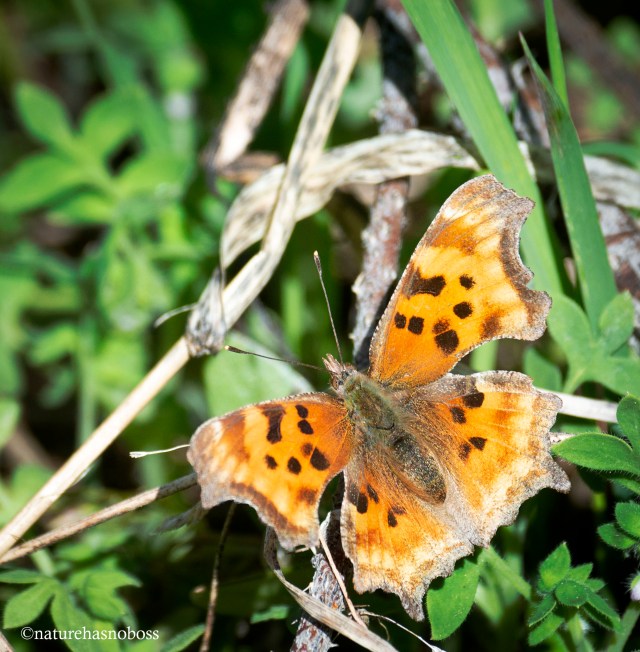
A short pause is in order today to just soak in the beauty of the Comma, butterfly, that is.  One of the earlier butterfly species to grace the skies in our area each summer many of the earlier arrivals we observed actually overwintered as adults. Some finding refuge from the winters freeze deep in crevices of a trees bark.

Comma_2

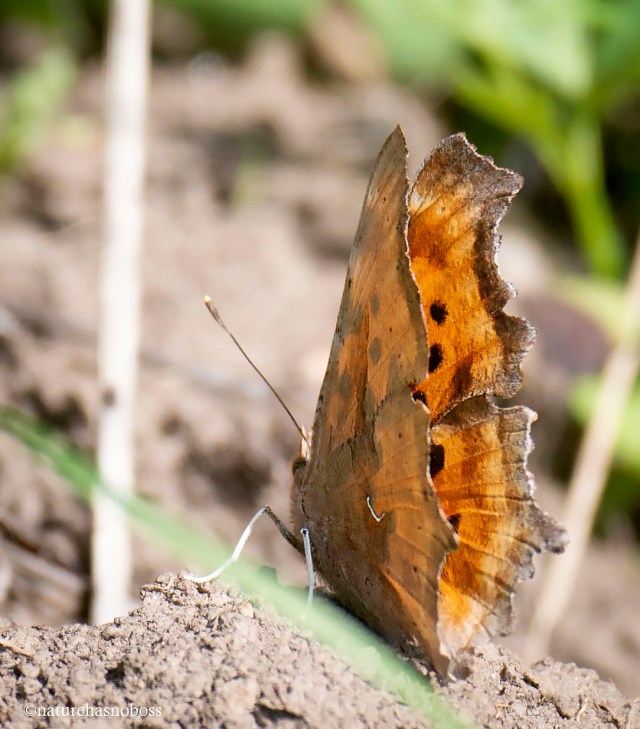
Some we found warming themselves collecting minerals from the moist soil on the forest floor.

Comma_3

Whereas others were often found feeding on the new growth of the trees and shrubs.

Comma_4

Yes, C is for Comma.

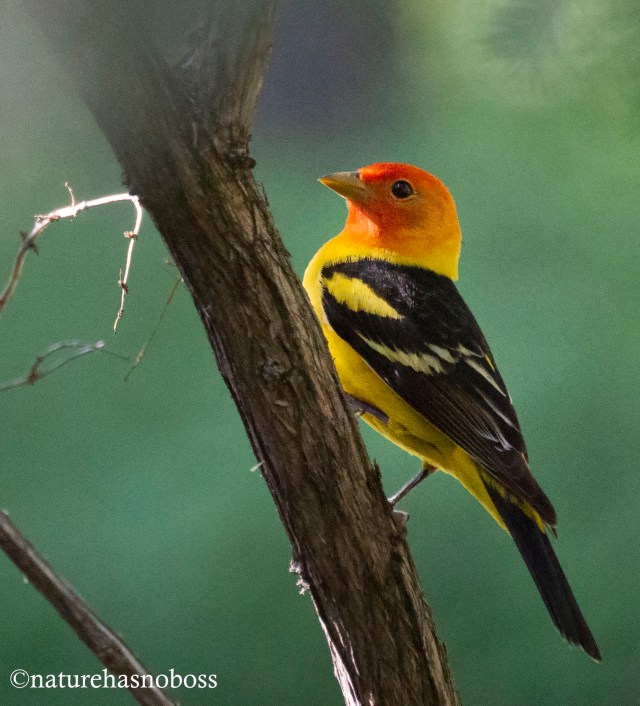
Atomic Fireball: aka Flame

Atomic_fireball_7823

We hear the Western Tanagers calling every morning and evening from late May until early August and despite the brilliant colors of the males good looks are few and far between as they move quickly in the upper story of the conifers nearby.

The brilliant red color of the Males is unique.

“While most red birds owe their redness to a variety of plant pigments known as carotenoids, the Western Tanager gets its scarlet head feathers from a rare pigment called rhodoxanthin. Unable to make this substance in their own bodies, Western Tanagers probably obtain it from insects in their diet.”1

This day we got a nice look at this male, which we have fondly dubbed flame, perched in the midlevel of the trees.  What a beautiful bird.


Reference:

1.https://www.allaboutbirds.org/guide/Western_Tanager/overview
Juniper Hairstreak

Juniper_hairstreak_901276 copy

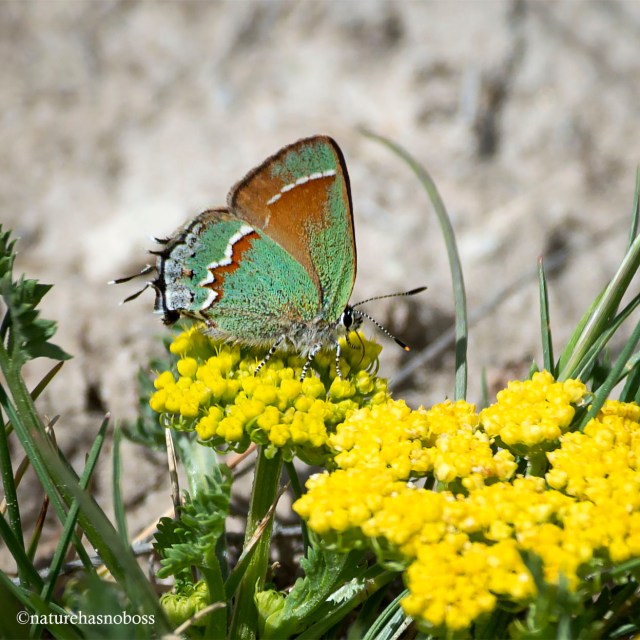
One of the most interesting butterflies found in our area is the beautiful and fancy in a non-fancy sort of way Juniper Hairstreak.  Widely distributed across the United States this butterfly is often seen in old fields, bluffs, barrens, juniper and pinyon-juniper woodlands, and cedar breaks. This one was photographed feeding on biscuit root along the base of a cliff that had several areas of Juniper growing. The male will sit all day upon the ends of juniper branches to attract a female.