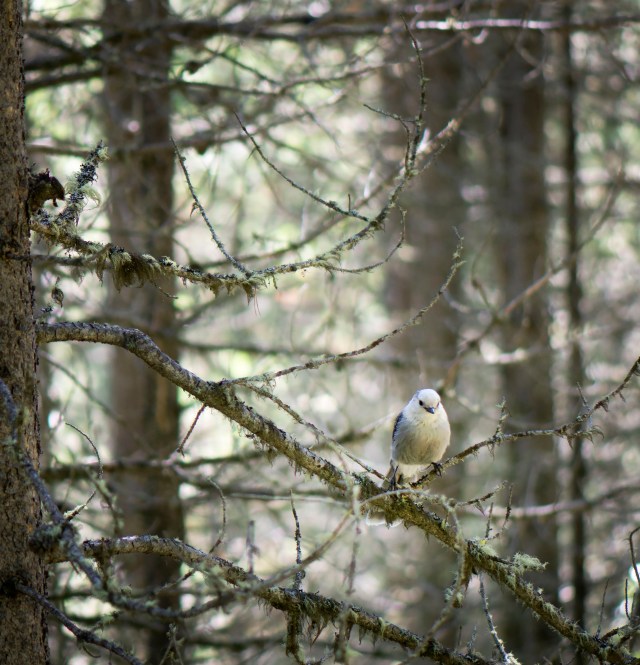
Feeling right at home in a lichen filled forest.
Both us and the Canada Jay.
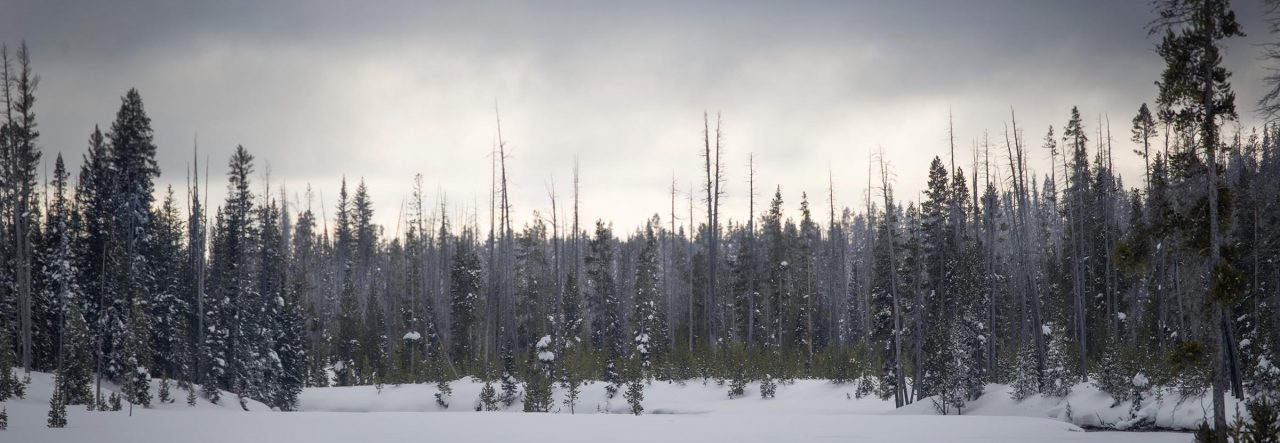
Feeling right at home in a lichen filled forest.
Both us and the Canada Jay.

On a silent morning we stopped and spent some time in the heart of a meadow looking out towards the edge. To the northwest, mountains rise as skies clear all the while clouds and snow roll in right above.
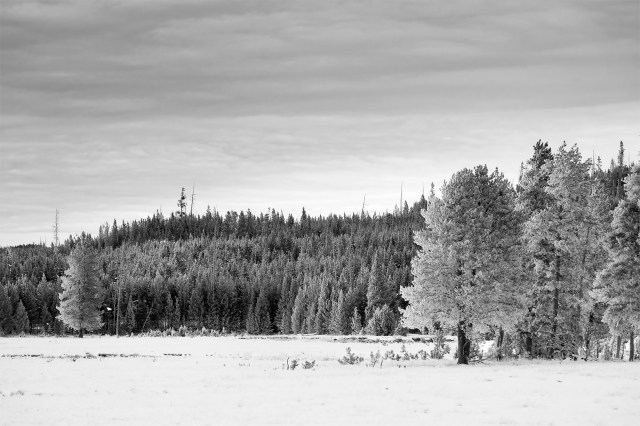
With just a slight turn the mood quickly changes with a dusting of white to the north…
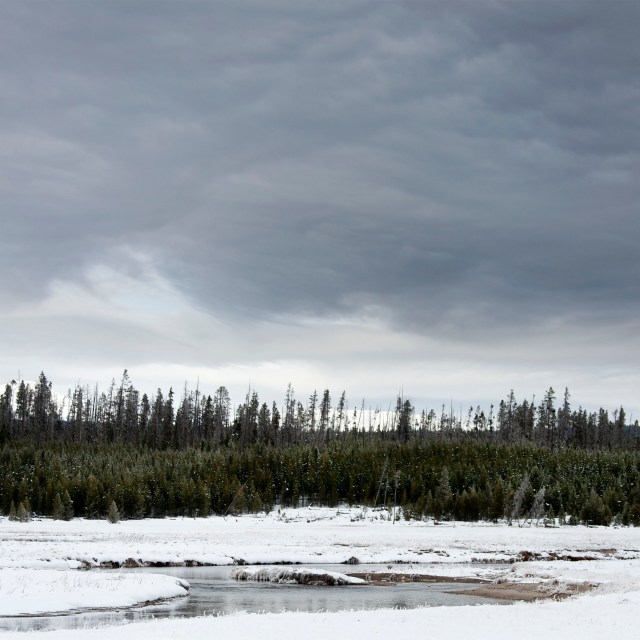
…and to the west a river meanders south and heavy clouds lie overhead…
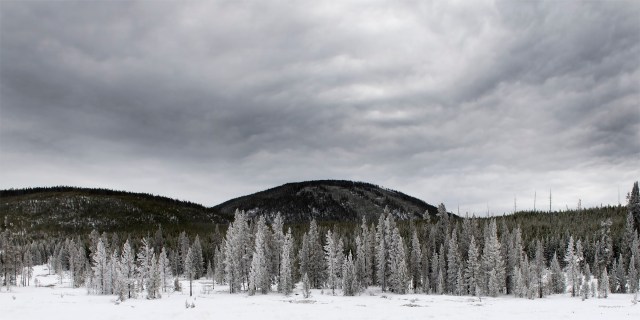
…to the east the hills rolled as the skies above.
As the day progressed the skies cleared and sun shone bright yet what lingers inside is the views towards the meadows edge.
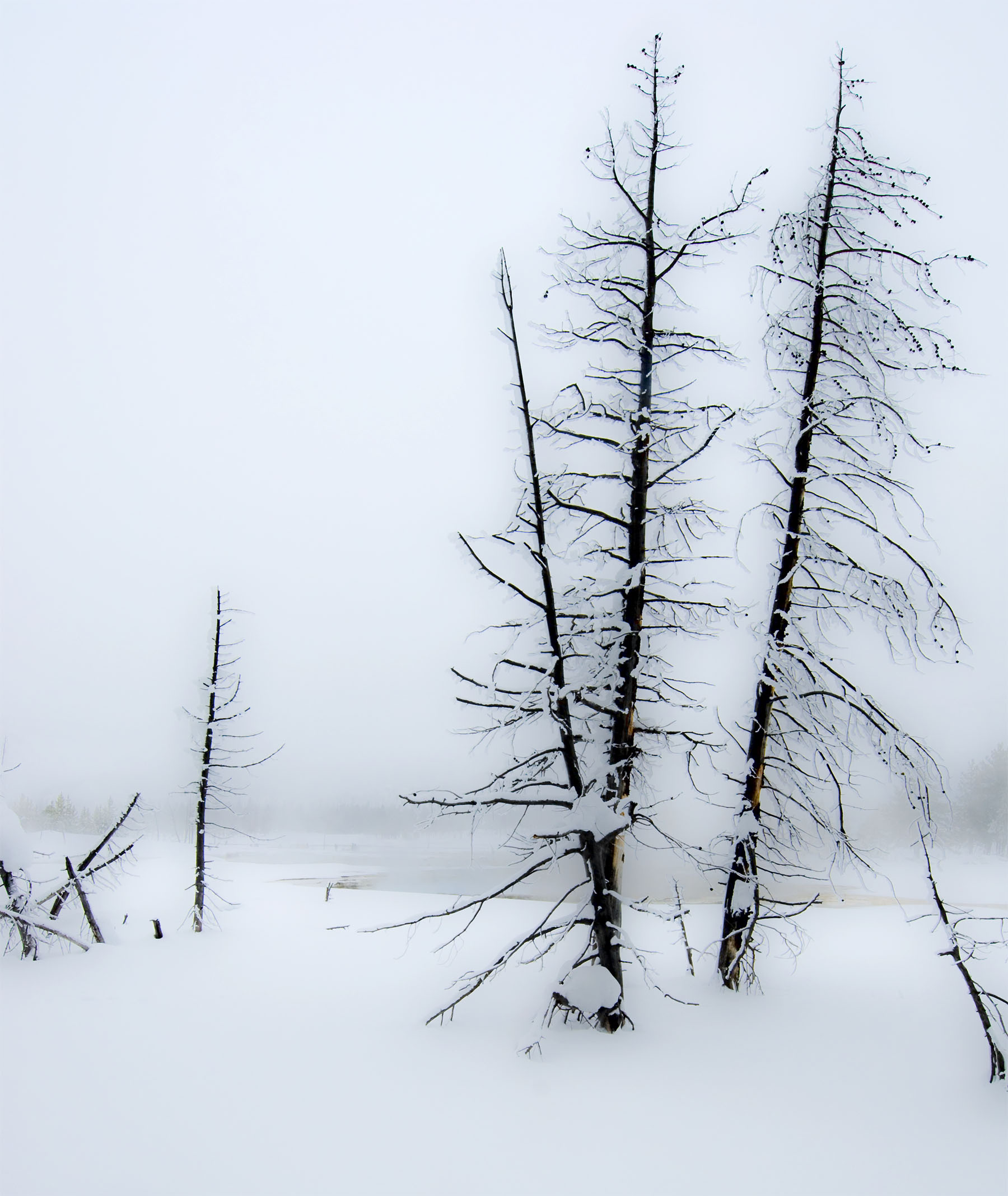
Two trees speaking softly through the mists created by our planets inner heat. Yellowstone National Park.
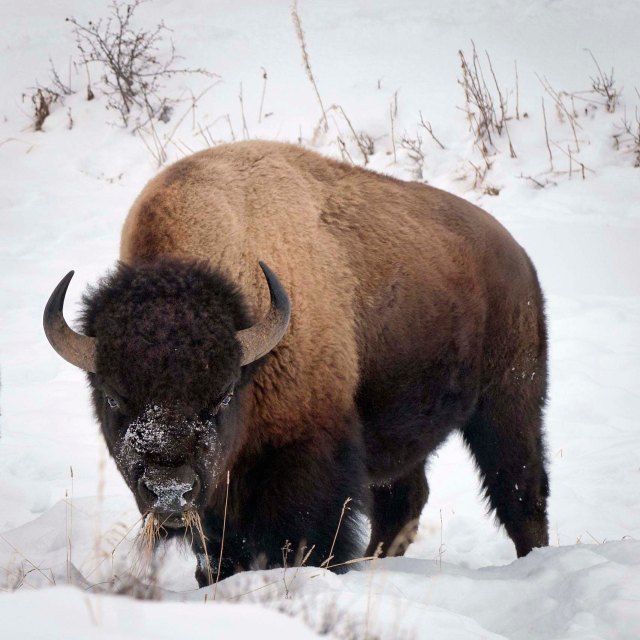
Just as we turned a corner while skiing on the Blacktail plateau we came across this guy having breakfast. We watched him for a minute but when he stomped his front hoof and gave us a grunt knew it was time for Quick U turn. We did not get to ski to our planned destination but it was a good day nonetheless.
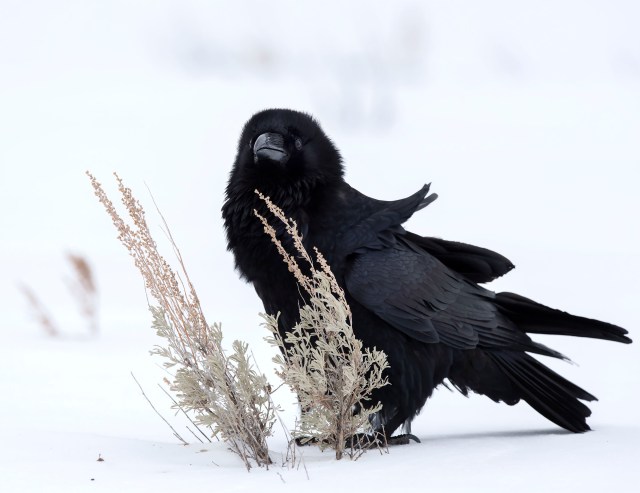
With the tips of a sage bush just poking above the snow a Raven endures the winter winds and cold while searching for the next meal.
From afar a black and white scene yet bursting with color the closer we got.
Happy Friday and a great weekend to all.

We don’t know about you but we tend to get over ambitious at times with books, especially reading them. Five or six books sitting proudly on the coffee table in living room each with a bookmark placed about 1/3 into the book. Each book calling your name when you plop down on the sofa to relax. You sit and stare back at them silently wondering how you will finish them all before they are due at the library. You get through one or two wonderful books but always feel like your not reading enough as you solemnly remove the bookmarks form the remaining three and whisk them off and into the return slot at the library. So this year it’s only one book at a time- from front to back- all the way though.
We recently came across a wonderful four part series on the best nature books of 2019 written by the Chicago Review of Books
. It is a very diverse list of nature books that will provide us some guidance in choosing and reading our one-book-at-a time in 2020.
Here are links to each of the four posts. The author of the articles Amy Brady stated in the part four of this series that this year has been the best in recent memory for nature writing. Looking though the lists is almost as fun as reading the books listed.
Part Four
Part Three
Part Two
Part One
Anything catch your eye as a first read from these lists. Maybe because it’s winter and darkness comes early the book Dark Skies: a journey into the wild night By Tiffany Francis-Baker sounds like it might be first up this year.
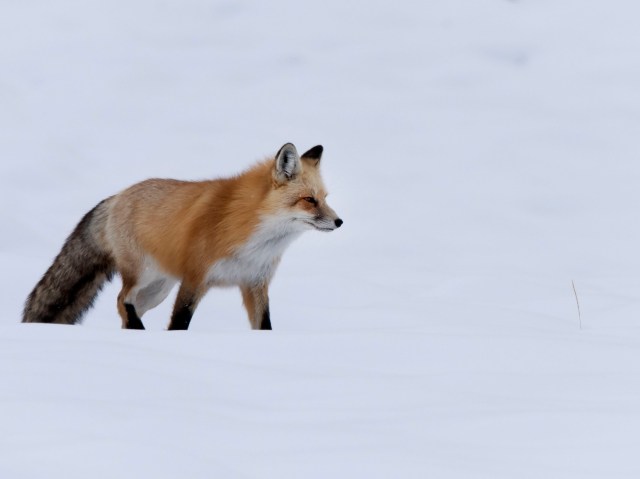
A Red Fox on the prowl on a chilly January morning.
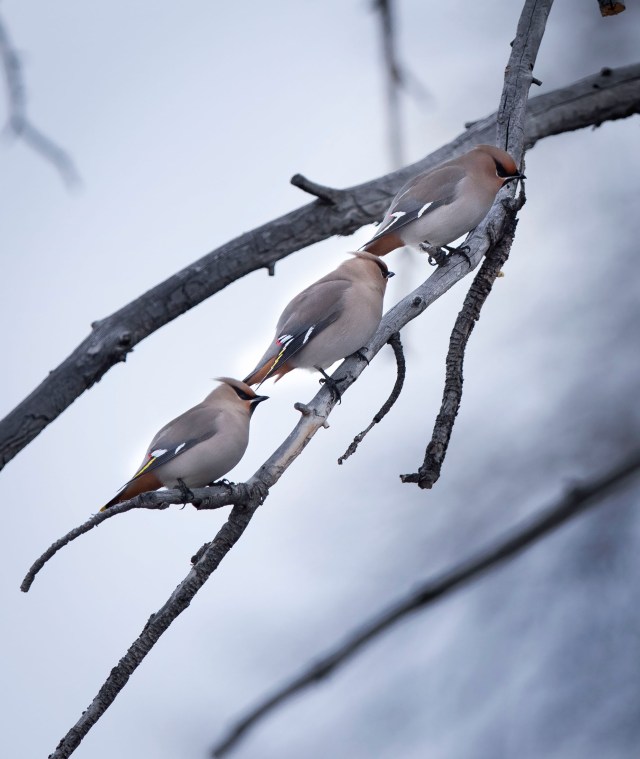
It was an overcast morning and difficult to make out the details but it sure looked like there were a handful birds hanging out in a juniper bush as we speed along a quiet road. We decided to turn around and take a quick look and spotted a beautiful trio of Bohemian Waxwings. These three quickly flew off while we were watching but landed just across a small creek in a juniper loaded with berries and a large flock of Waxwings buzzing about in constant motion picking the berries for their morning meal.
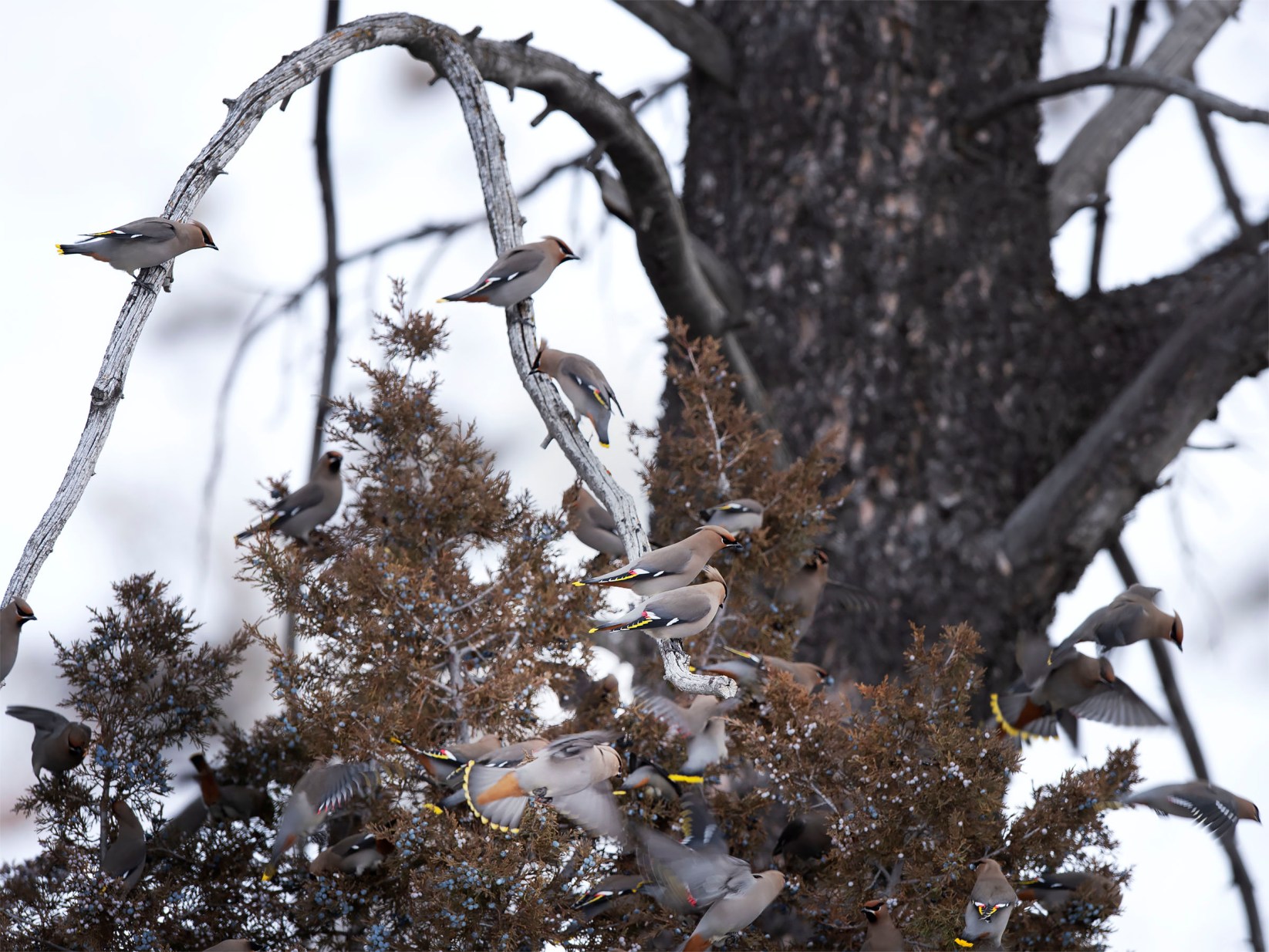
It was a whirlwind of activity with birds coming and going, picking berries, and perhaps, just for a small moment, sitting still.
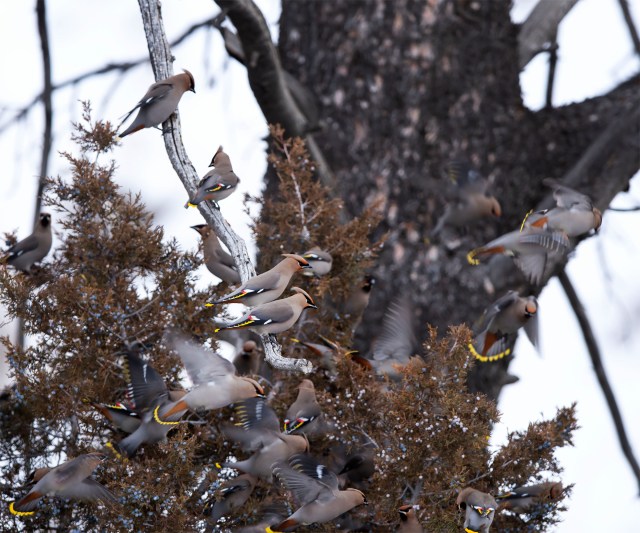
The beautiful colors of these birds were flashing brightly in the dull overcast light and made for quite a show.
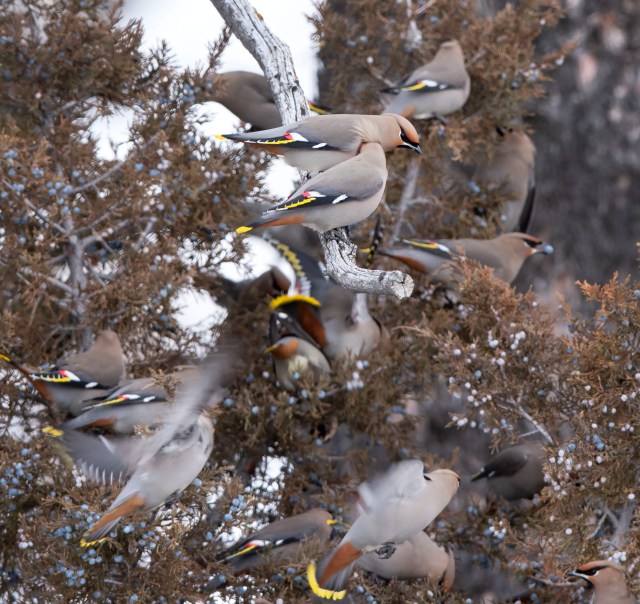
The berries and the birds made for a fine start to the day.

As this decade comes to a close we ran across an interesting statistic produced by the Royal Statistical Society in the UK. In fact it was the societies statistic of the decade and one that is nothing to write home about-deforestation of the Amazon rainforest.

The estimated accumulated deforestation of the Amazon being equivalent to around 8.4 million football pitches or about 24,000 square miles. In a decade!
A recent article in the Conversation provides further insight into this statistic describing some of the more obvious consequences of this deforestation and rebutting arguments that conversion of the rainforest to ranching, resource extraction and farming is required for economic benefits of nations and the people within those nations. In fact there is data to suggest that if left alone the economic benefits of the amazon rainforest outweigh its destruction for short-term profits. However, another recent article suggests the worst is yet to come in the deforestation of the Amazon. With the cost of reforestation at over $2,000 an acre cost alone, not to mention political forces, make restoration less likely day by day.
The amazon rainforest has been called the lungs of the earth breathing in carbon dioxide and stabilizing the earth’s climate and exhaling oxygen-oxygen that fuels life animal life in all its myriad forms.
A grim statistic to have won the honor of statistic of the decade but one we ought to heed as we move forward into the next.
It is hard to appreciate this fact for us living far from the Amazon in places already striped of natural landscapes. However, when we drive past a once fertile farm field just down the road now being plowed over for a new round of strip malls we get an inkling of what the future holds. A planet impoverished for the enrichment of a few, until it all falls apart.
Perhaps the statistic of the next decade in 2030 will something like this “the decade humanity work together to solve the climate crisis for the good of all”.I know it’s not really a statistic but we will be able to quantify the results and turn that into the next statistic of the decade.
Howdy and a very happy new year to ya’ll!
 nature has no boss
You must be logged in to post a comment.