Under a full moon

Crested_butte_winter_2008

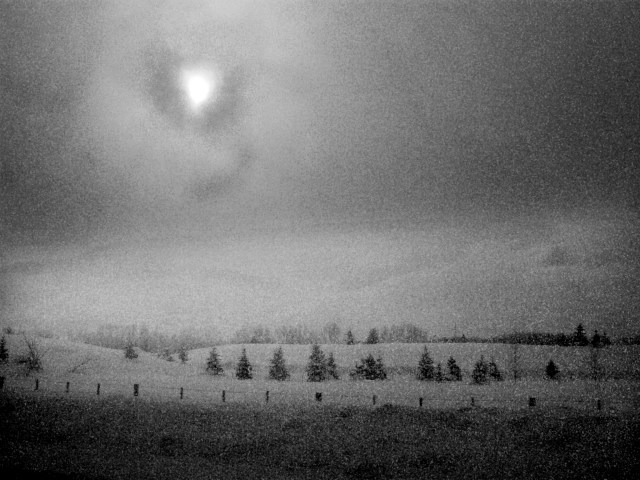
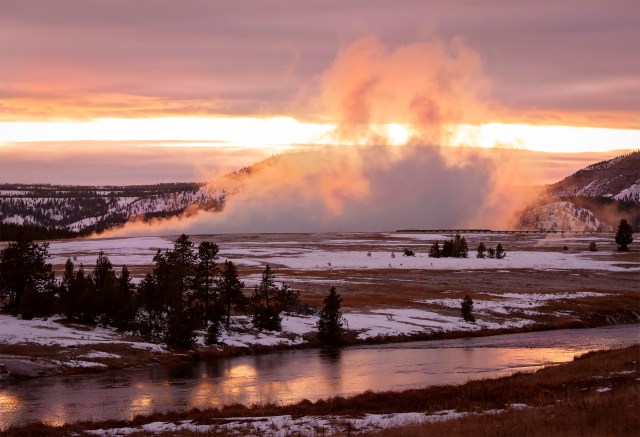
The moon was bright and full last night brightening the sky and even making the snow sparkle with color. Seeing the bright moonlight got us to wondering how moonlight nights might effect animal behavior.

There have been many studies effects so we thought it might be interesting to pass along just a few more recent observations we are aware of.

Several phenomenon related to animal behavior have been attributed to the full moon including increased spawning of corals and other reproductive behavior.

The Barau’s petrel, a tropical seabird species, uses the lunar cycle., unlike many other birds with use the sun or length of day, to time mating.

A recent study by Norevik et al. describes how the full moon synchronizes the initiation of the fall migration in the European Nightjar. The abstracts states:

We found that the daily foraging activity more than doubled during moonlit nights, likely driven by an increase in light-dependent fuelling opportunities. This resulted in a clear cyclicity also in the intensity of migratory movements, with occasionally up to 100% of the birds migrating simultaneously following periods of full moon. We conclude that cyclic influences on migrants can act as an important regulator of the progression of individuals and synchronize pulses of migratory populations, with possible downstream effects on associated communities and ecosystems.1

So as we enjoy another night of moonlight skies we can all ponder what other effects the lunar cycles have on the other inhabitants we share the planet with. So much to study and so much still unknown. Do we need to expand our ecosystem to include the moon? the show universe?
1) Norevik G, Åkesson S, Andersson A, Bäckman J, Hedenström A (2019) The lunar cycle drives migration of a nocturnal bird. PLoS Biol 17(10): e3000456. https://doi.org/10.1371/journal.pbio.3000456

Before the snow

Fading_121

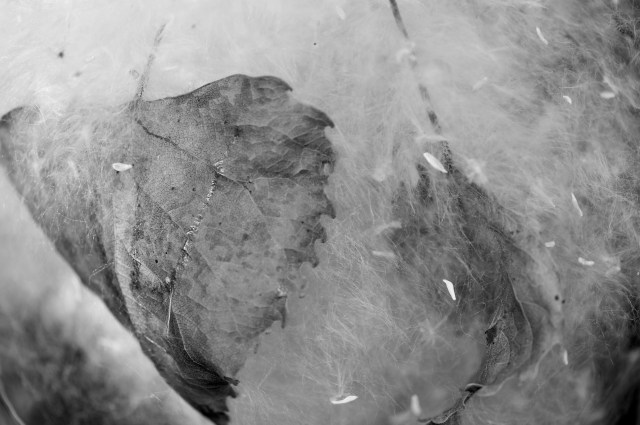
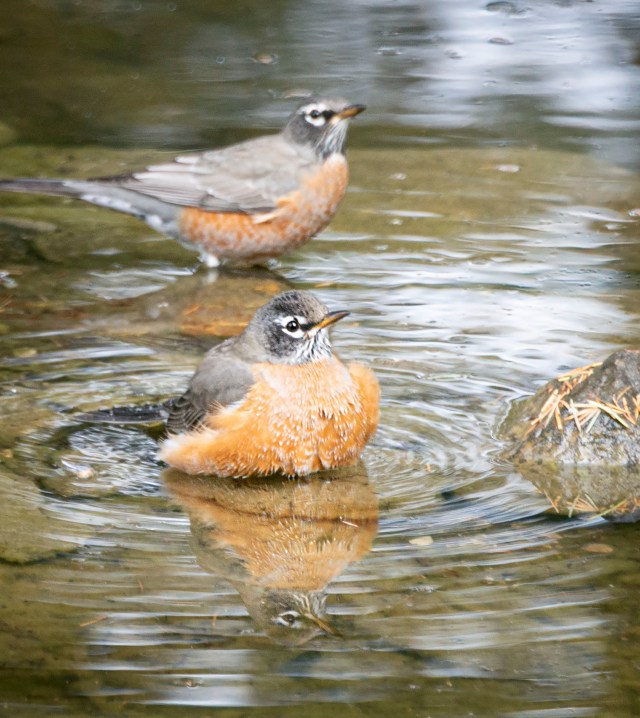
Just about a month ago we witnessed Robins galore massing in the trees around a small pond. Swooping in for what sure looked like one final long-and-luxurious bath before the pond froze over. On this day up to 10 or more Robins would swoop down form the spruce trees surrounding the pond and take what seemed a communal bath. We witnessed two, three and sometimes fours birds clustered together soaking and communicating for minutes at a time. It was fun to observe a different, albeit subtle, variation in bird bathing behavior.

Mulie

Mulie_98234

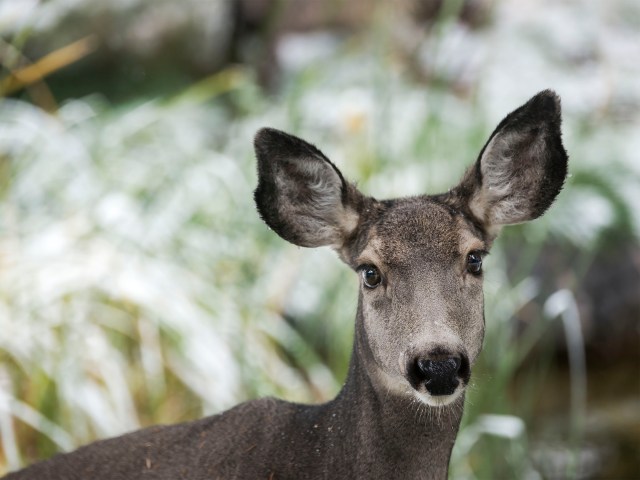
With a light layer of snow covering the ground a Mule Deer doe gives us the once over before moving back to foraging. Feasting on what were to be the last remain green grasses of Autumn as the snow gently fell. The next day a cold snap set in flipping the switch that turned all things all to brown.

Hope your weekend is a great one.

The importance of wilderness

“Wilderness areas act as a buffer against species loss, as the extinction risk for species within wilderness communities is—on average—less than half that of species in non-wilderness communities.” 1

A recent study published in the Journal Nature titled “Wilderness Areas Half The Extinction Risk of Terrestrial Biodiversity” mapped several locations around the world where maintaining wilderness areas should be a priority. The first statement the authors make in the abstract in this paper really hit the nail on the head for me.

“Reducing the rate of global biodiversity loss is a major challenge facing humanity, as the consequences of biological annihilation would be irreversible for humankind. 1

In this single sentence the authors make clear that the steady march of human activity, as currently, conducted could potential be catastrophic to all life on earth.

“Wilderness areas act as a buffer against species loss, as the extinction risk for species within wilderness communities is—on average—less than half that of species in non-wilderness communities.” 1

The paper points to several locations on the plant especially important to protect yet the authors also state that all wilderness areas have intrinsic conservation value thus we can all play a role by supporting local conservation efforts of wilderness area near to each of us. Below we showcase a few wilderness area we have recently spent time in. They are both beautiful as well as safe havens for biodiversity.

Click any photo for slide show.

Absoroka-Beartooh and Lee Metcalf wilderness areas.

References:

1. Reference: Di Marco, M., Ferrier, S., Harwood, T.D. et al. Wilderness areas halve the extinction risk of terrestrial biodiversity. Nature 573, 582–585 (2019) doi:10.1038/s41586-019-1567-7

For a short summary of the article visit Science daily.

A couple of groups that support the missions of wilderness as a buffer for biological diversity are:
The Wilderness Society
The Half-Earth Project

On the talus slope

Pika_201934

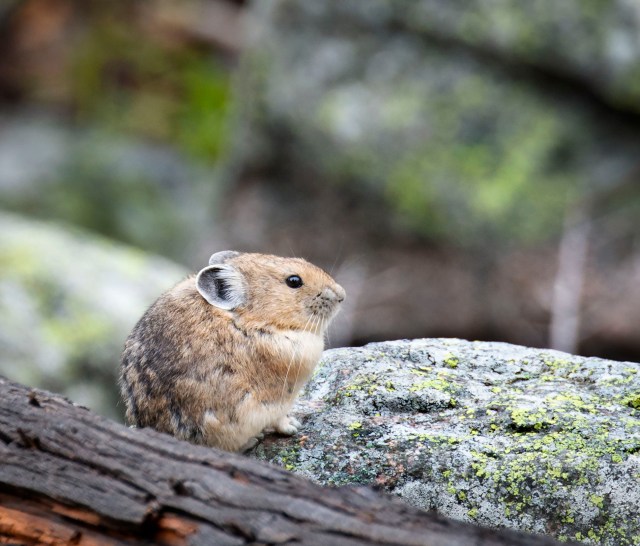
I never get disappointed when I hear the little chirp of a Pika moving about on the talus slopes. Always spotting us before we spot them. usually sitting still and looking out into their environment then scurrying off to collect plants for winter larder. The Pika is yet another species threaten by climate change and the focus of this short video in Smithsonian Magazine.

It is encouraging that some Pika may be showing behavior adaptation to a loss of habitat resulting from climate change but as the authors of a recent study concludes “while many species have a clear capacity to modulate behavior in relation to variations in climate parameters,much remains to be learned about the trade-offs, fitness implications, and limitations of behavioral flexibility in the context of novel climate dynamics.”

I sure hope these little guys are able to adapt to the new reality imposed upon them by our species. A walk on the talus slopes without them would be a lonely walk indeed.