Strutting

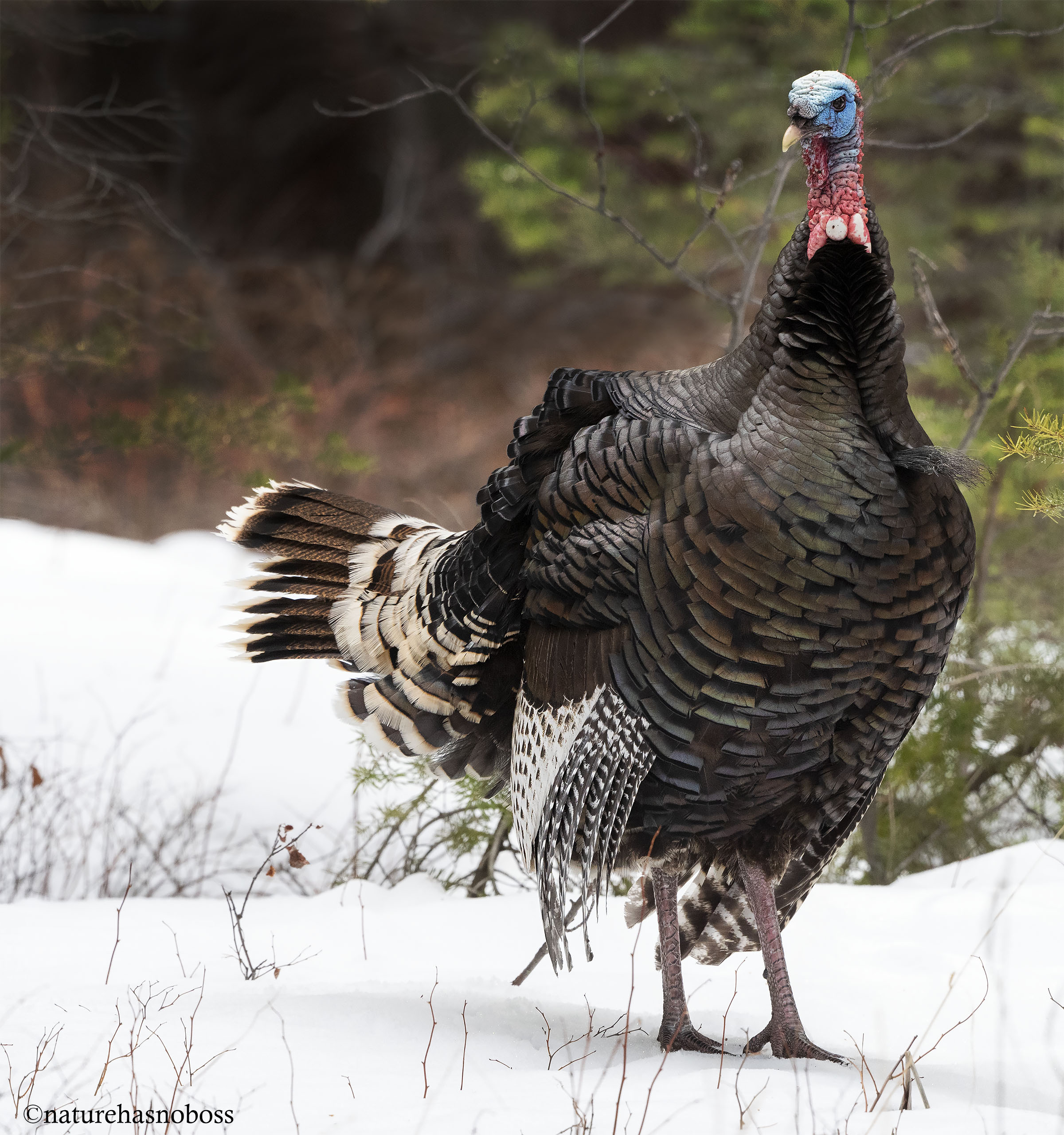
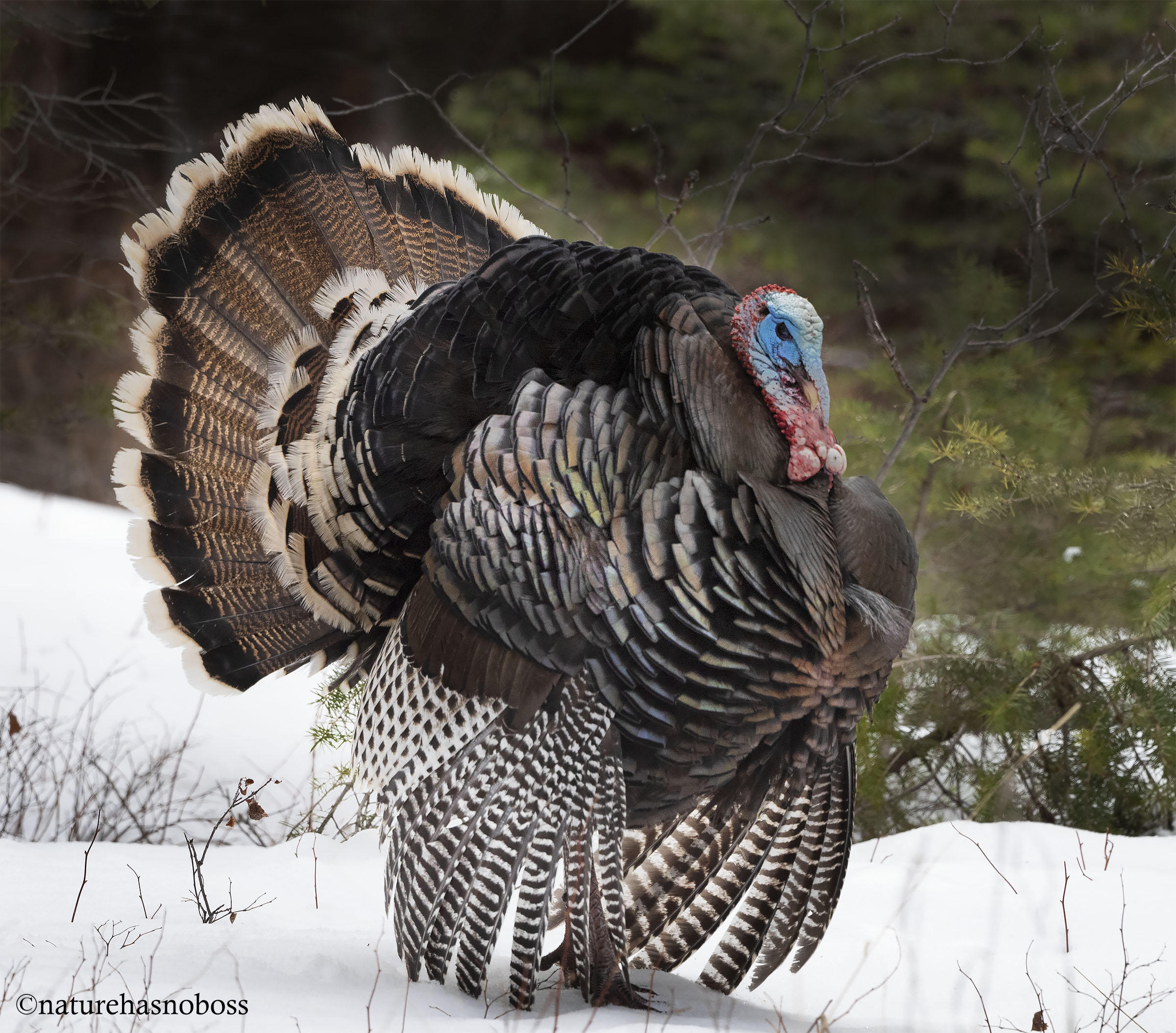
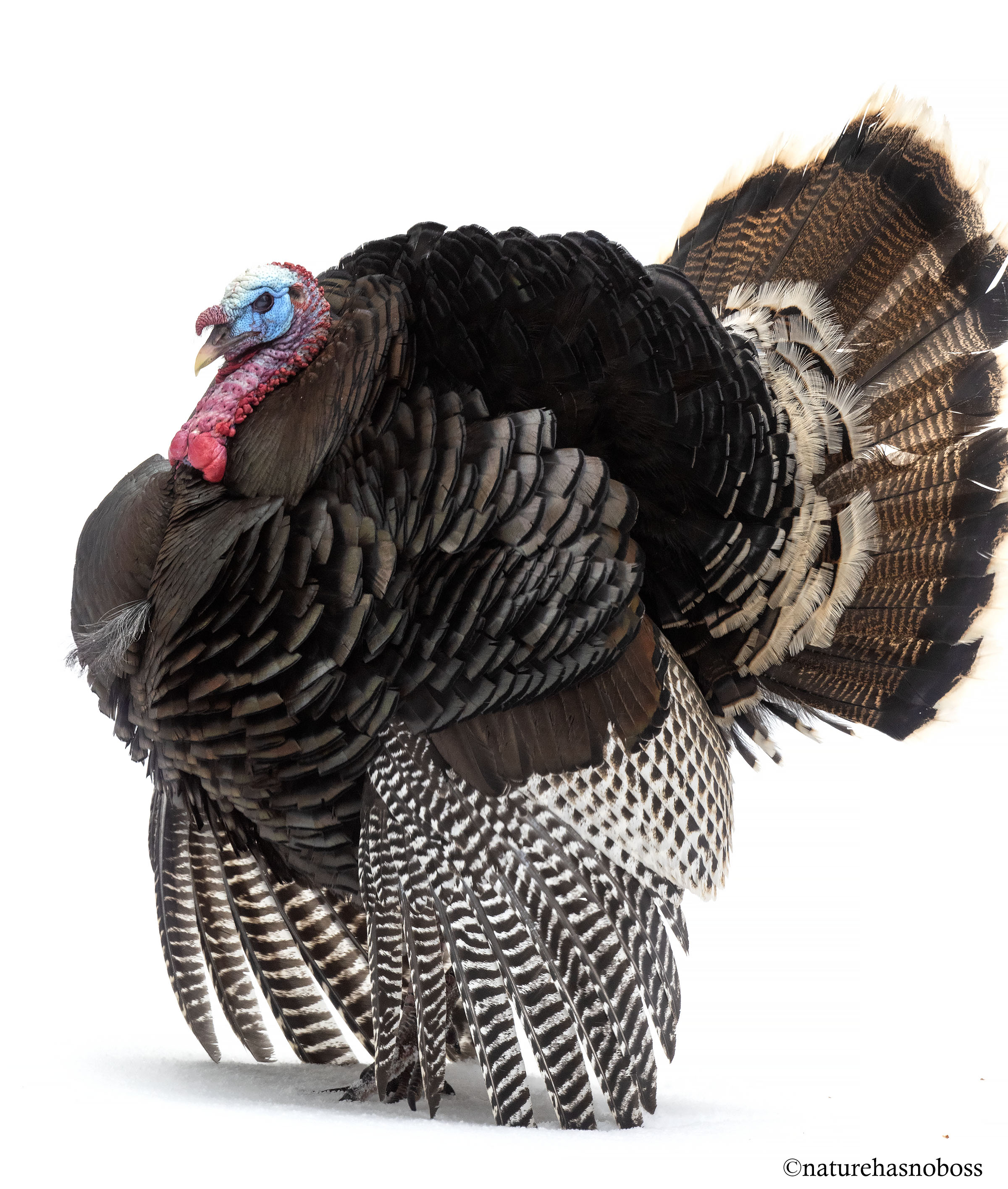
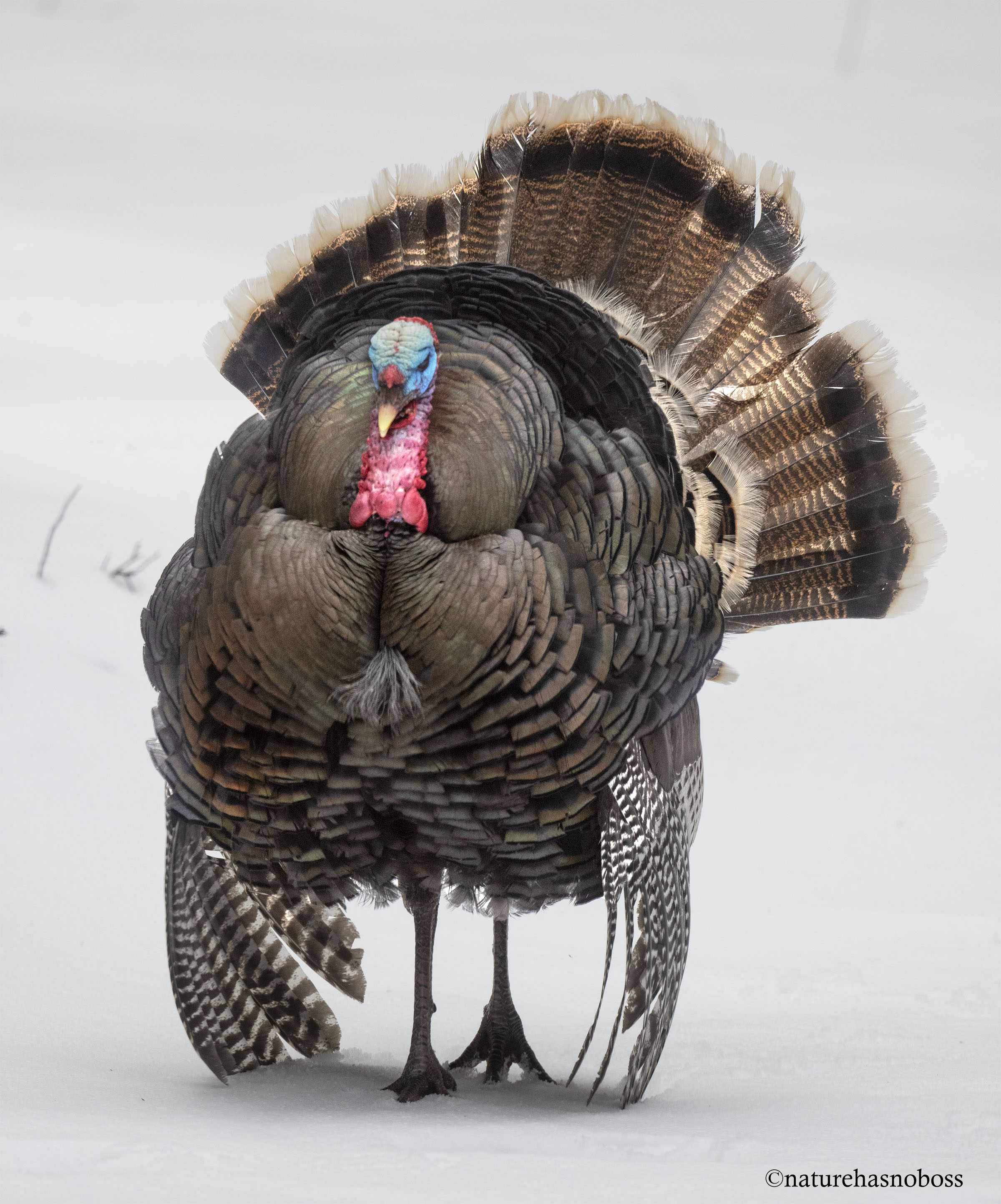
Just last week a Tom Turkey decided to wander through the neighborhood and although he only had a single female admirer in tow that didn’t stop this handsome guy from displaying his wares.

Over the course of about fifteen minutes we were also privy to his show. Each display period only lasted a few seconds or so but boy what a show.

From a remarkable collection of feathers and unique anatomical features Wild Turkeys are fascinating birds.

Sweet

Unlike previous winters where Mountain Chickadees were the predominant species of chickadee in our neck of the woods this winter the Black-capped Chickadees seem to be the most abundant. We have come to affectionately refer to the Mountain Chickadee simply as spunky wheras the word “sweet” seems to be the best descriptor of the the neighborhood Black-caps. It’s fun to have both species around and to be able to really get to know their personalities and who doesn’t like a bit of sweet to liven up a winters day.

Strutting their stuff

Strutting their stuff

Two male goldeneyes working hard to impress a female in the late afternoon light. These guys will likely only be around here a few more weeks. As spring arrives most of the waterfowl leave my area. Their yearly coming and going gives rhythm to life. Have a great trip north and someday we hope to join you.


For the next couple of weeks we will be posting some of our favorite posts from the past as we take a small respite from the digital world.

Under a full moon

Crested_butte_winter_2008

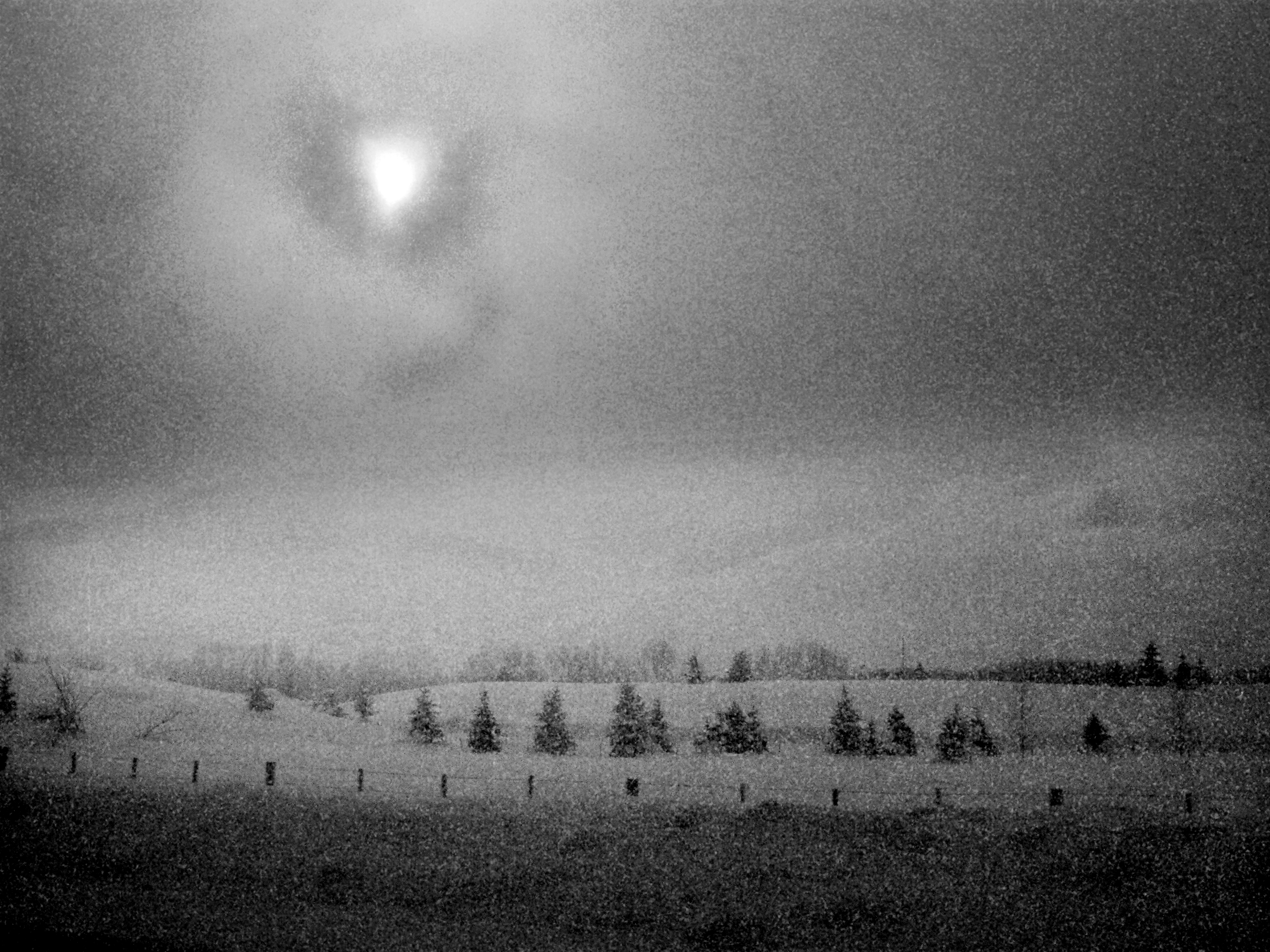
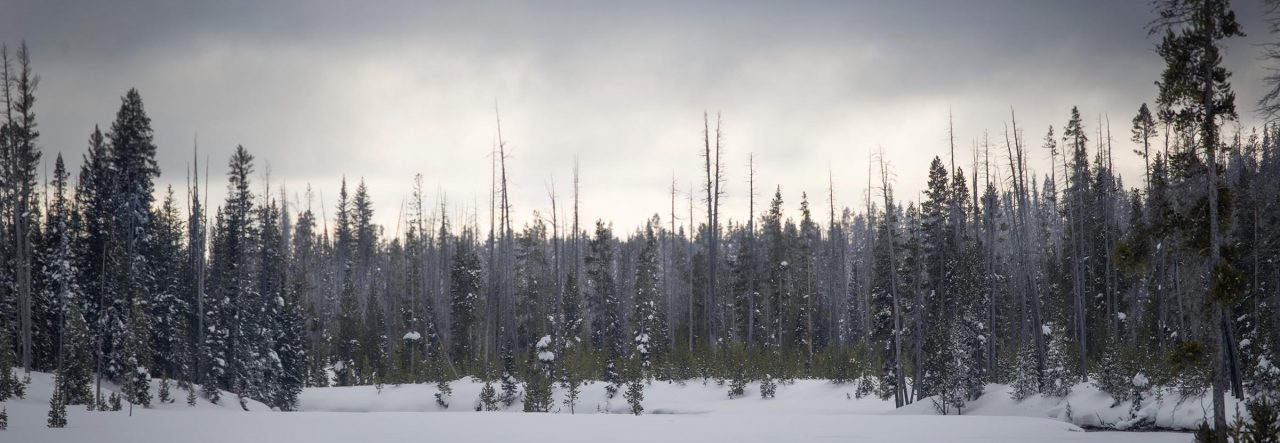
The moon was bright and full last night brightening the sky and even making the snow sparkle with color. Seeing the bright moonlight got us to wondering how moonlight nights might effect animal behavior.

There have been many studies effects so we thought it might be interesting to pass along just a few more recent observations we are aware of.

Several phenomenon related to animal behavior have been attributed to the full moon including increased spawning of corals and other reproductive behavior.

The Barau’s petrel, a tropical seabird species, uses the lunar cycle., unlike many other birds with use the sun or length of day, to time mating.

A recent study by Norevik et al. describes how the full moon synchronizes the initiation of the fall migration in the European Nightjar. The abstracts states:

We found that the daily foraging activity more than doubled during moonlit nights, likely driven by an increase in light-dependent fuelling opportunities. This resulted in a clear cyclicity also in the intensity of migratory movements, with occasionally up to 100% of the birds migrating simultaneously following periods of full moon. We conclude that cyclic influences on migrants can act as an important regulator of the progression of individuals and synchronize pulses of migratory populations, with possible downstream effects on associated communities and ecosystems.1

So as we enjoy another night of moonlight skies we can all ponder what other effects the lunar cycles have on the other inhabitants we share the planet with. So much to study and so much still unknown. Do we need to expand our ecosystem to include the moon? the show universe?

1) Norevik G, Åkesson S, Andersson A, Bäckman J, Hedenström A (2019) The lunar cycle drives migration of a nocturnal bird. PLoS Biol 17(10): e3000456. https://doi.org/10.1371/journal.pbio.3000456
The Bully

THe_bully_1

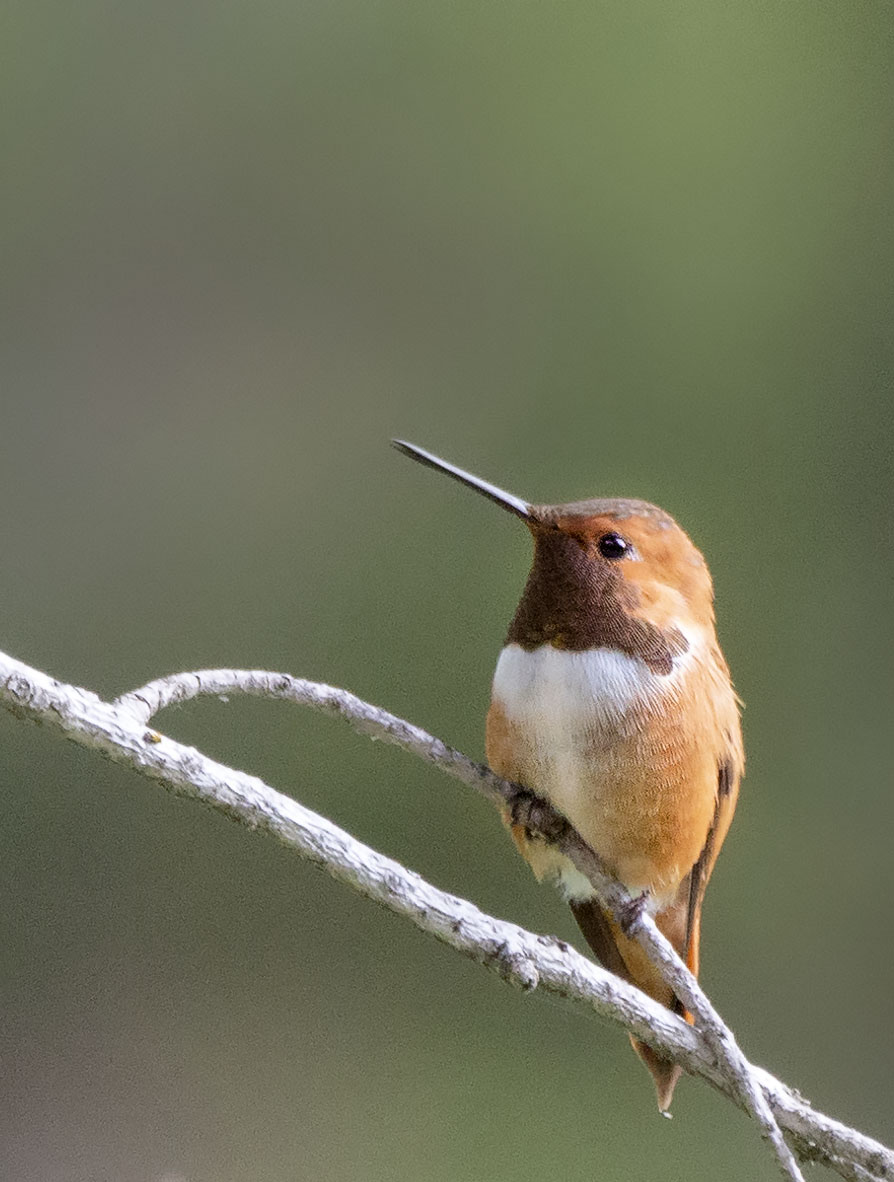
Meet the local bully a Male Rufus Hummingbird. We typically only have Calliope Hummingbirds list our backyard feeder so it was a surprise, and a welcome one, to have this beautiful guy visit. It was a pleasure until we observed his bullying behavior. He would fly to the tree the feeder was hung from and perch on a hidden branch waiting for unsuspecting Calliopes to visit. He would then swoop down and chase them off. The funny part is that he seldom visited the feeder for a sip of nectar himself. Beautiful but quite the bully this Rufus guy.