Exuberance

Exuberance

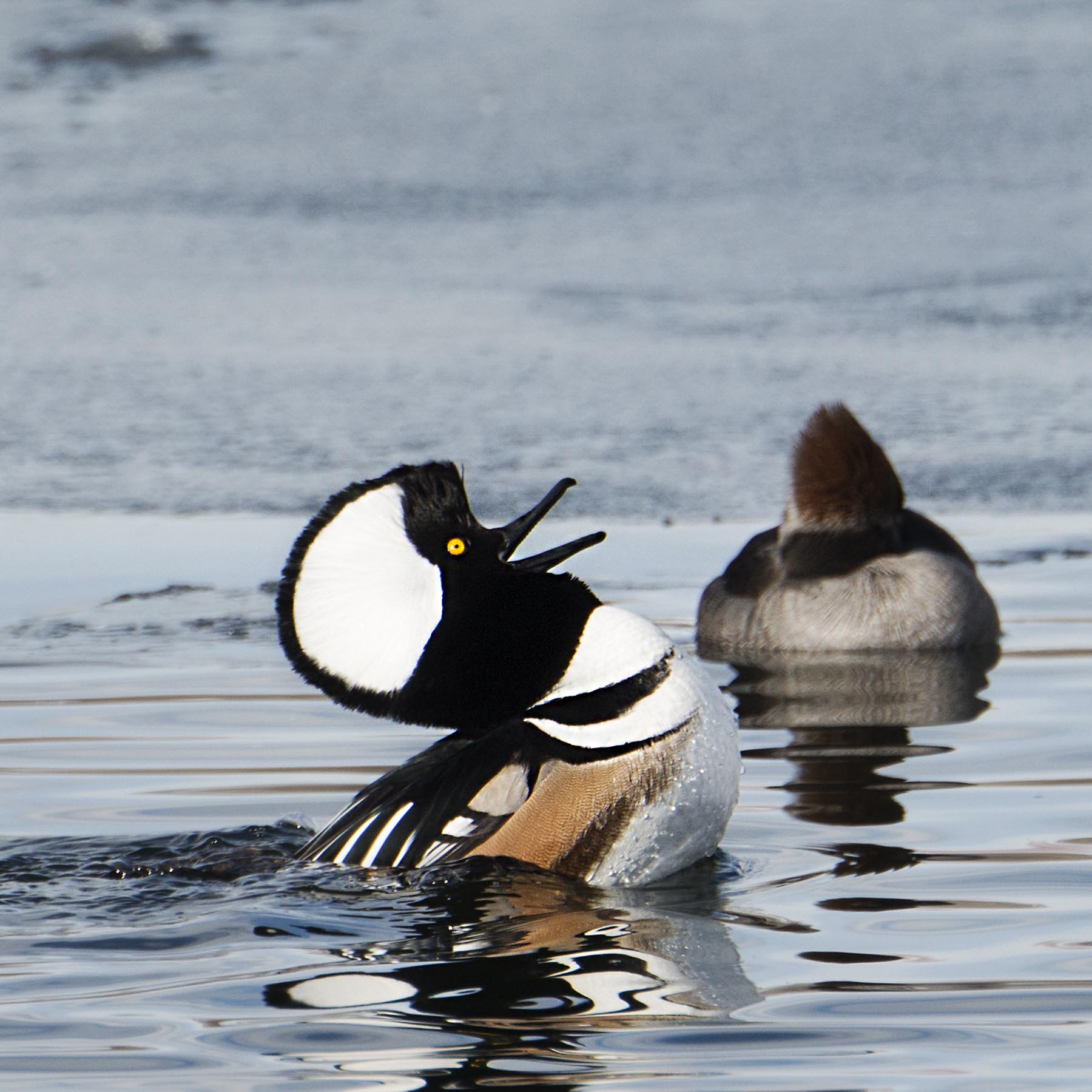
We were treated to quite a show by this Male Hooded Merganser the other day and unfortunately for him we seemed more interested in his display than the female Hoodie he was courting. To begin with, he took on the other male in the pond in a typical Hooded Merganser head bobbing competition. He appeared to win that battle easily. Next he danced around his lady bobbing his head up and down and to our surprise would crook his neck sideways and belt out a little tune for her. The female hoodie would occasionally glance over his way, tuck her head back into her feathers and continue with her afternoon nap. He kept head bobbing and singing for quite some time and we got to witness quite a show but were left wondering was the female just playing hard to get, or was his show subpar?


For the next couple of weeks we will be posting some of our favorite posts from the past as we take a small respite from the digital world.

Hop on in.

morning_yoga_on_the_beach_1

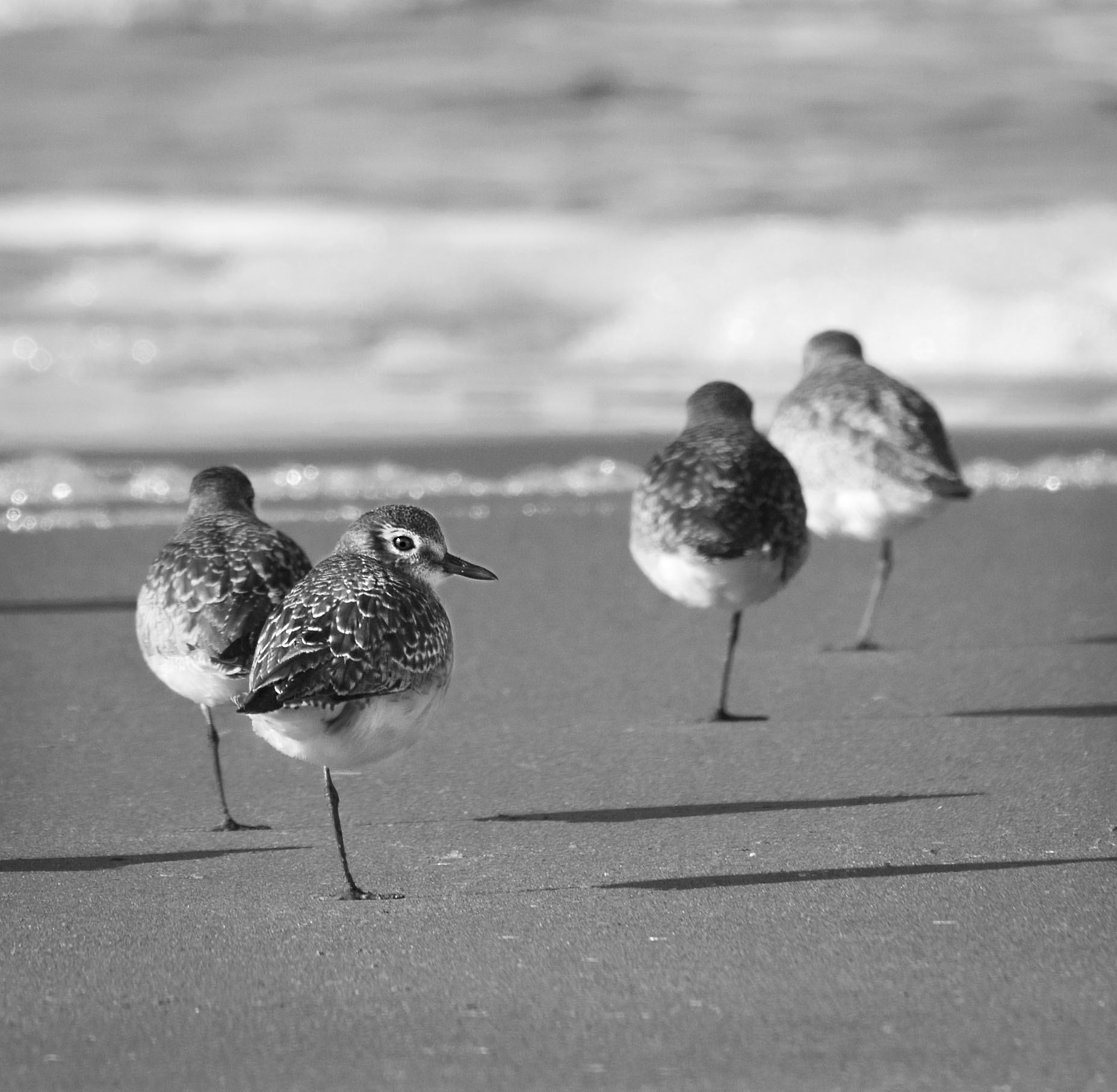
A little Sand Piper gives me a wink and motions me to join in their morning yoga class on the beach. Although balancing on one leg proved not too difficult I fell flat on my face trying to hop away on one leg like these characters did when a rogue wave came up the beach just a little too far.


For the next couple of weeks we will be posting some of our favorite posts from the past as we take a small respite from the digital world.

Foggy and Frosty

Frosty_morning_fog_1

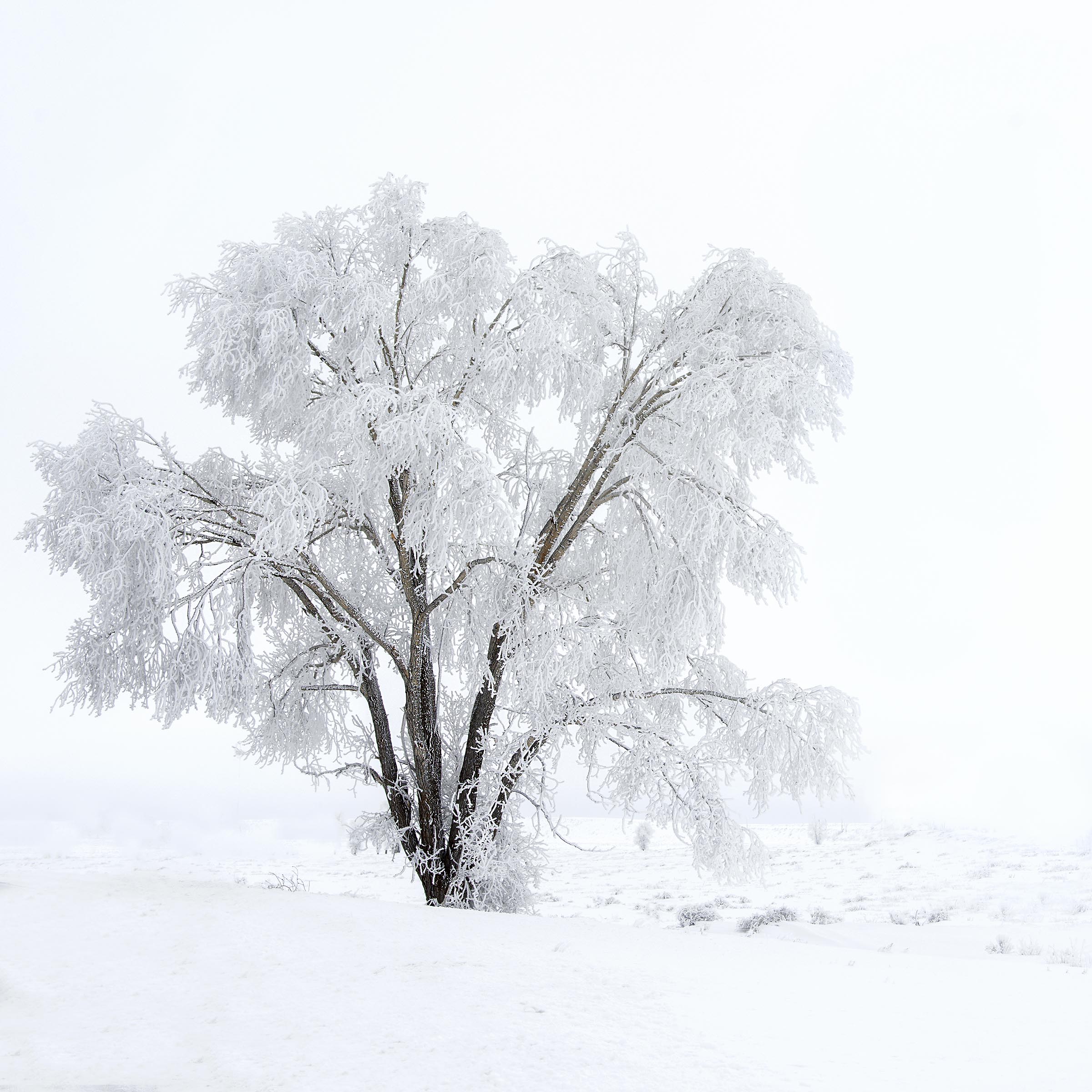
Rising in the east and obscured behind thick fog, the winter sun lights an old cottonwood tree covered in delicate hoar frost. Once the fog lifted it only took a couple of hours of sunlight to melt the frost away. Temporal, fractal art at is finest. Grand Teton National Park, WY.


For the next couple of weeks we will be posting some of our favorite posts from the past as we take a small respite from the digital world.

Shy

shy

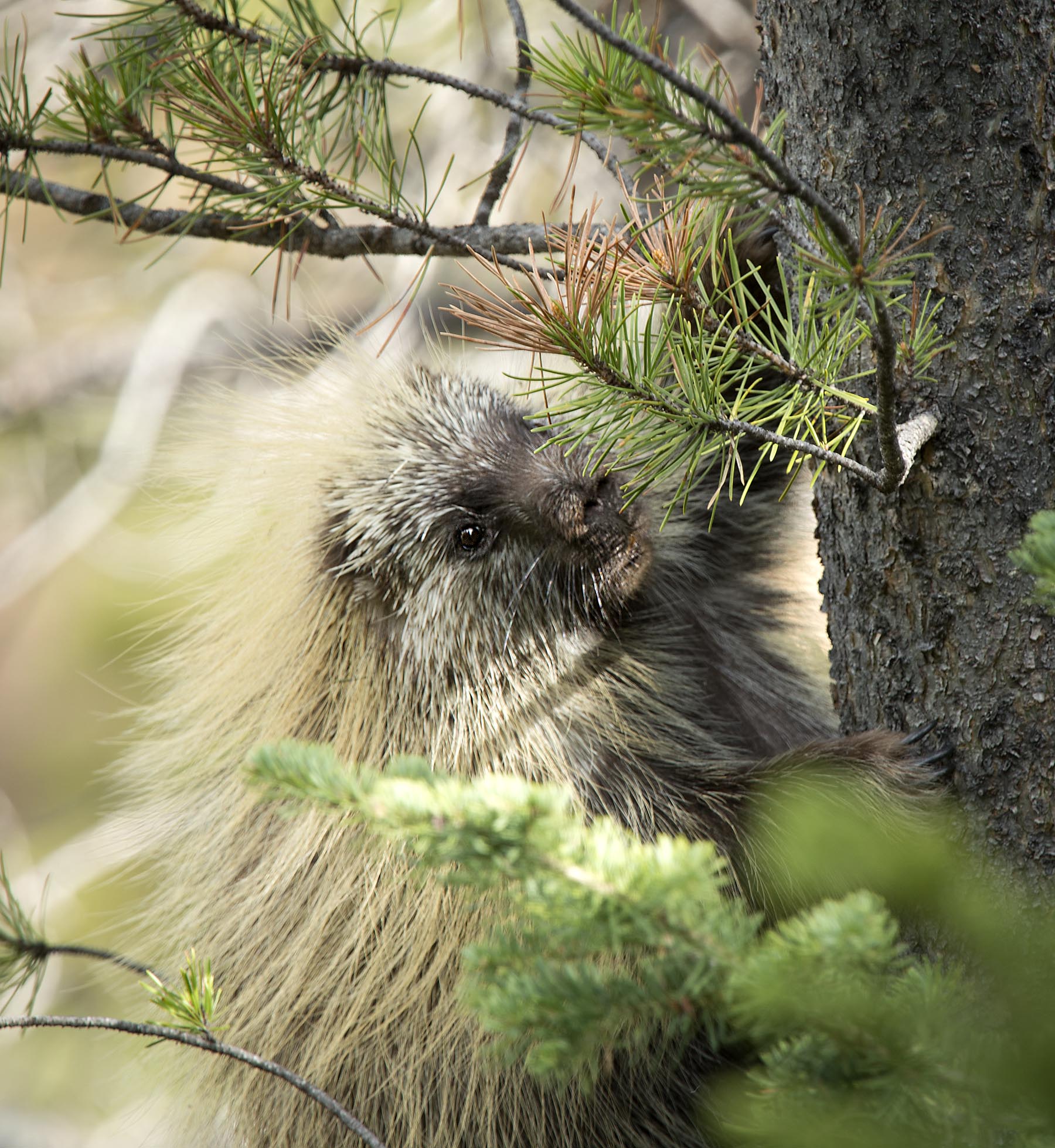
A porcupine peaking out from behind a lodgepole pine near Willow Creek Pass in Colorado. We seldom see theses guys while out and about so this was a treat.

Have a great weekend.

For the next couple of weeks we will be posting some of our favorite posts from the past as we take a small respite from the digital world.


A curious case: The Color of Baby Coots.

Coots_1

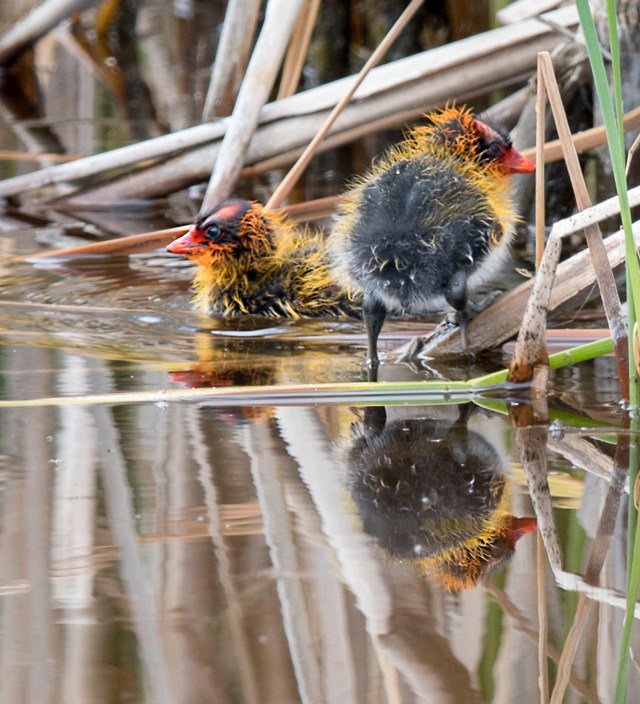
Why do American Coot chicks who develop into mainly greyish-black birds as adults begin their lives with such a splash of color? 1

That is a question a team of biologists have been asking for quite some time and, as is typical in science, the answer was not what they first expected. Previous studies conducted by this same laboratory concluded that coot parents preferentially feed chicks that display brighter coloration. The goal of the present study was to determine why this was the case.

The researchers noted that coots lay between 8-10 eggs and these eggs hatch in the order they were laid. Additionally coots are nest predators and lay eggs in other coots nests. One hypothesis was that the chicks hatched from predatory eggs were the more brightly colored chicks and thus would have gotten fed more. This turned out to be false. The researchers discovered that the chicks hatched from the latter laid eggs were the more brightly colored. Typically chicks hatched latter in a brood have to catch-up to their larger siblings if they are to survive. The researcher noted that if these smaller and brightly colored latecomers survived the parents would use their coloration as a way to preferentially feed these chicks more and allow them to catch-up to their earlier siblings. 2

A wonderful survial strategy reveled in a nicely done study. Hat’s off to science and to the coot.

References:

1. University of California – Santa Cruz. “The mysterious case of the ornamented coot chicks has a surprising explanation: The bright colors of the chicks of American coots help their parents choose favorites, according to a new study.” ScienceDaily. ScienceDaily, 31 December 2019. www.sciencedaily.com/releases/2019/12/191231111817.htm.

2. Bruce E. Lyon, Daizaburo Shizuka. Extreme offspring ornamentation in American coots is favored by selection within families, not benefits to conspecific brood parasites. Proceedings of the National Academy of Sciences, 2019; 201913615 DOI: 10.1073/pnas.1913615117


Statistic of the decade

Rare_6
As this decade comes to a close we ran across an interesting statistic produced by the Royal Statistical Society in the UK. In fact it was the societies statistic of the decade and one that is nothing to write home about-deforestation of the Amazon rainforest.
Rare_10

The estimated accumulated deforestation of the Amazon being equivalent to around 8.4 million football pitches or about 24,000 square miles. In a decade!

A recent article in the Conversation provides further insight into this statistic describing some of the more obvious consequences of this deforestation and rebutting arguments that conversion of the rainforest to ranching, resource extraction and farming is required for economic benefits of nations and the people within those nations. In fact there is data to suggest that if left alone the economic benefits of the amazon rainforest outweigh its destruction for short-term profits. However, another recent article suggests the worst is yet to come in the deforestation of the Amazon. With the cost of  reforestation at over $2,000 an acre cost alone, not to mention political forces, make restoration less likely day by day.rae_8

The amazon rainforest has been called the lungs of the earth breathing in carbon dioxide and stabilizing the earth’s climate and exhaling oxygen-oxygen that fuels life animal life in all its myriad forms.

  • One in ten known species on our planet including over 2,000 species of animals and probably more plant species than can be counted.
  • Half of the earths remaining tropical rain forests.
  • Over 4,000 river
  • Over 2.6 million square miles.

A grim statistic to have won the honor of statistic of the decade but one we ought to heed as we move forward into the next.

It is hard to appreciate this fact for us living far from the Amazon in places already striped of natural landscapes.  However, when we drive past a once fertile farm field just down the road now being plowed over for a new round of strip malls we get an inkling of what the future holds. A planet impoverished for the enrichment of a few, until it all falls apart.

Perhaps the statistic of the next decade in 2030 will something like this “the decade humanity work together to solve the climate crisis for the good of all”.I know it’s not really a statistic but we will be able to quantify the results and turn that into the next statistic of the decade.
THe_bully_1