Towards meadows edge

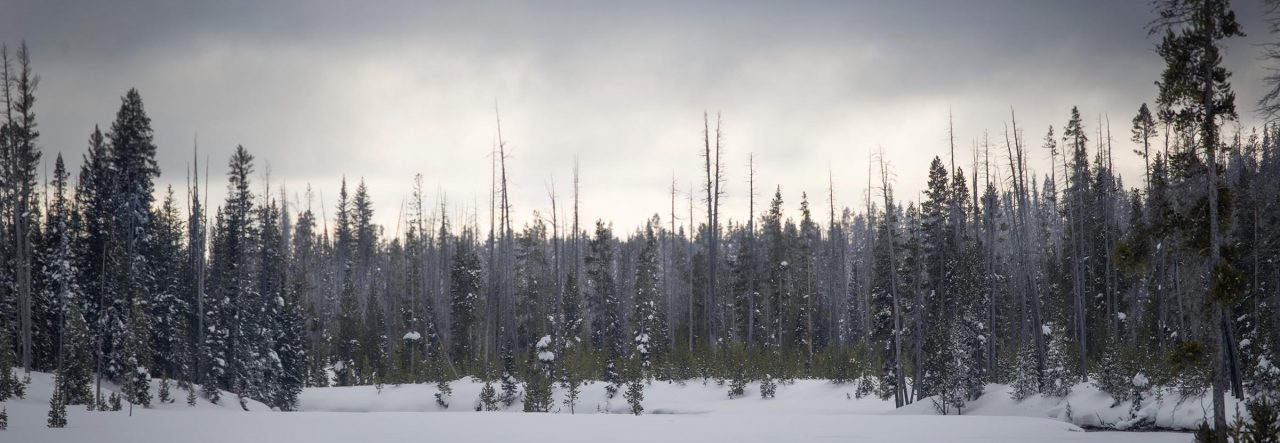
GIbbon_meadows_1

On a silent morning we stopped and spent some time in the heart of a meadow looking out towards the edge.  To the northwest, mountains rise as skies clear all the while  clouds and snow roll in right above.

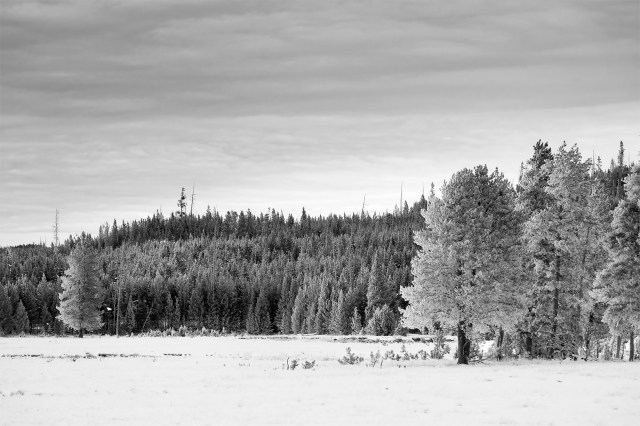
Gibbon_meadows_3

With just a slight turn the mood quickly changes with a dusting of white to the north…

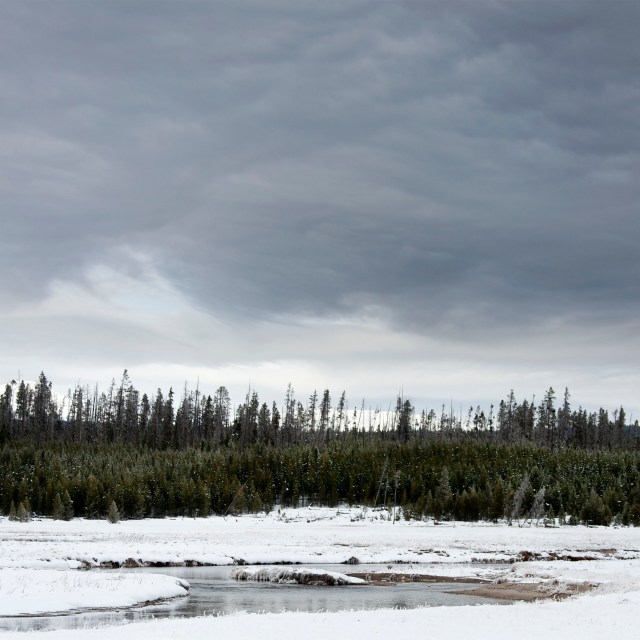
Gibbon_meadows_2

…and to the west a river meanders south and heavy clouds lie overhead…

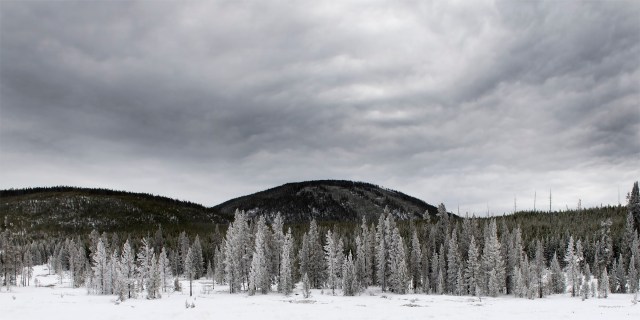
Gibbon_meadows_4

…to the east the hills rolled as the skies above.

As the day progressed the skies cleared and sun shone bright yet what lingers inside is the views towards the meadows edge.

This year: One book at a time.


We don’t know about you but we tend to get over ambitious at times with books, especially reading them. Five or six books sitting proudly on the coffee table in living room each with a bookmark placed about 1/3 into the book. Each book calling your name when you plop down on the sofa to relax. You sit and stare back at them silently wondering how you will finish them all before they are due at the library. You get through one or two wonderful books but always feel like your not reading enough as you solemnly remove the bookmarks form the remaining three and whisk them off and into the return slot at the library. So this year it’s only one book at a time- from front to back- all the way though.

We recently came across a wonderful four part series on the best nature books of 2019 written by the Chicago Review of Books

. It is a very diverse list of nature books that will provide us some guidance in choosing and reading our one-book-at-a time in 2020.

Here are links to each of the four posts. The author of the articles Amy Brady stated in the part four of this series that this year has been the best in recent memory for nature writing. Looking though the lists is almost as fun as reading the books listed.
Part Four
Part Three
Part Two
Part One

Anything catch your eye as a first read from these lists. Maybe because it’s winter and darkness comes early the book Dark Skies: a journey into the wild night By Tiffany Francis-Baker sounds like it might be first up this year.

Success Stories: National Geographic

More good news stories for 2019 this time from National Geographic in an article titled “Wildlife wins: 7 good-news stories from 2019“. The article begins with an all to often heard hours of

Optimism can be in short supply when it comes to wildlife and conservation.

Going on describe several events that are disconcerting to those who consider conservation a worthy cause including the following events:

Masai giraffes were declared endangered, fires in the Amazon devastated jaguars, turtles, and other wildlife, and cheetah researchers accused of spying were sentenced to years in prison in Iran. Demand for wildlife and wildlife products—such as pet turtles, lion bone, and shatoosh, scarves made from the fleece of rare Tibetan antelopes—is thought to be on the rise”

Conversely and giving us a bit of hope the main focus of the article presents several key victories in the conservation of species and preservation of wildlife around the globe. Another article that both gives hope yet points that there is still no reason take pause in the fight for conservation of non-human life on the planet.

Spring loaded

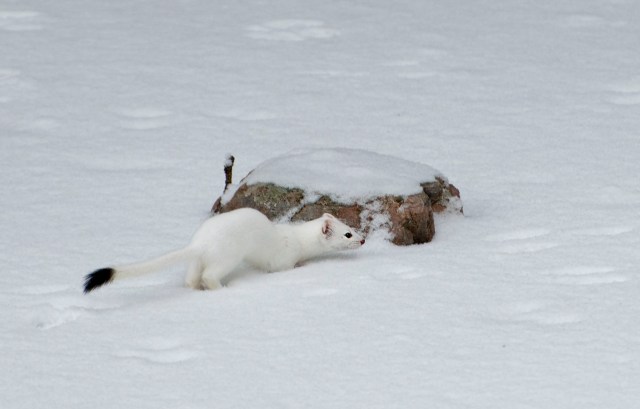
Ermine_021345psd

Spring loaded and tightly wound may be an understatement.

Back and forth and all around following the rabbit tracks this Ermine moved so fast it made us dizzy. As he hunted rabbits darted with lightening speed in every direction gravity would allow. Excitedly we watched yet feared for the rabbits lives. Yet when all was said and done we think the Winter Bunn made it out alive.  How she escaped this mighty hunter is a testament to the difficulty of finding a meal even for a hunter as fierce as the Ermine.

Rare is common?

Rare is common?

A recent report published in Science Advances suggests that up to 40% of plant species are actually very rare and these rare species are extremely vulnerable to extinction via climate change as well as destruction of native ecosystems for human land use.

In the introduction to the paper the authors state:

“Why some species are common and others are rare has intrigued ecologists at least, since Darwin. Rare species are orders of magnitude more likely to go extinct, making it puzzling how so many rare species can be maintained.”

To make their conclusions thirty-five research teams form over 20 institutions complied 20 million observational records of plants from around the globe. Their analysis revealed over 435,00 plant species with about 36.5% being classified are rare.

The rare species were clustered in regions around the globe that through time have had more stable climates especially during the planets last ice-age. These rare plant hotspots included regions of the Northern Andes, Costa Rica, Madagascar and regions of Southeast Asia. However as the planet warms and the ever present march of human conversion of land for agriculture, housing and tourism continues these rare plant regions are threatened.

The authors state that:

“If nothing is done, this all indicates that there will be a significant reduction in diversity — mainly in rare species — because their low numbers make them more prone to extinction.”

A very interesting report and a short summary can be found at Science Daily.


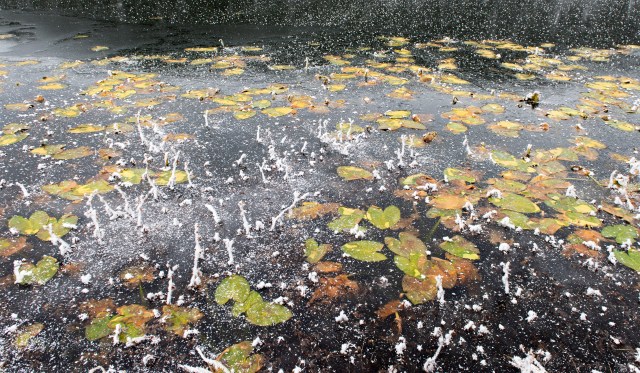
While none of these photos depict rare plants, or so I think, these are the types of places rare plants might live.

What will be lost when we only have the common left?

Click Image for slide show

References:

  1. Brian J. Enquist, Xiao Feng, Brad Boyle, Brian Maitner, Erica A. Newman, Peter Møller Jørgensen, Patrick R. Roehrdanz, Barbara M. Thiers, Joseph R. Burger, Richard T. Corlett, Thomas L. P. Couvreur, Gilles Dauby, John C. Donoghue, Wendy Foden, Jon C. Lovett, Pablo A. Marquet, Cory Merow, Guy Midgley, Naia Morueta-Holme, Danilo M. Neves, Ary T. Oliveira-Filho, Nathan J. B. Kraft, Daniel S. Park, Robert K. Peet, Michiel Pillet, Josep M. Serra-Diaz, Brody Sandel, Mark Schildhauer, Irena Šímová, Cyrille Violle, Jan J. Wieringa, Susan K. Wiser, Lee Hannah, Jens-Christian Svenning, Brian J. McGill.The commonness of rarity: Global and future distribution of rarity across land plantsScience Advances, 2019; 5 (11): eaaz0414 DOI: 1126/sciadv.aaz0414
  2. University of Arizona. “Nearly 40% of plant species are very rare and are vulnerable to climate change.” ScienceDaily. ScienceDaily, 27 November 2019. <www.sciencedaily.com/releases/2019/11/191127161235.htm>.