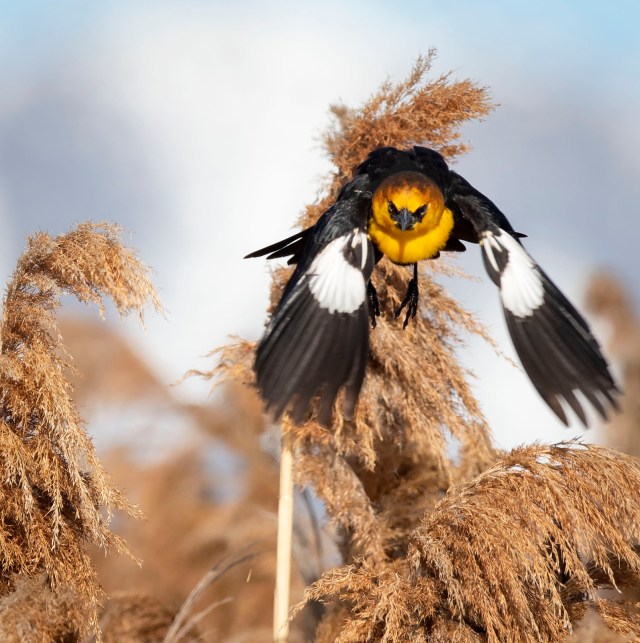
Good things are heading your way. In this case it’s a Yellow Headed Blackbird that has returned to the marsh and that means spring is sure to follow.
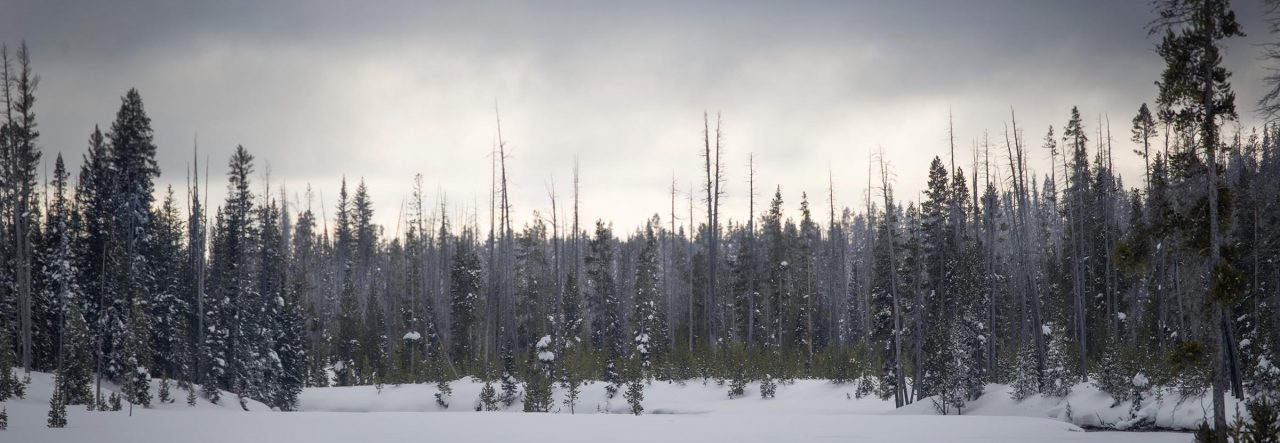
Good things are heading your way. In this case it’s a Yellow Headed Blackbird that has returned to the marsh and that means spring is sure to follow.
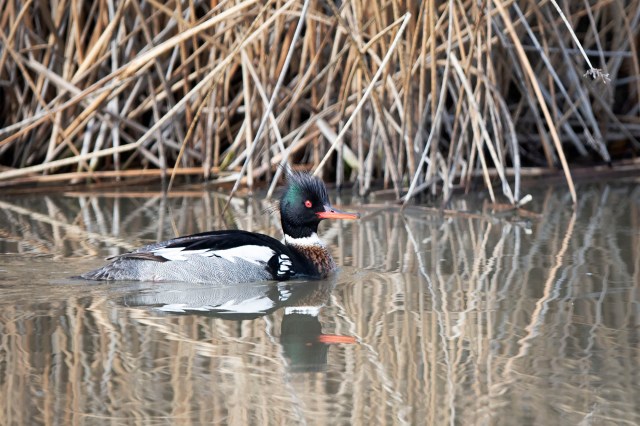
Looking fine as can be in his breeding plumage a male Red-Breasted Merganser swims quietly along in the cattails confidant he will attract a mate.
References:
1. The Cornell Laboratory of Orinthology, All about birds Website, https://www.allaboutbirds.org/guide/Red-breasted_Merganser/lifehistory
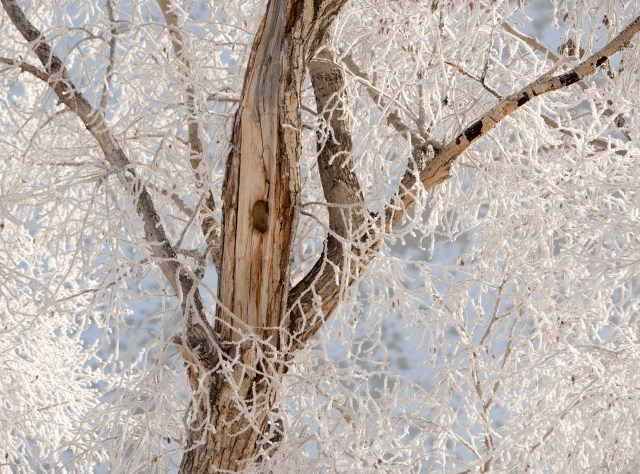
A bit of frost and a sunny day makes a beautiful way to start the week.
Knock…knock…anybody home?
Happy Monday.
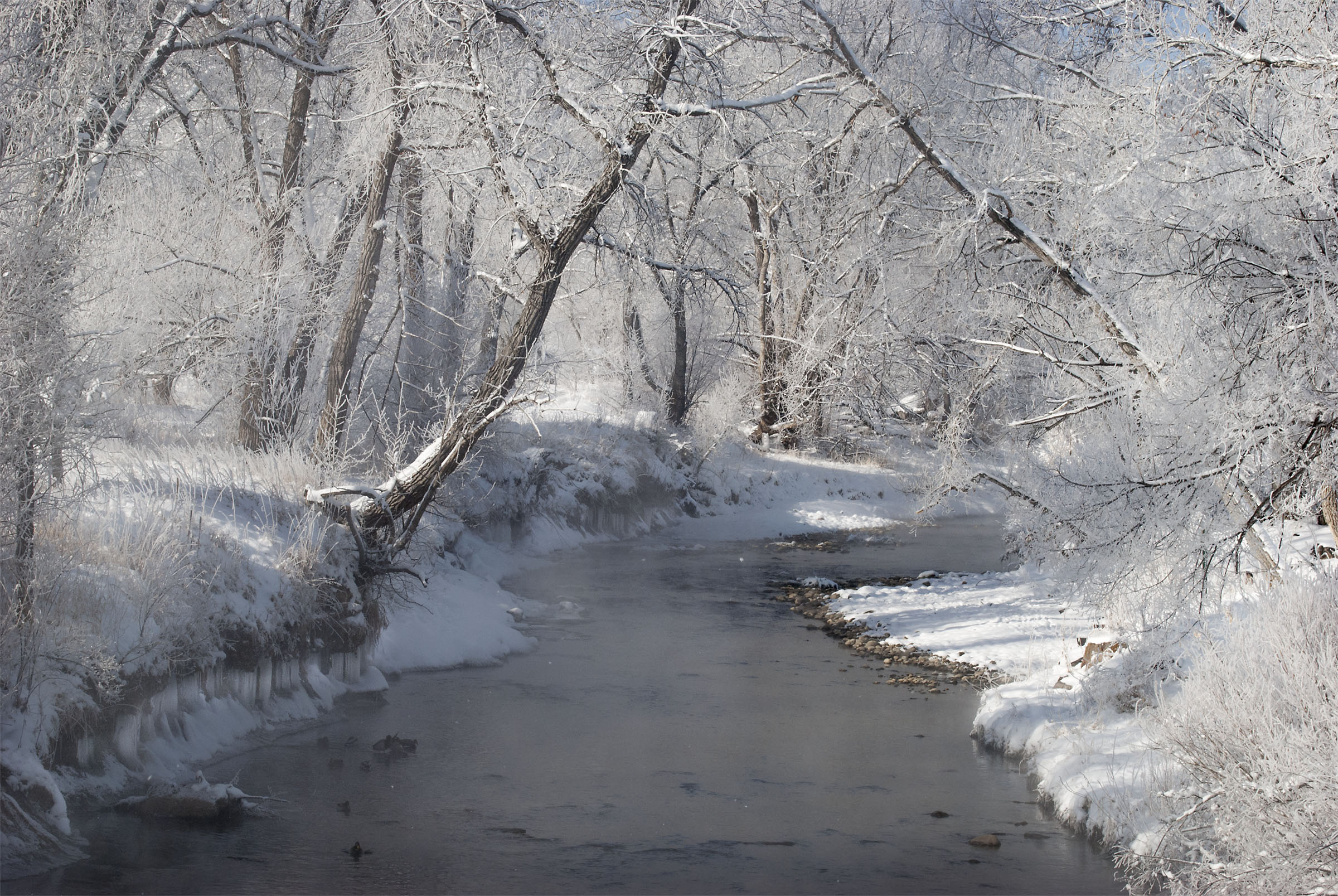
Late one night winters breath blew and gave us the snow.
In the morning spring awoke bringing us sun and warmth.
When winter meets spring is a fine time of year.
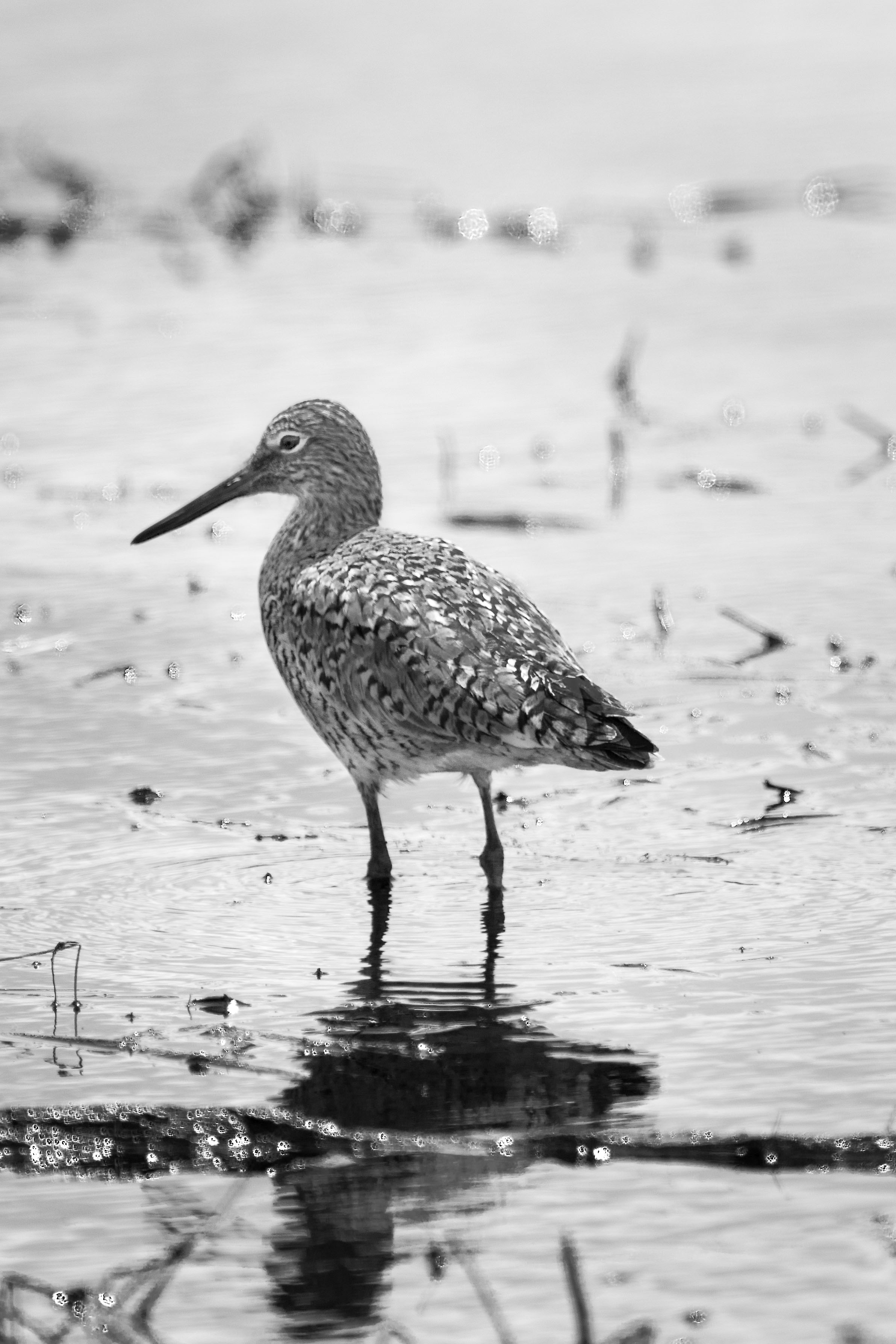
A Willet soaking up the warmth of the sun.
Every day it feels more like spring, yes, winter remains yet it’s grips has lost much strength.

A young mule deer peeks out from behind a spruce tree to give the nearby shrub a little trim on a snowy March morning.
Wishing you a wonderful weekend.
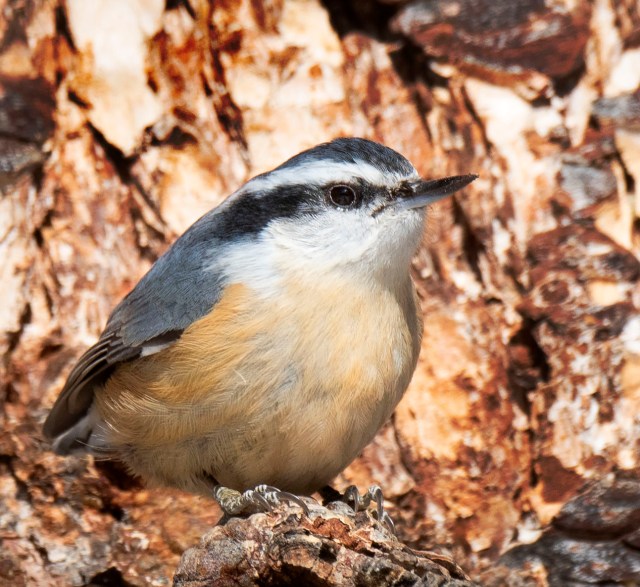
Earlier this week we featured the Mountain Chickadee who by our accounting is the most prevalent species hanging around our neighborhood this winter. A close second, and perhaps on some days the most prevalent species, is the Red-Breasted Nuthatch. Sitting quietly in an old spruce this particular Nuthatch presented us a nice photo opportunity on a warm March afternoon. It won’t be long before they scatter to higher grounds and prepare for breeding season but until then we savor the opportunity to listen to their honk-honk-honk from the trees nearby.
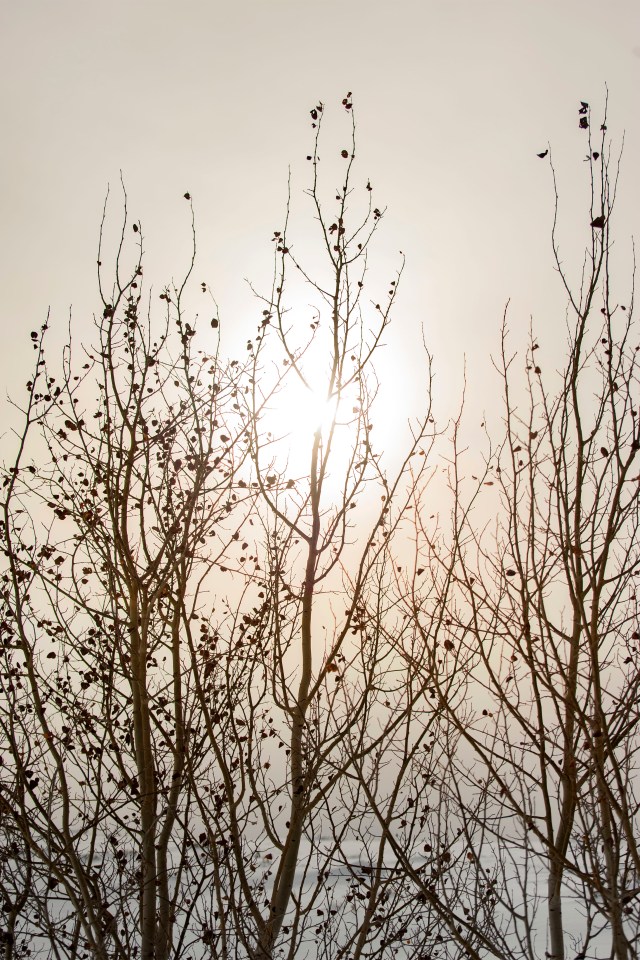
Sometimes it’s not so bad to have the sun in your eyes.
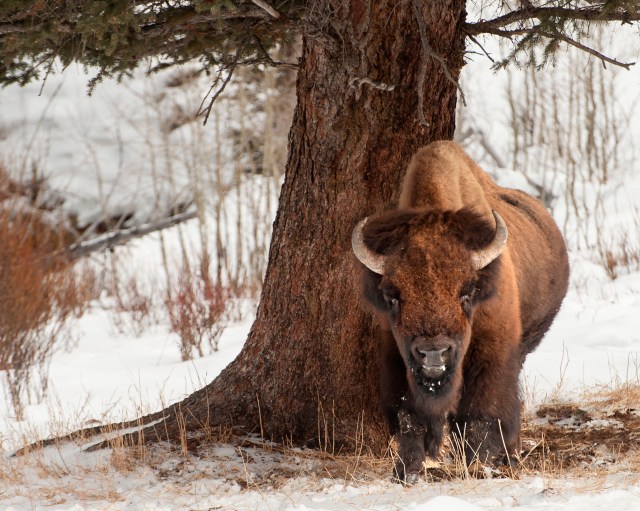
Moving quietly as we skiied by a rusty red scene. The Bison, the tree, the willows all variations on a color theme. A rusty brown-red within fields filled of snow.
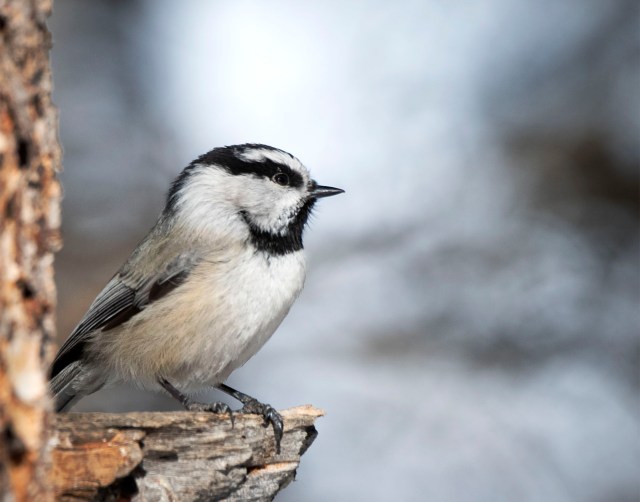
This winter the most numerous bird species hanging around our area is the Mountain Chickadee. They appear to make up the core of mixed flocks roaming the neighborhood and slightly outnumber the Red-Breasted Nuthatches and Black-Capped Chickadees. These guys have a wonderful feisty-spunky-gritty- character that makes them a real treat to have around on a winters day. As spring arrives they will move back up into the hills but for now we are thoroughly enjoying having the around.
 nature has no boss
You must be logged in to post a comment.