Red Breasted Merganser

RBM_902314756

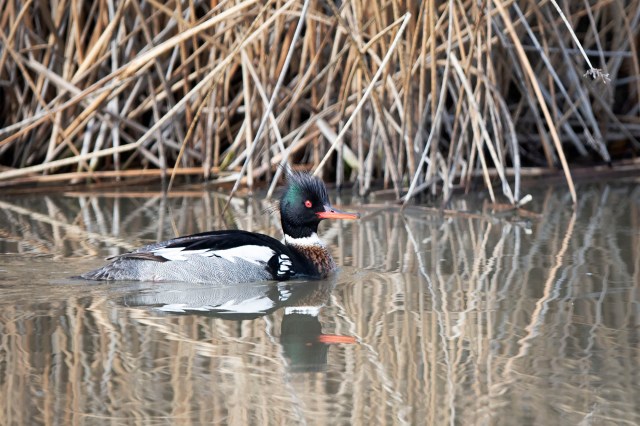
Looking fine as can be in his breeding plumage a male Red-Breasted Merganser swims quietly along in the cattails confidant he will attract a mate.

“Courting males salute a female with head held high and then curtsy to the female by tipping up and putting their rear in the air with bill held high. In response to the male’s gesture, the female often jabs him with her bill. Courting males also shake their head side to side to get the attention of a female. Once the female accepts the male she stretches her neck out while holding her bill down and then lowers her neck again in a bobbing motion. They form a monogamous bond for the breeding season, but the male takes off at the beginning of incubation, leaving the female to tend the young alone. Males head to secluded waters to molt their feathers before migrating south while females tend to molt near the breeding site.”  1

References:
1. The Cornell Laboratory of Orinthology, All about birds Website, https://www.allaboutbirds.org/guide/Red-breasted_Merganser/lifehistory

A close second

A-Close_second_12123

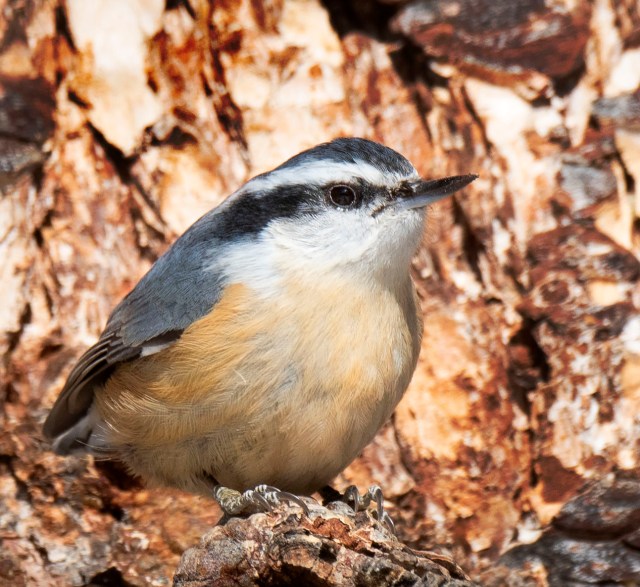
Earlier this week we featured the Mountain Chickadee who by our accounting is the most prevalent species hanging around our neighborhood this winter. A close second,  and perhaps on some days the most prevalent species, is the Red-Breasted Nuthatch. Sitting quietly in an old spruce this particular Nuthatch presented us a nice photo opportunity on a warm March afternoon. It won’t be long before they scatter to higher grounds and prepare for breeding season but until then we savor the opportunity to listen to their honk-honk-honk from the trees nearby.

Black Vulture

black_vulture_2314

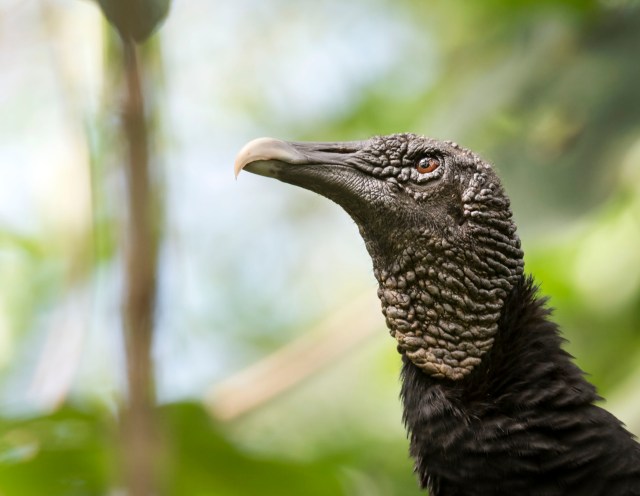
A beautiful Black Vulture presents their profile through a forest clearing. While not a local resident to the western United Staes Black Vultures have been slowly expanding their range and a now a common sight in the East and Southeaster US. Black Vultures are monogamous, staying with their mates for many years, and caring parents who feed thier young for up to 8 months.  In addition, vultures contribute a wonderful clean-up service to the ecosystems they inhabit. It was nice to get a close-up view of a bird we usually see soaring on the thermal high above our heads.


Under a full moon

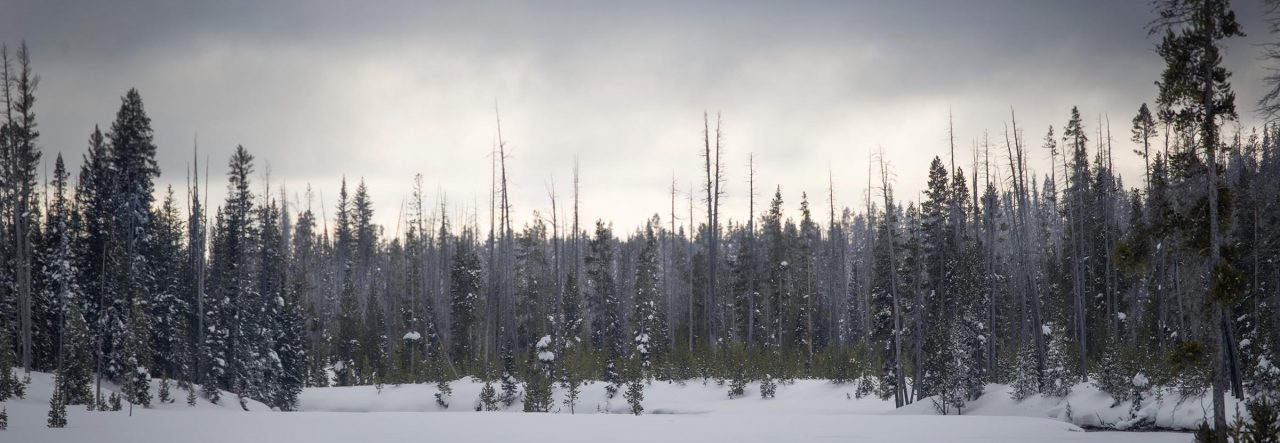
Crested_butte_winter_2008

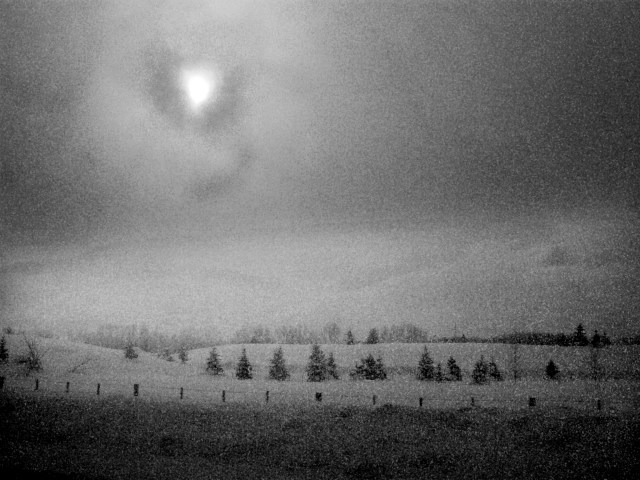
The moon was bright and full last night brightening the sky and even making the snow sparkle with color. Seeing the bright moonlight got us to wondering how moonlight nights might effect animal behavior.

There have been many studies effects so we thought it might be interesting to pass along just a few more recent observations we are aware of.

Several phenomenon related to animal behavior have been attributed to the full moon including increased spawning of corals and other reproductive behavior.

The Barau’s petrel, a tropical seabird species, uses the lunar cycle., unlike many other birds with use the sun or length of day, to time mating.

A recent study by Norevik et al. describes how the full moon synchronizes the initiation of the fall migration in the European Nightjar. The abstracts states:

We found that the daily foraging activity more than doubled during moonlit nights, likely driven by an increase in light-dependent fuelling opportunities. This resulted in a clear cyclicity also in the intensity of migratory movements, with occasionally up to 100% of the birds migrating simultaneously following periods of full moon. We conclude that cyclic influences on migrants can act as an important regulator of the progression of individuals and synchronize pulses of migratory populations, with possible downstream effects on associated communities and ecosystems.1

So as we enjoy another night of moonlight skies we can all ponder what other effects the lunar cycles have on the other inhabitants we share the planet with. So much to study and so much still unknown. Do we need to expand our ecosystem to include the moon? the show universe?

1) Norevik G, Åkesson S, Andersson A, Bäckman J, Hedenström A (2019) The lunar cycle drives migration of a nocturnal bird. PLoS Biol 17(10): e3000456. https://doi.org/10.1371/journal.pbio.3000456