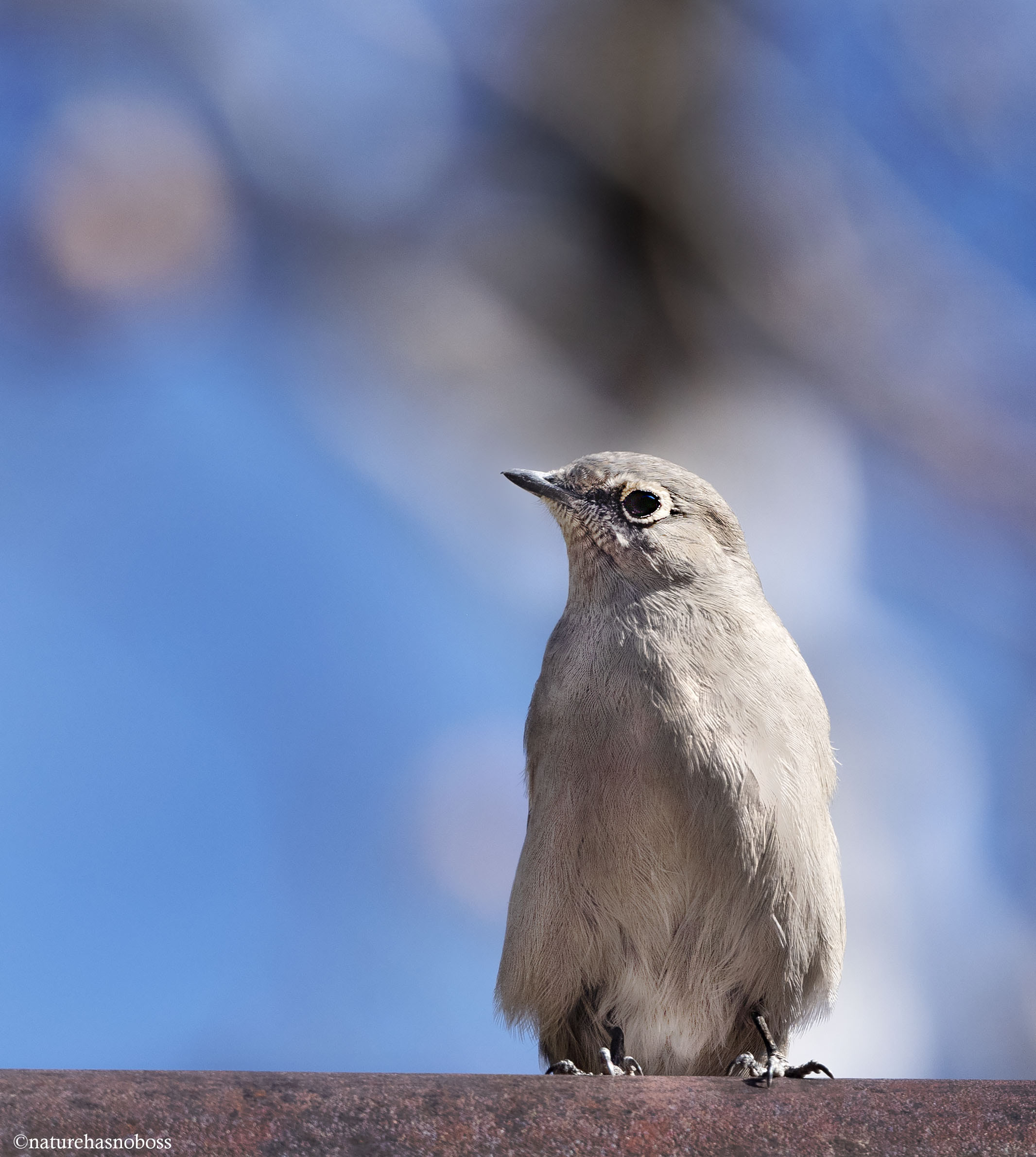
Just about everywhere we have gone this fall we have a the Townsend’s Solitaire as our companion. Wether sitting in coniferous tree-tops belting out their wonderful and at times complex tunes, perched in a Juniper bush giving a call claiming their domain or just sitting silently giving us the eye we have enjoyed having them around.
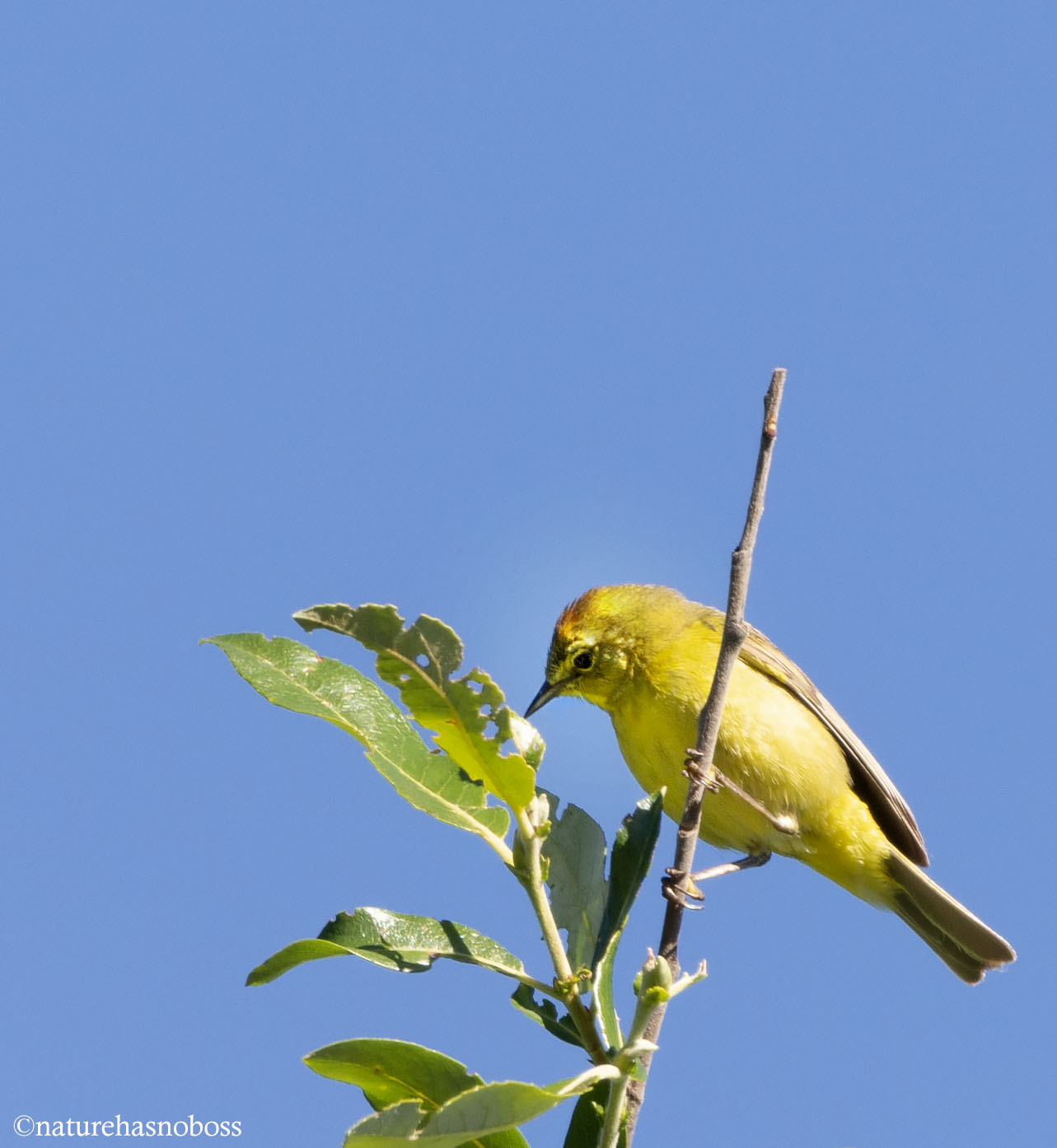
An Orange-crowned Warbler with orange crown actually showing forages high up in a stand of shrubs with nothing but a blue sky behind.
These grayish to olive-green birds vary in color geographically and have few bold markings. There’s rarely any sign of an orange crown, which is usually only visible when the bird is excited and raises its head feathers. They might have you scratching your head until you recognize their slim shape, sharply pointed bill, and warmer yellow under the tail.
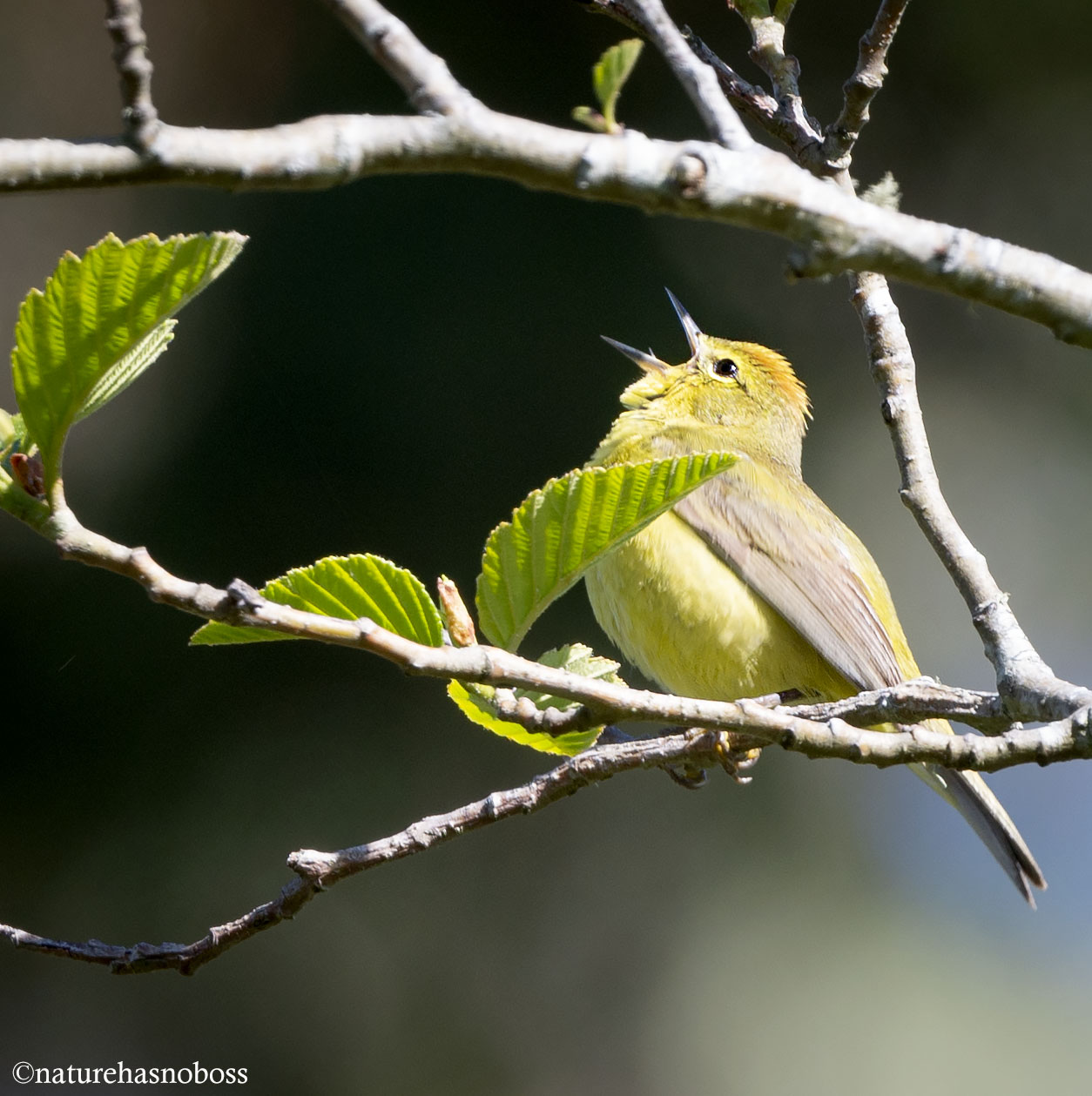
An excited male sang this morning moving from shrub to shrub and tree to tree as we intently listen and tried to learn his song.
The male Orange-crowned Warbler’s song is far more variable than that of other wood warblers—so much so that the males can be told apart by their distinctive song patterns. Breeding males often form “song neighborhoods,” where two to six birds in adjacent territories learn and mimic each other’s songs. These “neighborhood” songs can persist for years.
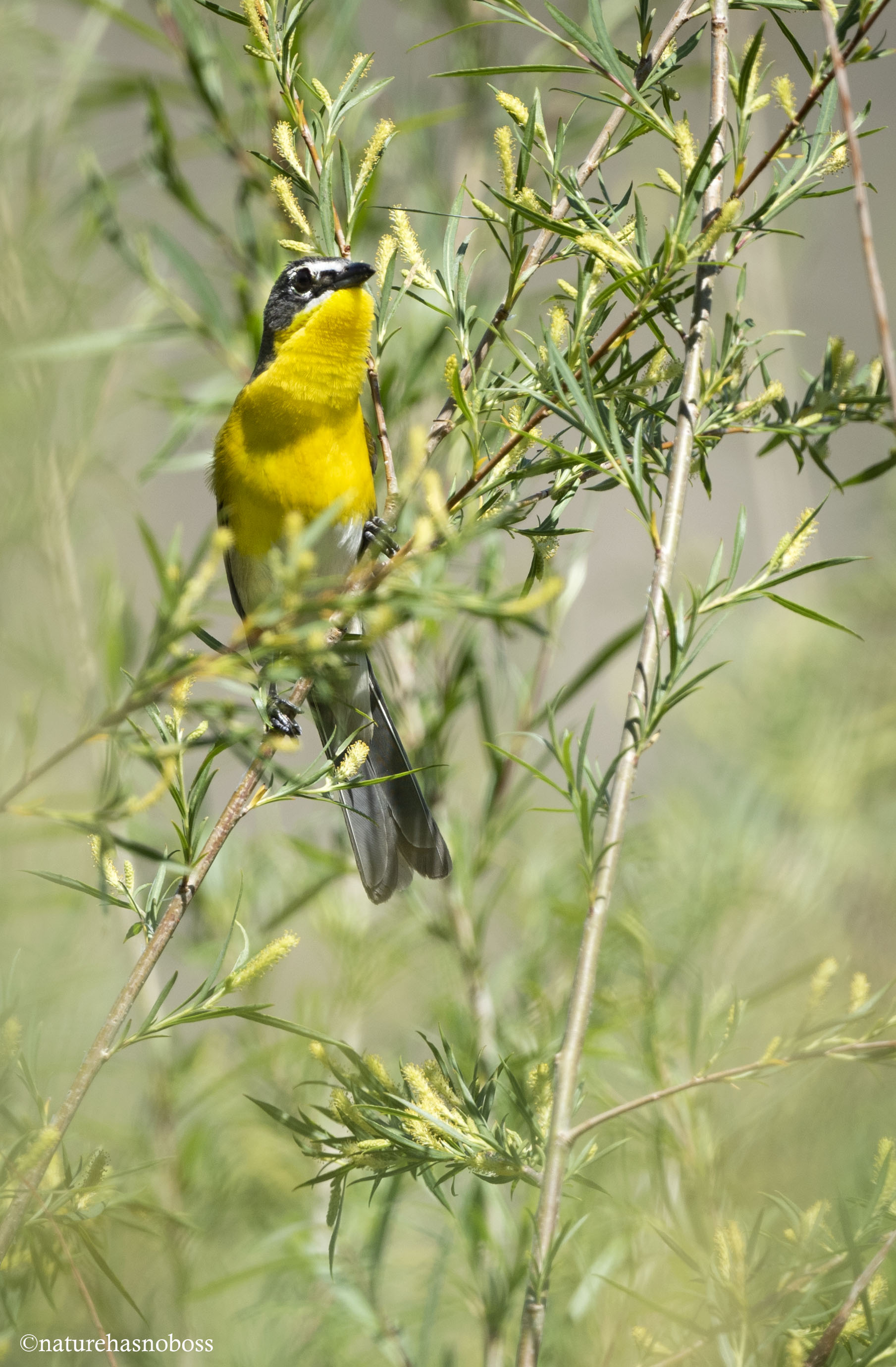
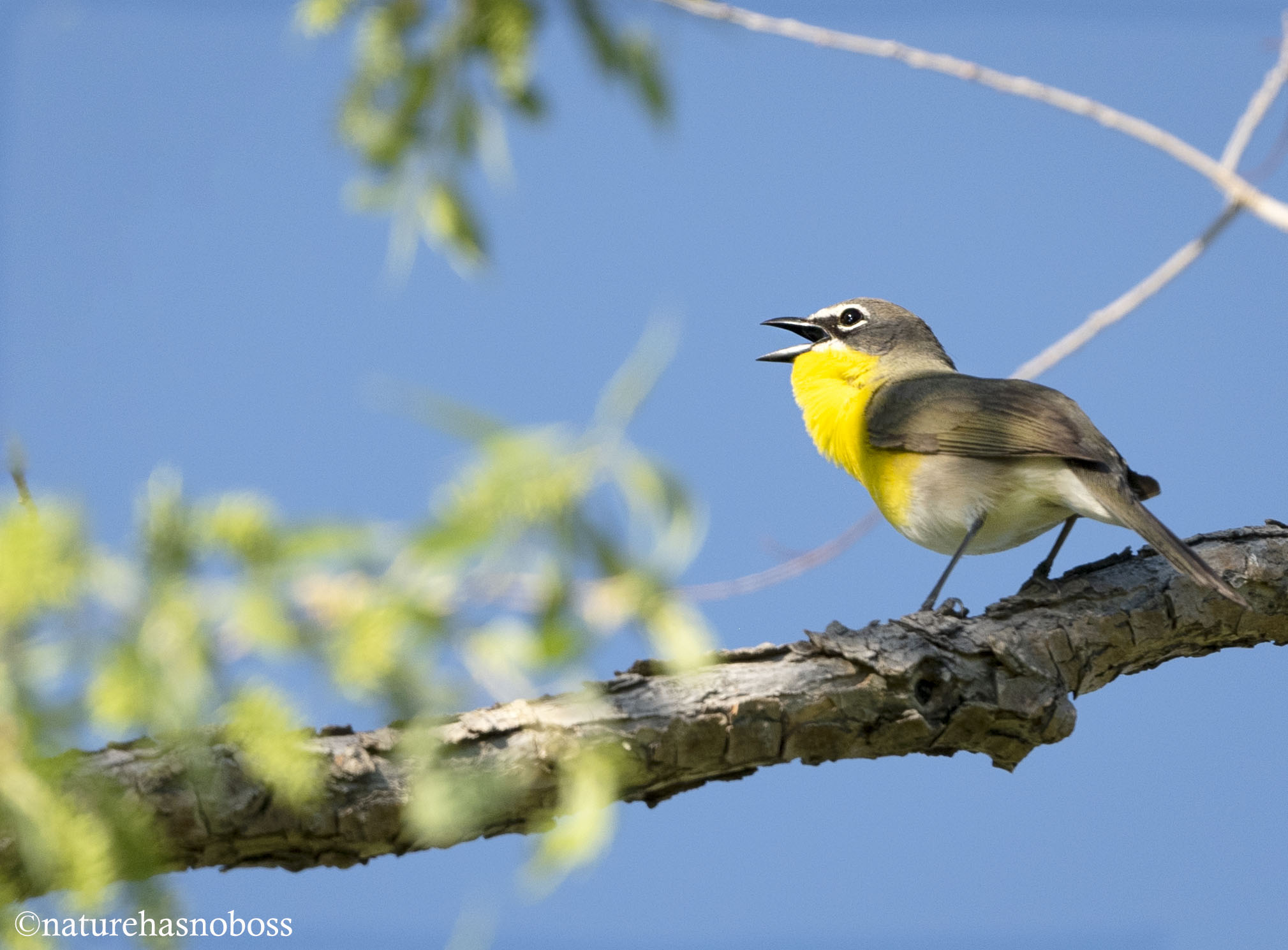
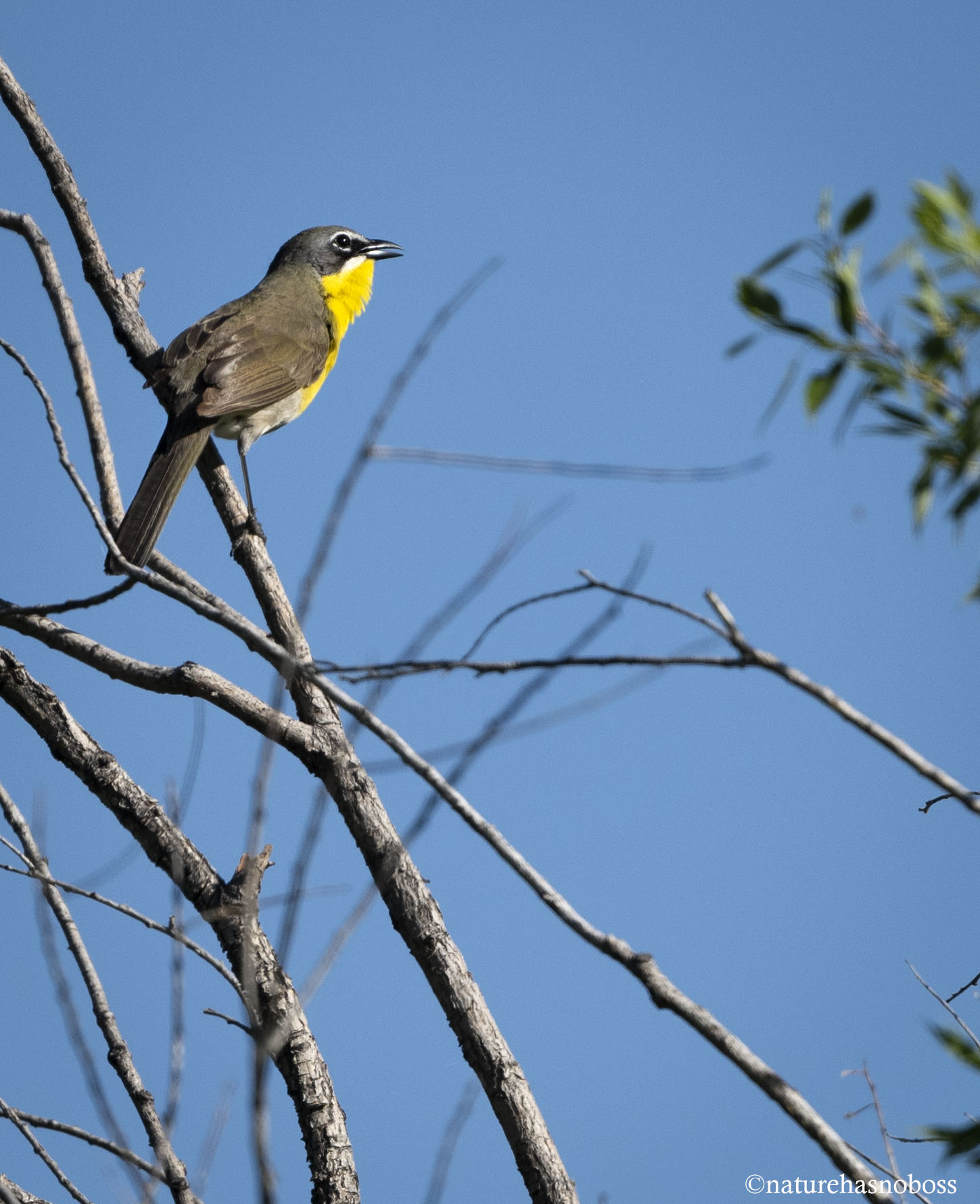
There is a unique pleasure associated with spending a night camping next to the homes of a couple a male Yellow-breasted Chats during the spring courting season. Prolific singers in early morning and evening light but it was the all night singing during the breeding season that made for a memorable experience.
Males have a large repertoire of songs made up of whistles, cackles, mews, catcalls, caw notes, chuckles, rattles, squawks, gurgles, and pops, which they repeat and string together with great variety.
That all night singing had us thinking it was dawn yet it was only 1 a.m. and wondering wonder….is this a dream?
The Yellow Breasted Chat is classified as a warbler but a warbler head and tails above other warblers in size as well as having a somewhat distinct shape A large head and neck as well as a long tail really make the Chat a very unique looking bird.
Yes, an evening spent in chat is an evening well spent.
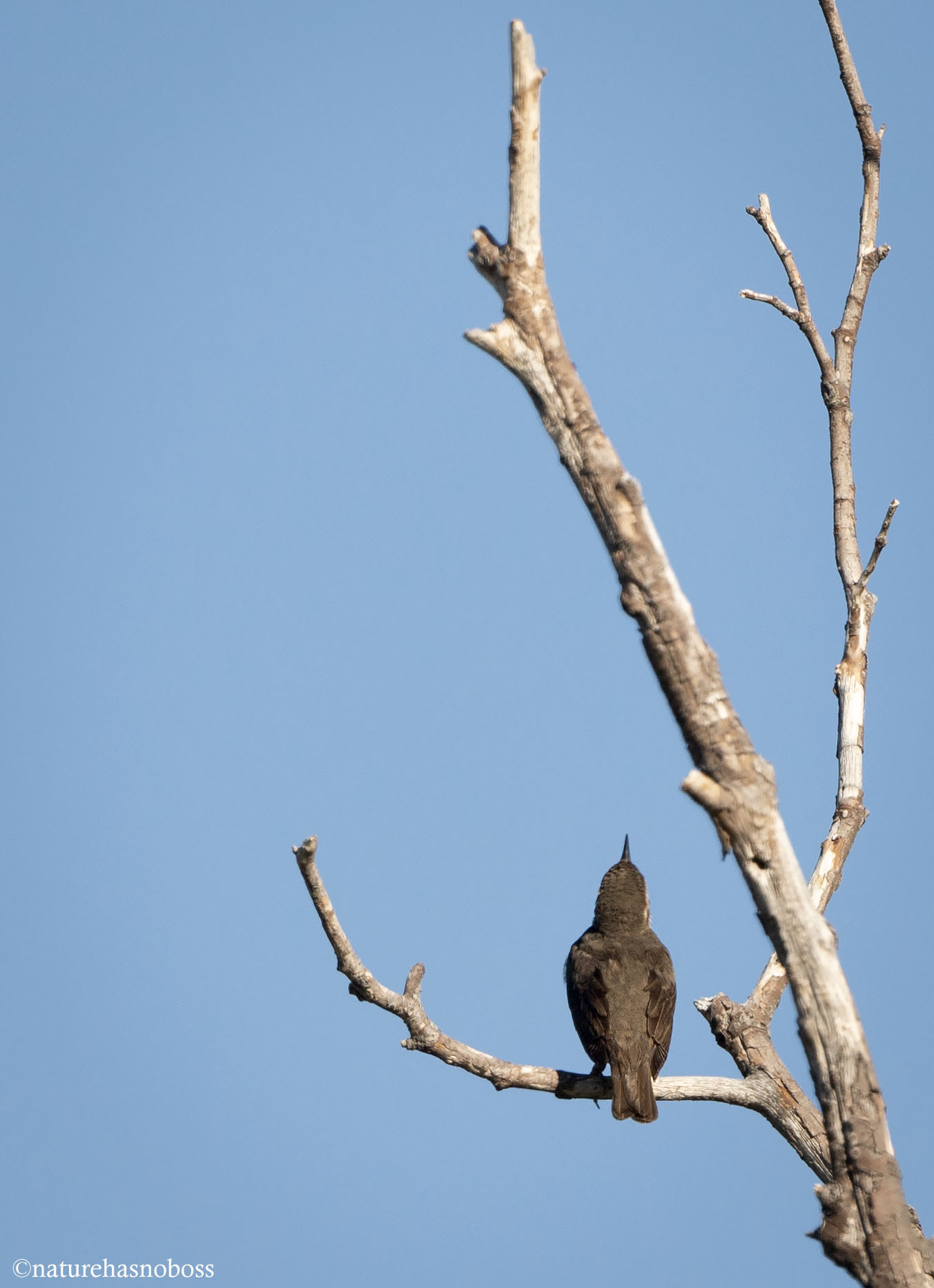
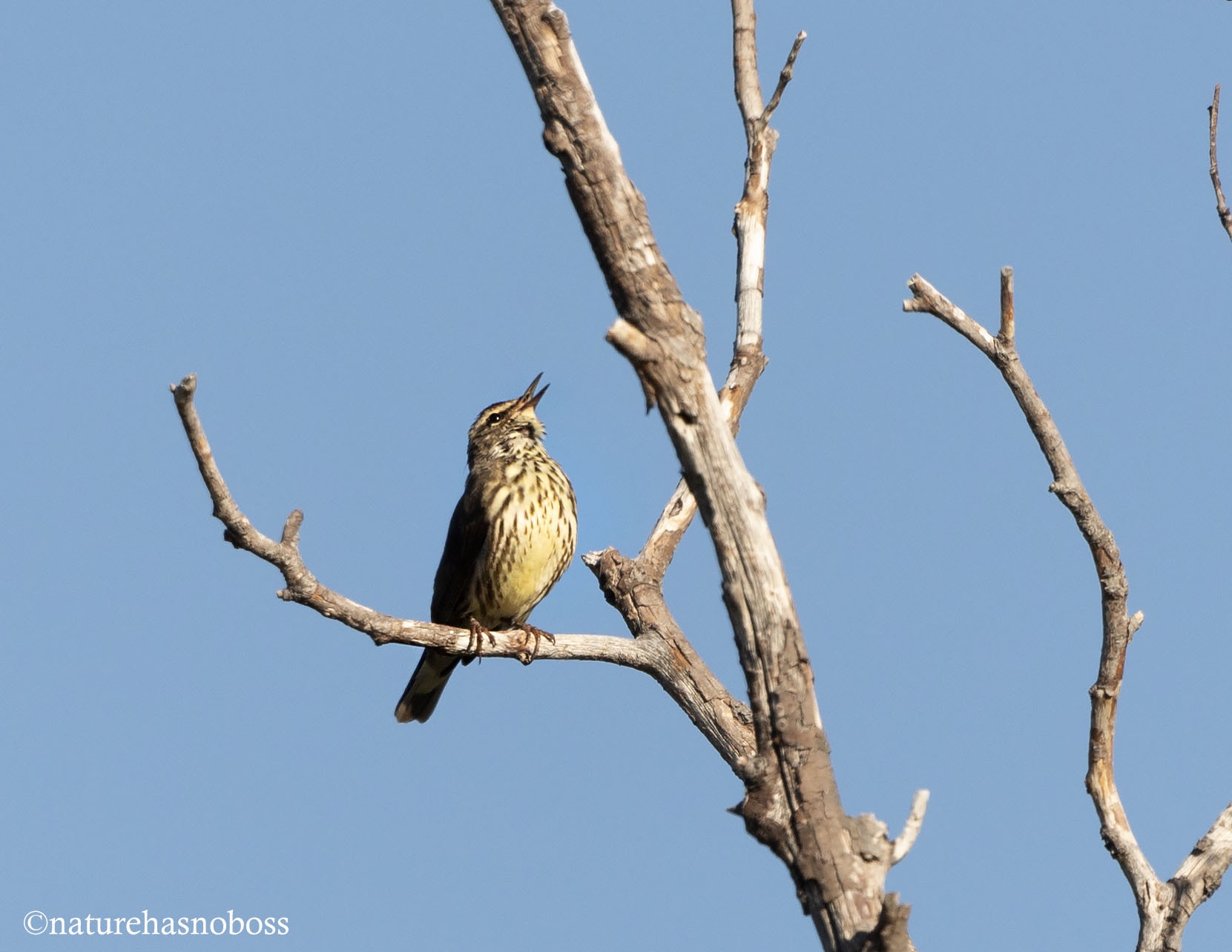
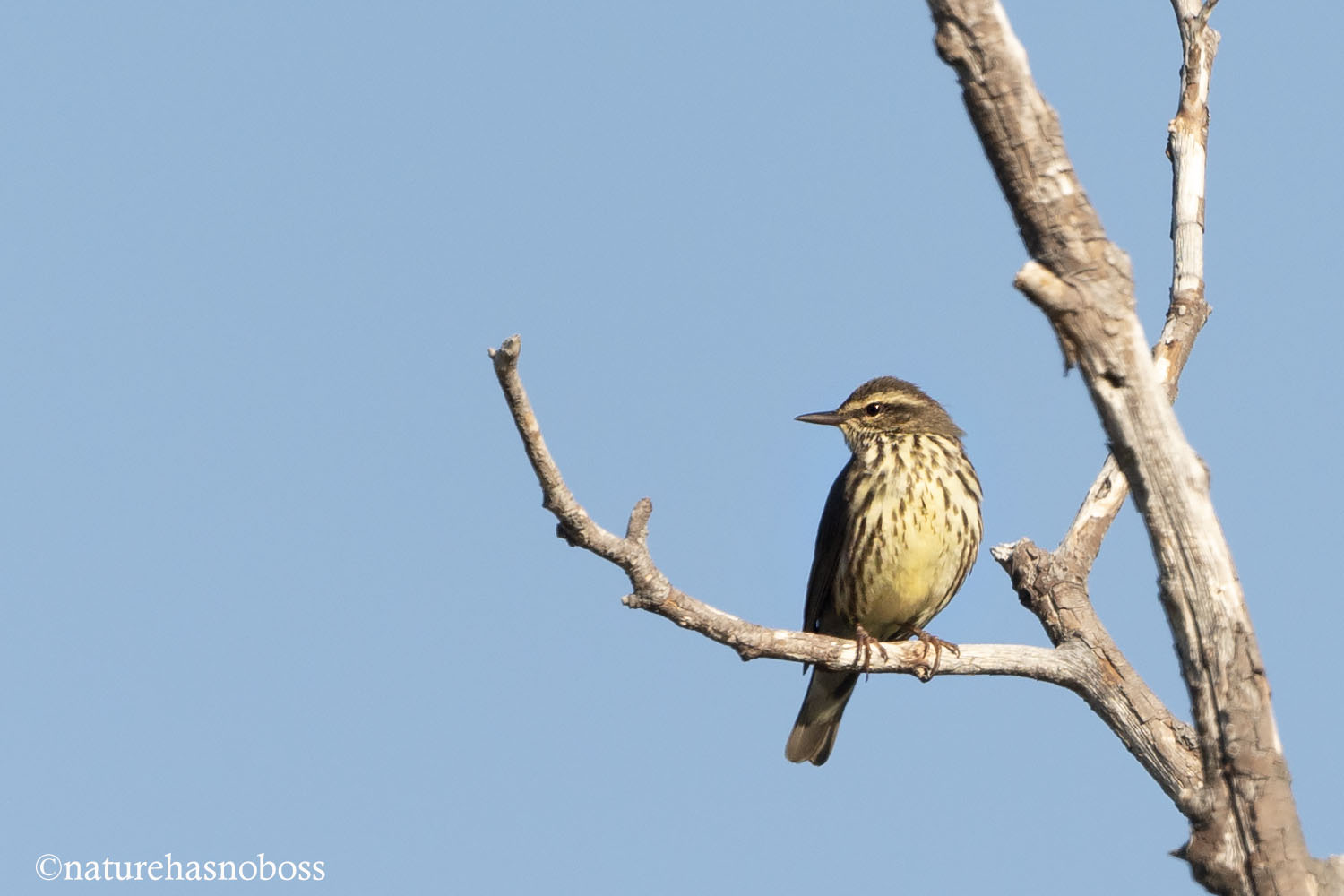
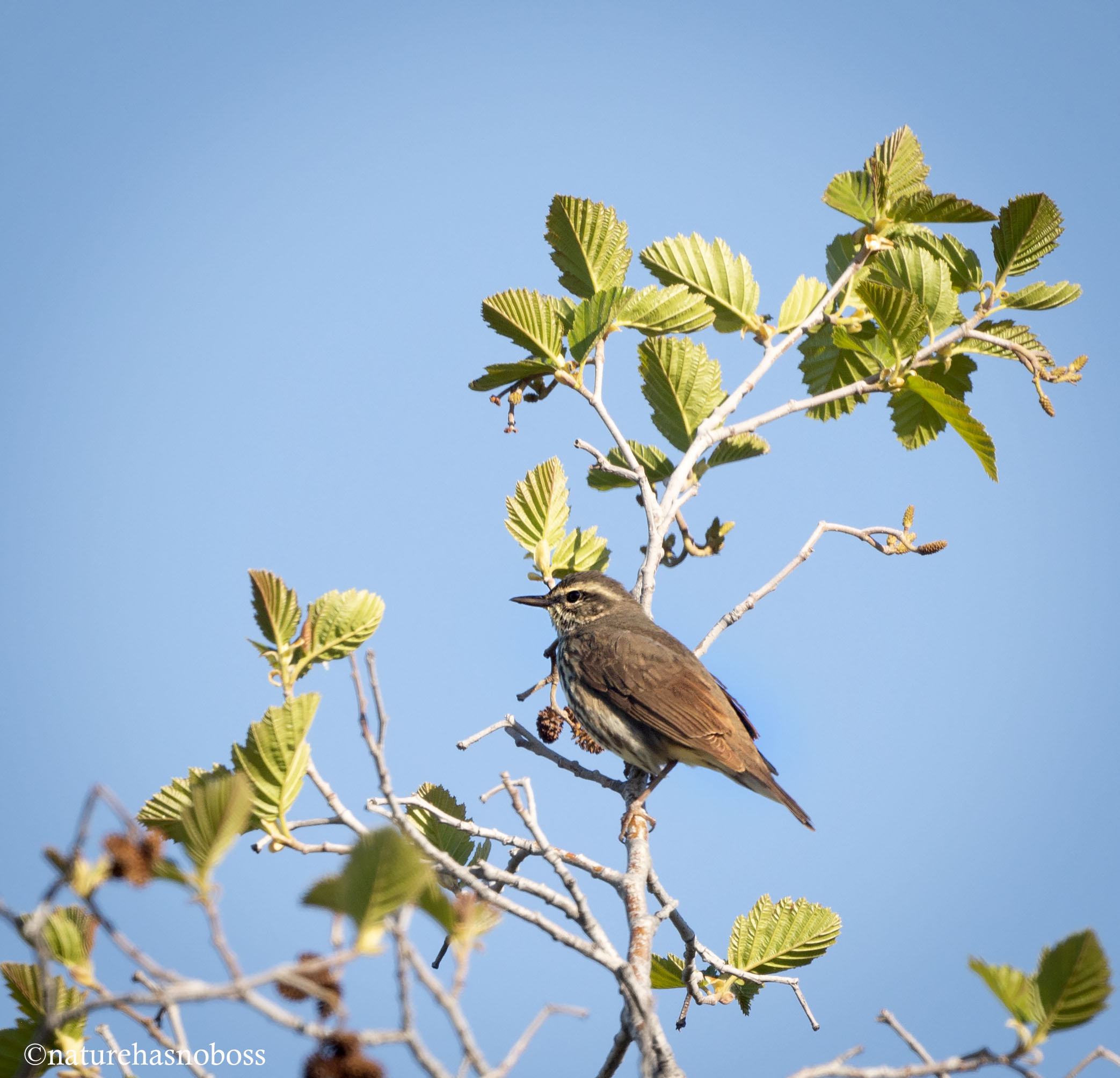
Although he had is back to us we could hear this Northern Waterthrushserenading the females across the creek from a fair distance as we walked through our small wetlands area one morning.
“The Northern Waterthrush is often an unseen singer whose rich, sweet whistles lure listeners into its attractive habitats, the wooded swamps and bogs of northern North America. These streaky brown songbirds lack the bold colors of many other warblers and don’t forage in forest canopies. They forage at the water’s edge in bogs and still water, where they hunt aquatic insects and small salamanders, all the while bobbing the rear of the body, much like a Solitary Sandpiper, another denizen of shady swamps.”1
This individual had a very sweet song and continued singing off and on for 15-20 minutes while perched up high along the creek.
After about 20 minutes perched in one location they moved nearby for one final look.
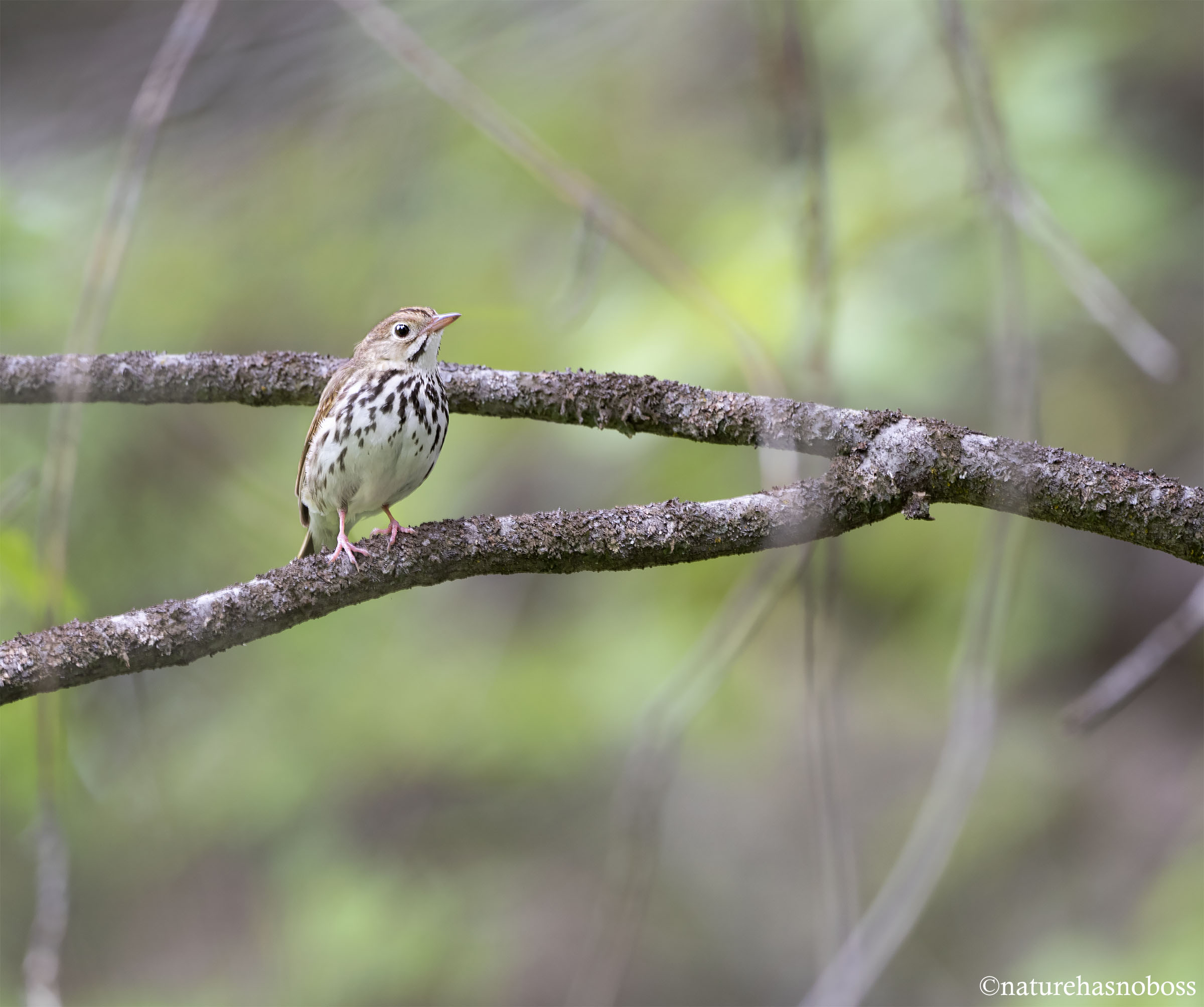
In the forest just up the road we have heard the calling of an Ovenbird for the last two summers without successfully seeing one. Their frequent calling had us looking in trees and forest floor but to no avail. This year we have gotten lucky and finally seen and actually gotten of a photograph of these little forest swelling warblers. Who would think such a little bird, and in this case can sweet looking bird, could make such a racket.
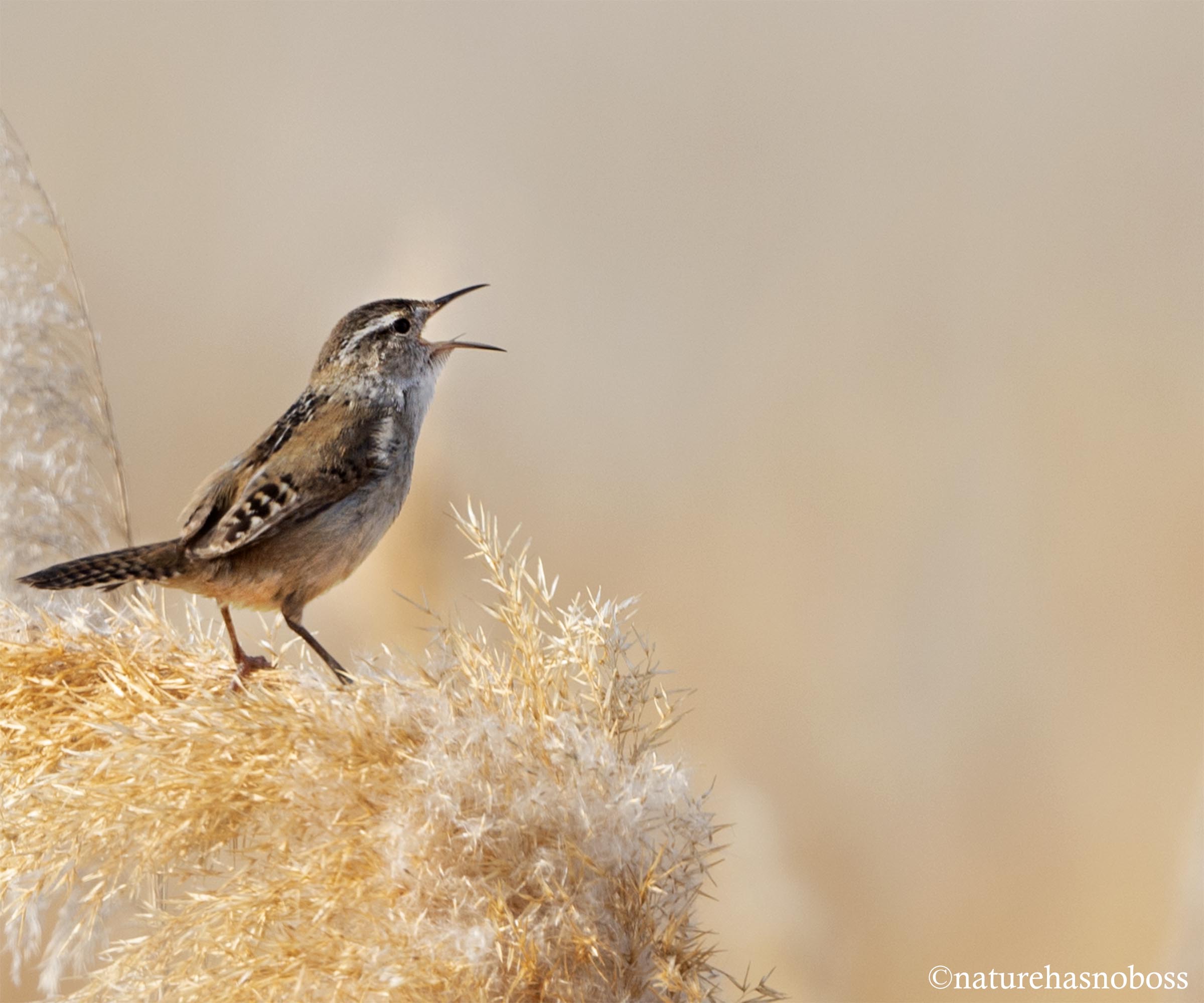
One of our favorite experiences when walking along the edge of a marsh is listening to the wonderful call of the Marsh Wren. Listening to maybe a half dozen or more at times belting out a little tune. Some days the wren stay hidden in the cattails and marsh grasses and that’s ok, but every once in awhile, they pop out in full view and then let the show begin.
An immature White-crowned Sparrow soaking in some of the golden morning sunlight.
We love listening to adults sing their songs each spring and according to the All About Birds website:
A young male White-crowned Sparrow learns the basics of the song it will sing as an adult during the first two or three months of its life. It does not learn directly from its father, but rather from the generalized song environment of its natal neighborhood.bird
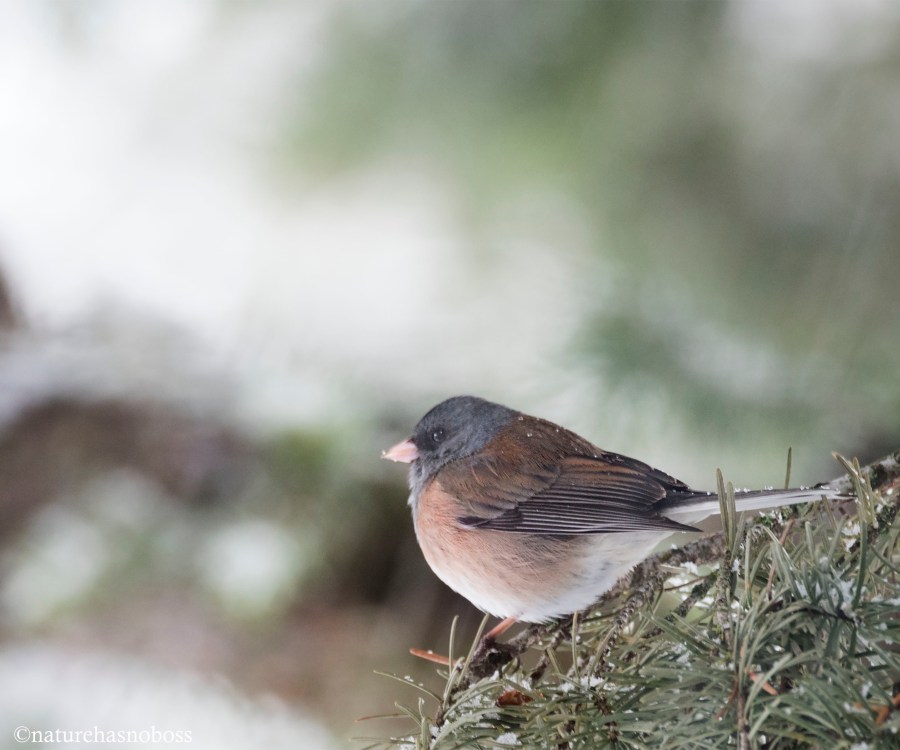
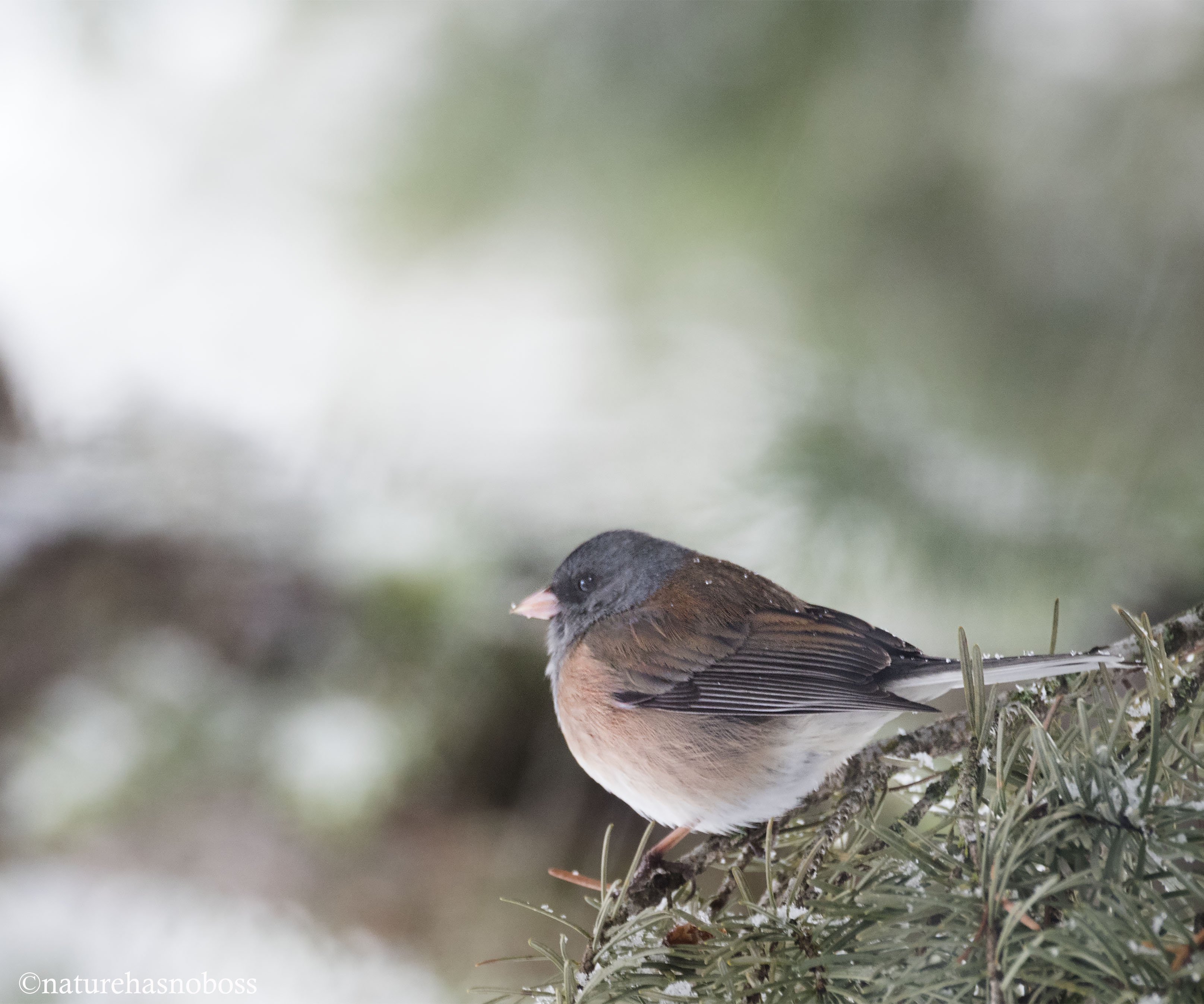
Absent from the area most of the winter the Dark Eyed Juncos have returned. First one, then two now quite a few. Hanging out in the trees on a typical spring day with some snow, some sunset mostly in-between. Soon we will hear the calling from the tree tops and the juniper bushes nearby. Another wonderful sign spring is on it’s way.
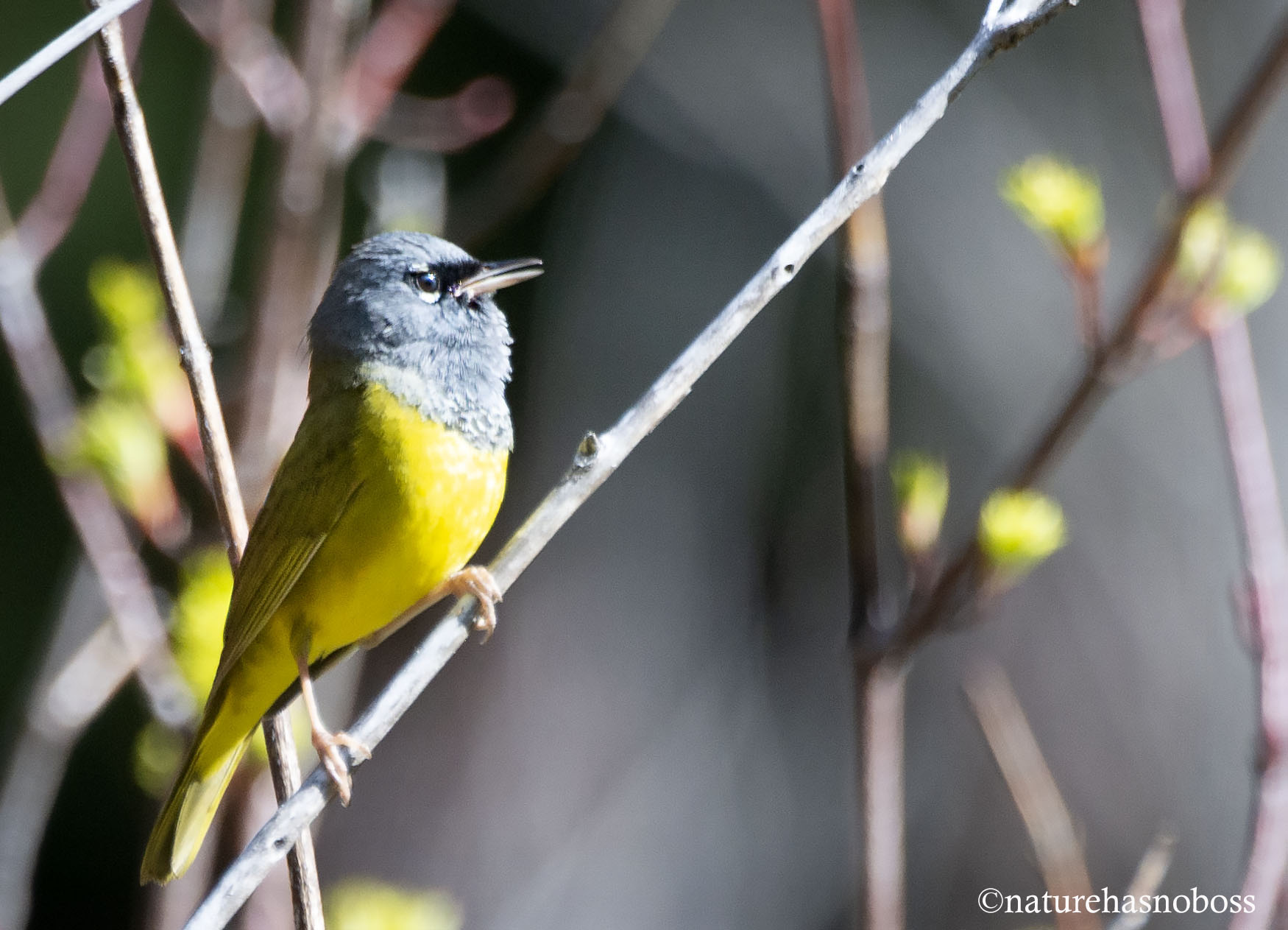
A male MacGillivray’s warbler sitting tall and singing in the morning light. This guy reminded me of a proud male lion that morning with his slate-gray hood and proud posture.



 nature has no boss
You must be logged in to post a comment.