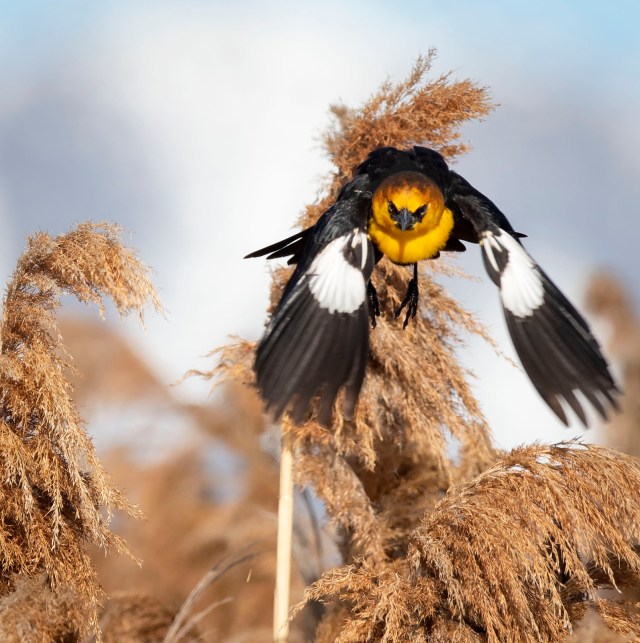
Good things are heading your way. In this case it’s a Yellow Headed Blackbird that has returned to the marsh and that means spring is sure to follow.
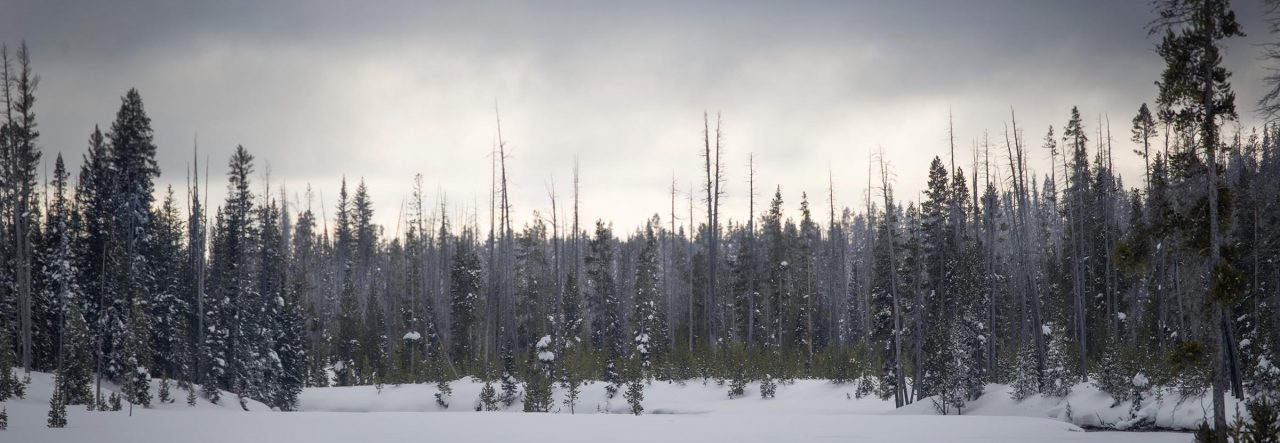
Good things are heading your way. In this case it’s a Yellow Headed Blackbird that has returned to the marsh and that means spring is sure to follow.
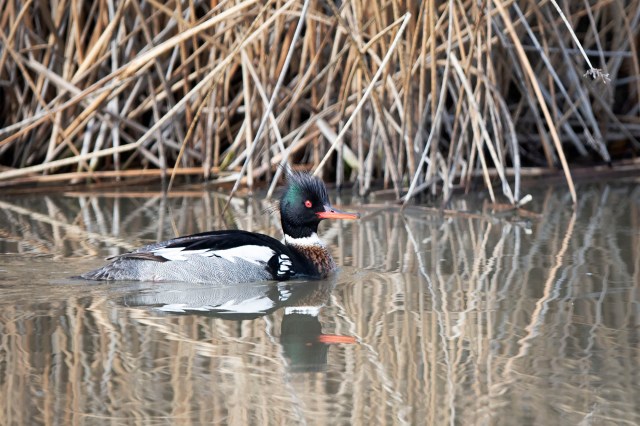
Looking fine as can be in his breeding plumage a male Red-Breasted Merganser swims quietly along in the cattails confidant he will attract a mate.
References:
1. The Cornell Laboratory of Orinthology, All about birds Website, https://www.allaboutbirds.org/guide/Red-breasted_Merganser/lifehistory
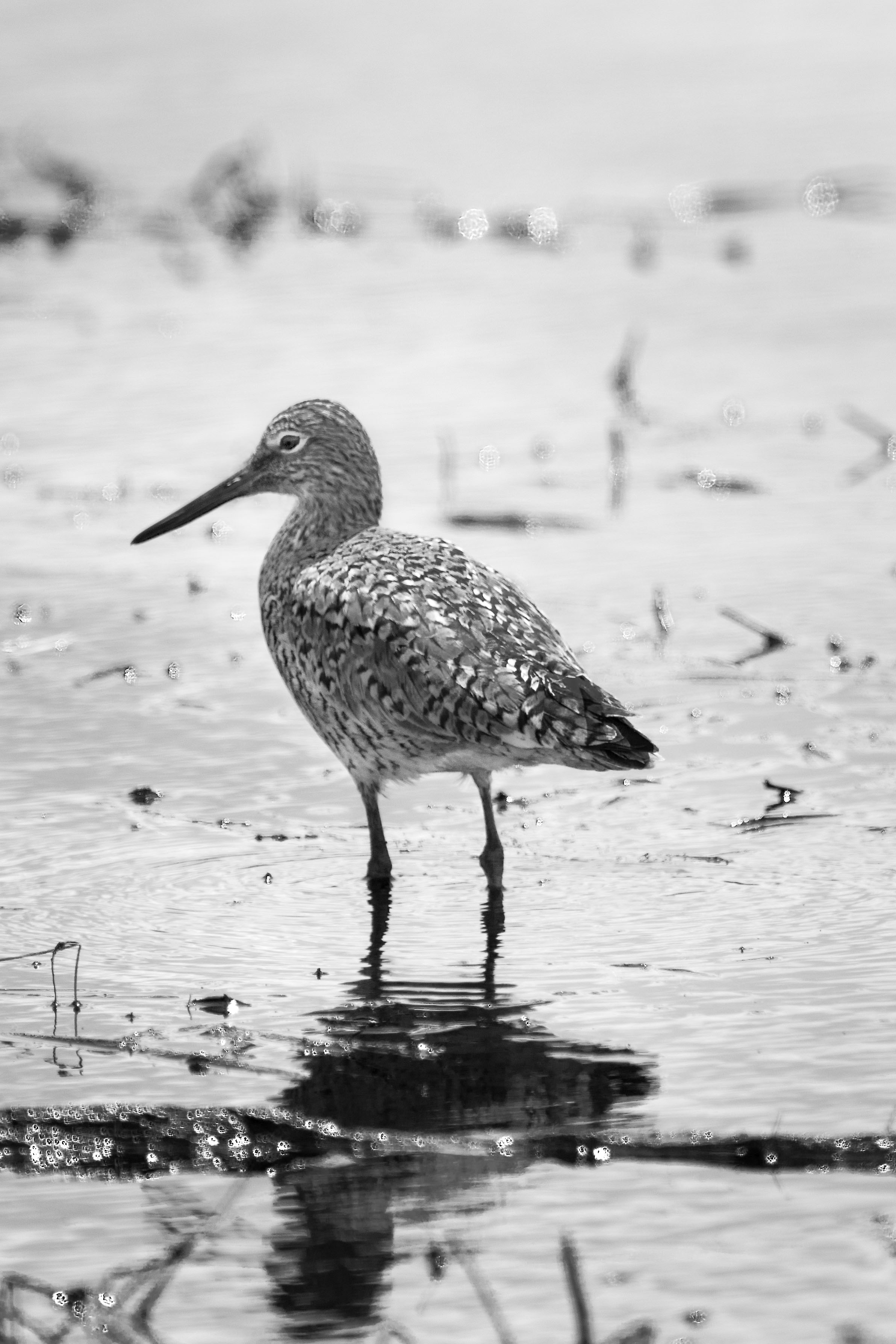
A Willet soaking up the warmth of the sun.
Every day it feels more like spring, yes, winter remains yet it’s grips has lost much strength.
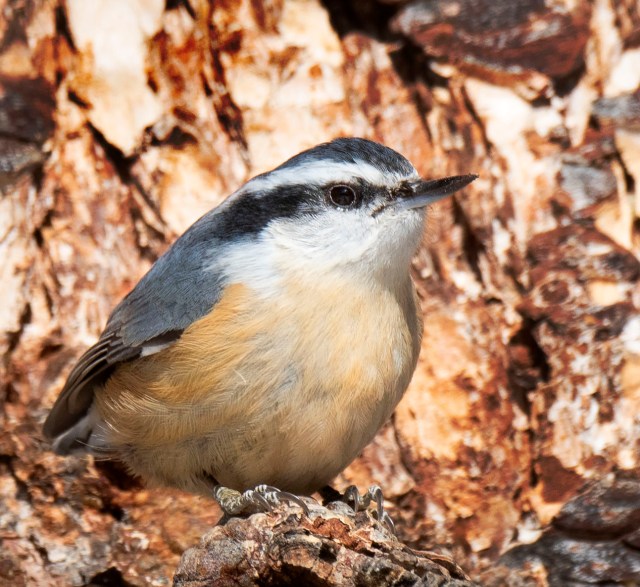
Earlier this week we featured the Mountain Chickadee who by our accounting is the most prevalent species hanging around our neighborhood this winter. A close second, and perhaps on some days the most prevalent species, is the Red-Breasted Nuthatch. Sitting quietly in an old spruce this particular Nuthatch presented us a nice photo opportunity on a warm March afternoon. It won’t be long before they scatter to higher grounds and prepare for breeding season but until then we savor the opportunity to listen to their honk-honk-honk from the trees nearby.
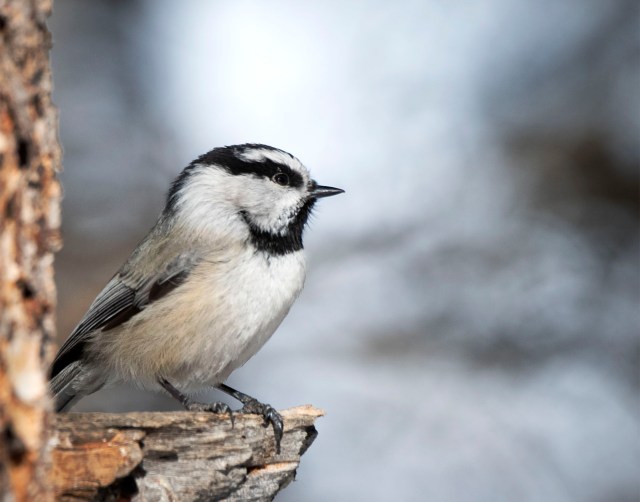
This winter the most numerous bird species hanging around our area is the Mountain Chickadee. They appear to make up the core of mixed flocks roaming the neighborhood and slightly outnumber the Red-Breasted Nuthatches and Black-Capped Chickadees. These guys have a wonderful feisty-spunky-gritty- character that makes them a real treat to have around on a winters day. As spring arrives they will move back up into the hills but for now we are thoroughly enjoying having the around.
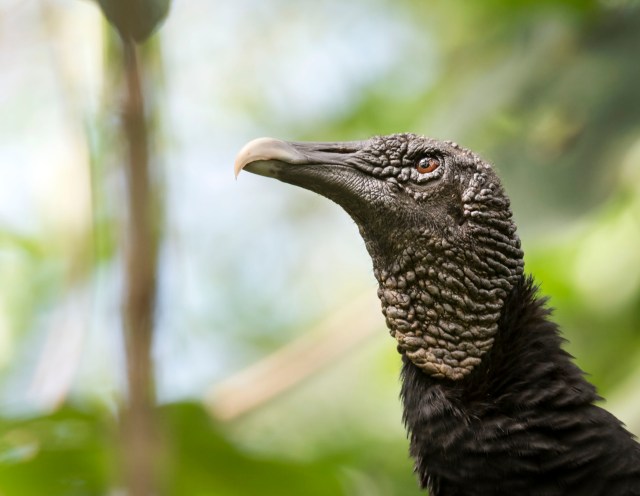
A beautiful Black Vulture presents their profile through a forest clearing. While not a local resident to the western United Staes Black Vultures have been slowly expanding their range and a now a common sight in the East and Southeaster US. Black Vultures are monogamous, staying with their mates for many years, and caring parents who feed thier young for up to 8 months. In addition, vultures contribute a wonderful clean-up service to the ecosystems they inhabit. It was nice to get a close-up view of a bird we usually see soaring on the thermal high above our heads.
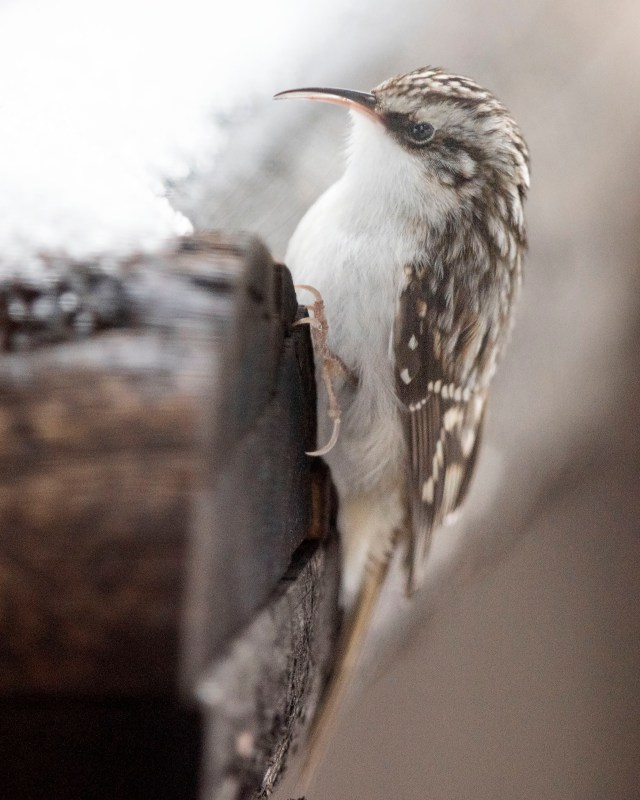
We have been lucky to have two and sometimes even three Brown Creepers hanging around the area this winter. They have been the first to arrive to the trees in the morning steadily working their way up and down the bark of the spruce and pines on their daily quest for sustenance. Tiny birds weighing on average seven grams and at most fine inches in length they are well camouflaged yet their presence looms large and is a welcome sight in the quiet of the winter forest.
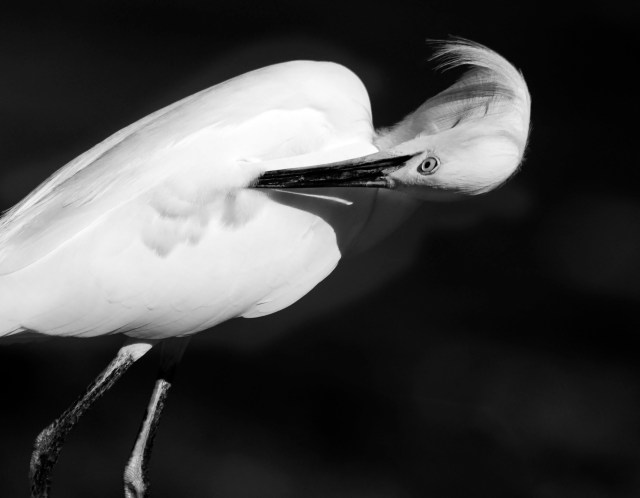
A Snowy Egret for a snowy Monday morning, at least in our little patch of the globe.
While these guys are definitely nowhere close to our area this time of year spring migration is only a month or two away.
The days are getting longer the temperature warming ever so slightly and a snowy Monday will give way to a sunny Tuesday.
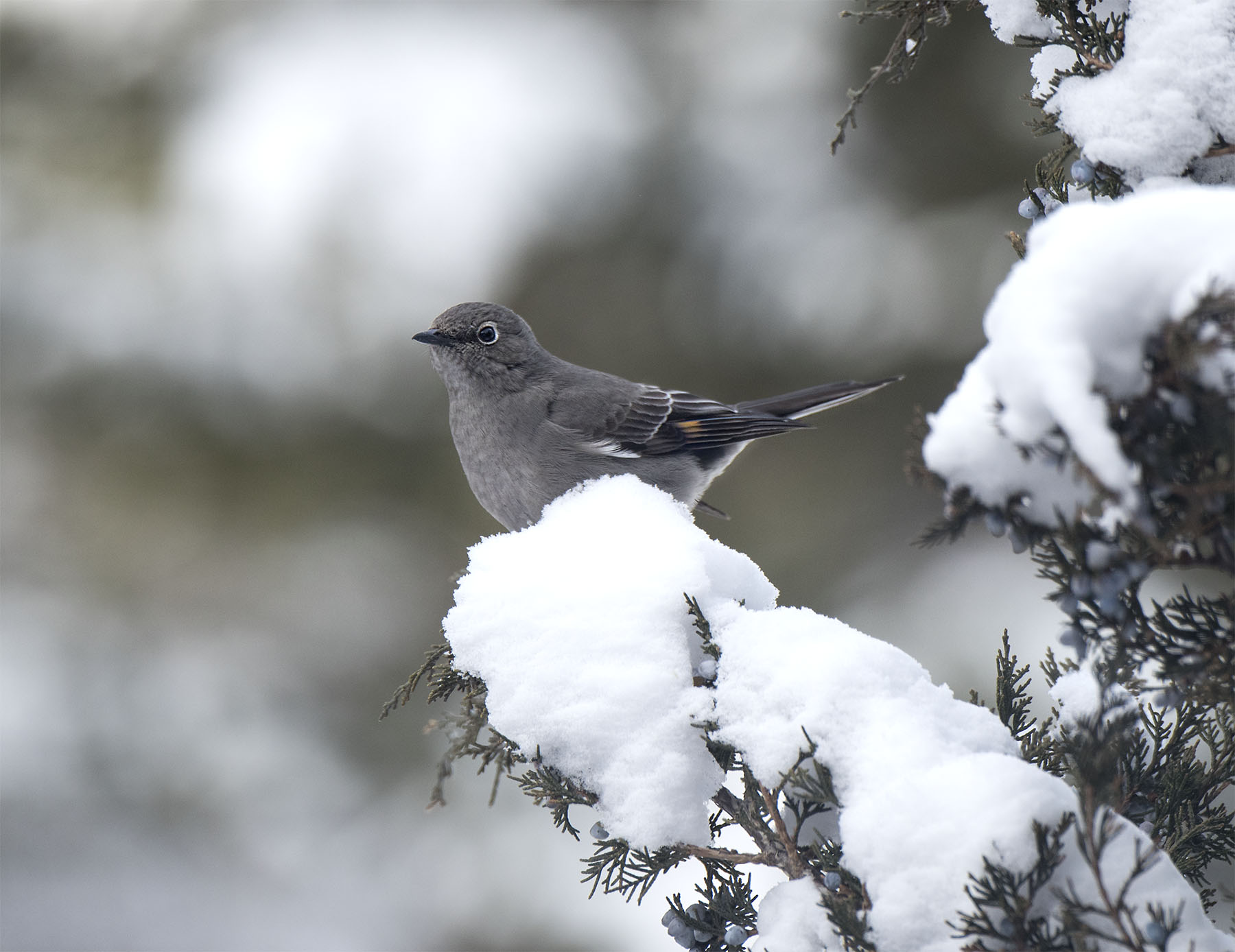
We watched as this Townsend’s Solitaire spent the better part of their day defending and consuming berries on a small patch of juniper trees.
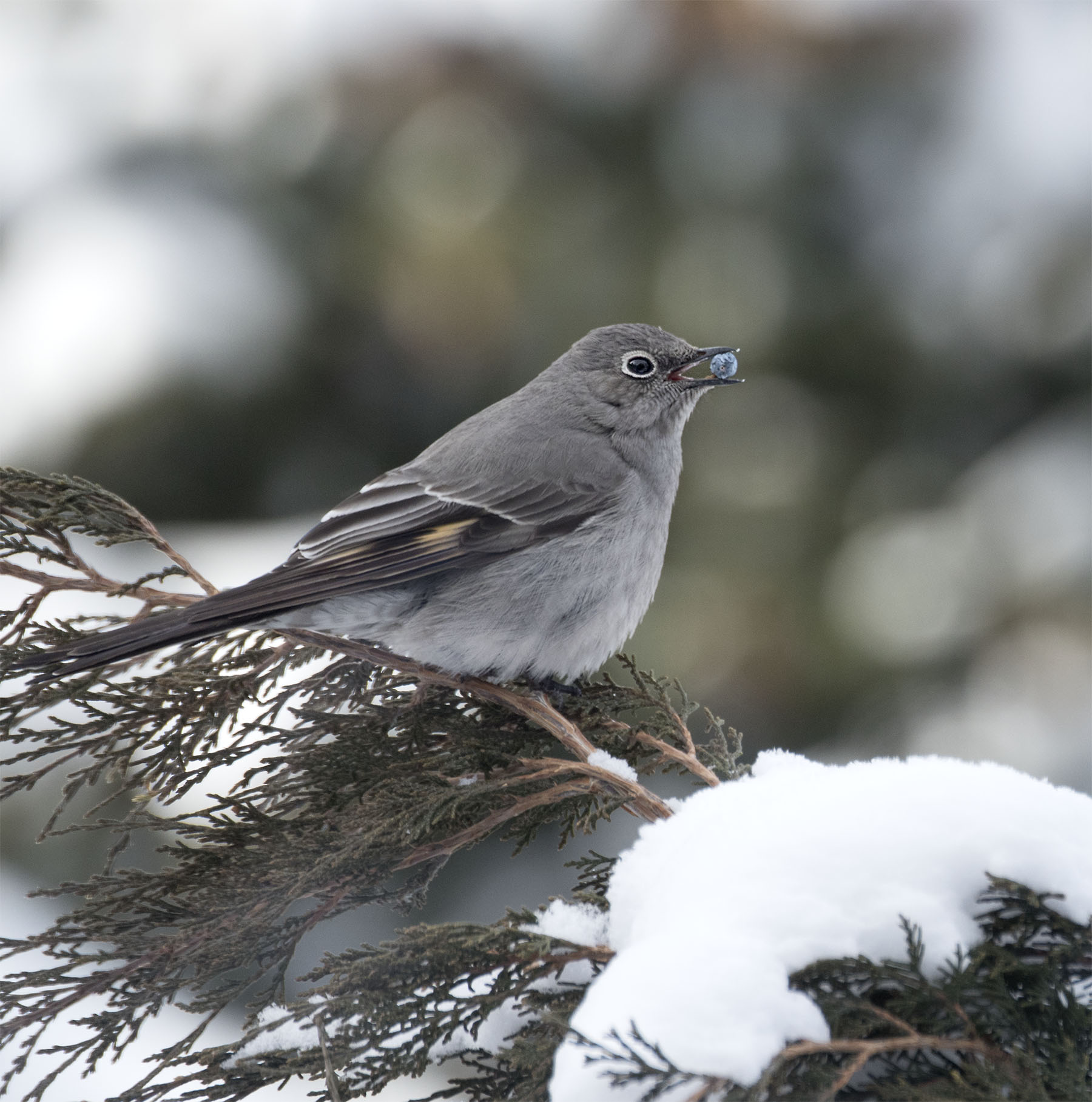
According to the Cornell Lab of Ornithology “During the winter, the male and female are both strongly territorial, defending patches of juniper trees against other solitaires and other birds. They feed largely or even exclusively on the juniper’s ripe, fleshy berries for the entire nonbreeding season.”
That sure appeared to be the case this day as this bird sat watch and every once in awhile darted into the tree and grabbed a berry.
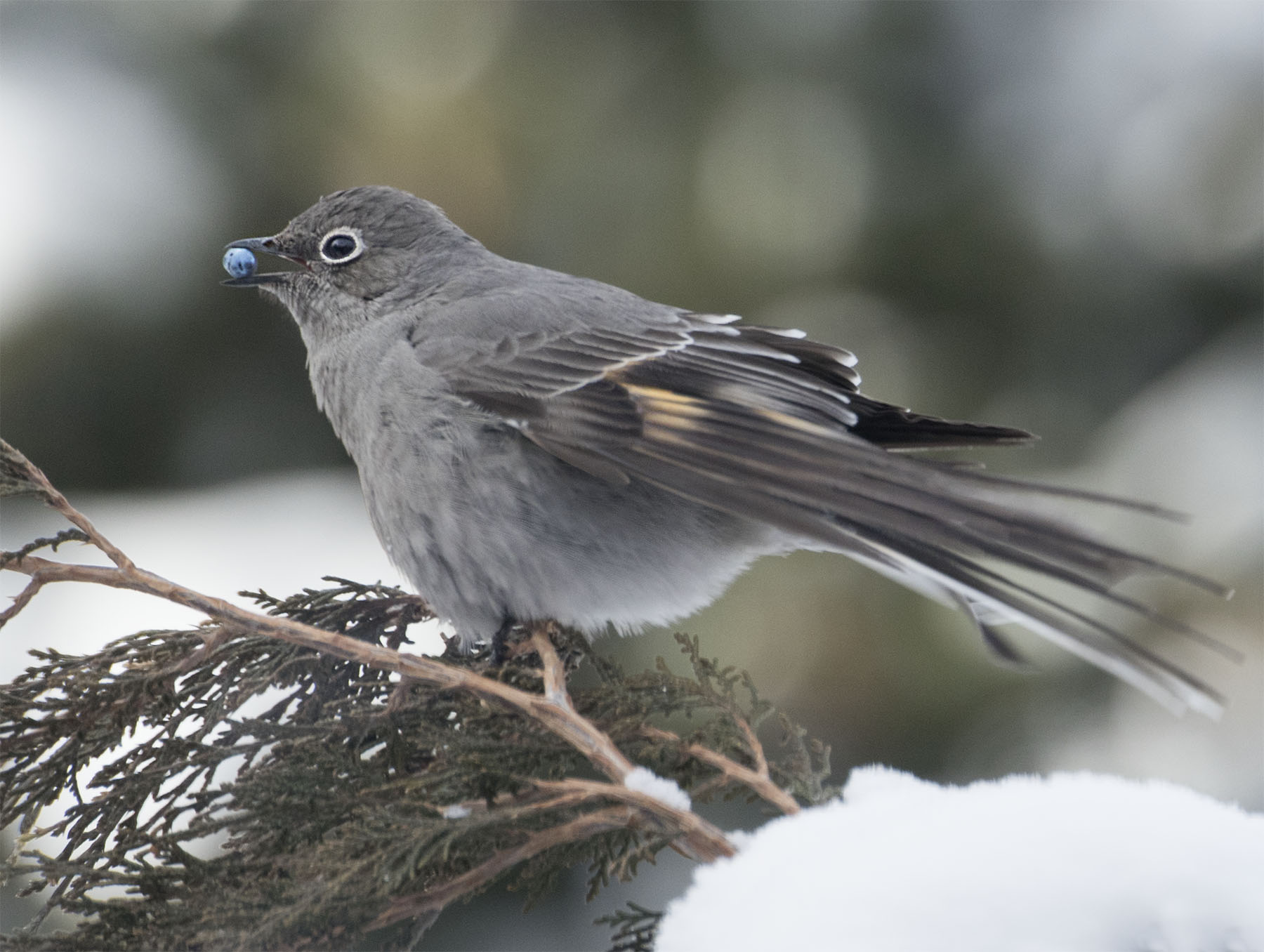
One study suggested a single Solitaire would need to eat between 42,000 and 84,000 juniper berries to survive the winter. I don’t think this small patch contained enough for this bird and sharing would be out of the question.

After a quick bite they were back perched and on the lookout. It has been observed that violent fights may break out in defense of the winter territory, because owners of large, berry-rich territories survive the winter at higher rates than solitaires on small territories with few berries. This day all was calm and the owner of this territory had it all to themselves.
To find out more about these inconspicuous but fascinating birds:
https://www.allaboutbirds.org/guide/Townsends_Solitaire/overview
http://www.audubon.org/field-guide/bird/townsends-solitaire
https://neotropical.birds.cornell.edu/Species-Account/nb/species/towsol/overview
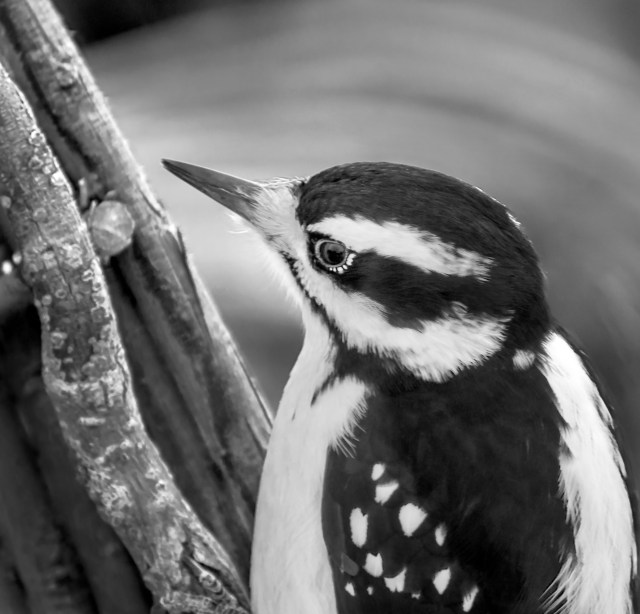
Time flies especially and especially on the weekends with the speed of a woodpecker pecking.
Well, you know what I mean.
Happy Monday and have a great week.
 nature has no boss
You must be logged in to post a comment.