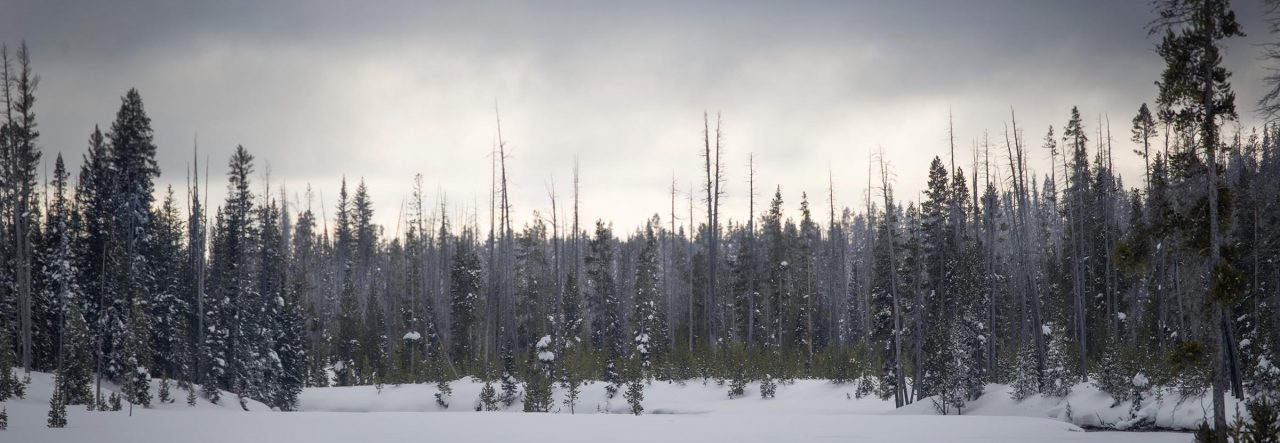

One of our frequent winter visitors is the Townsends Solitaire. Usually sitting high up on a tree or on top of a juniper bush singing either a wonderful melodious song or calling out a high pitched tew-tew-tew.
Tag: natural history
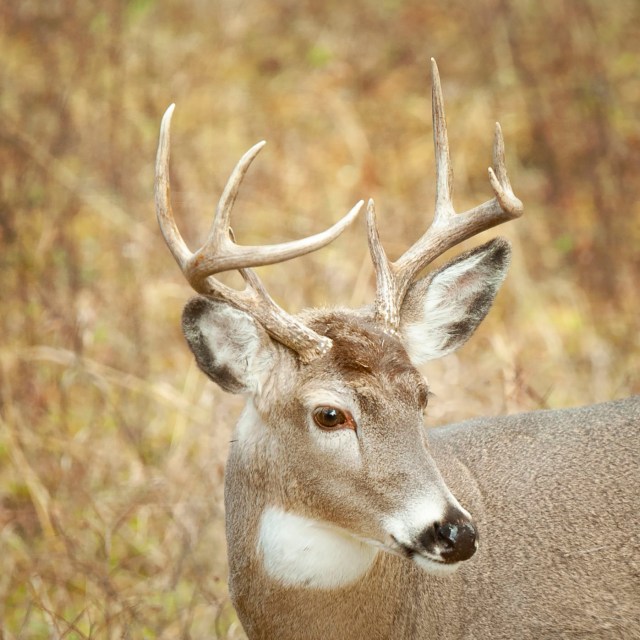
White Tailed Buck
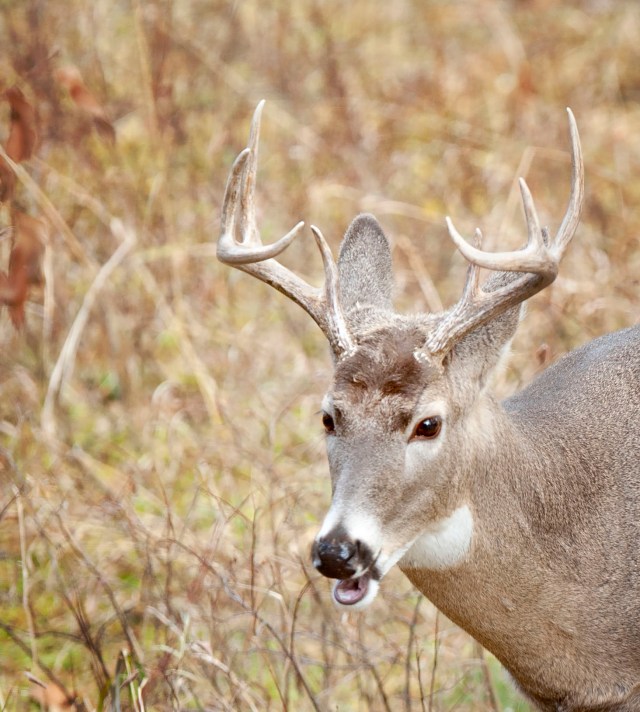
A white tailed buck slowly moves slowly through the fields of dried grass foraging on a few green shoots and the remains of a rocky mountain bee plant.
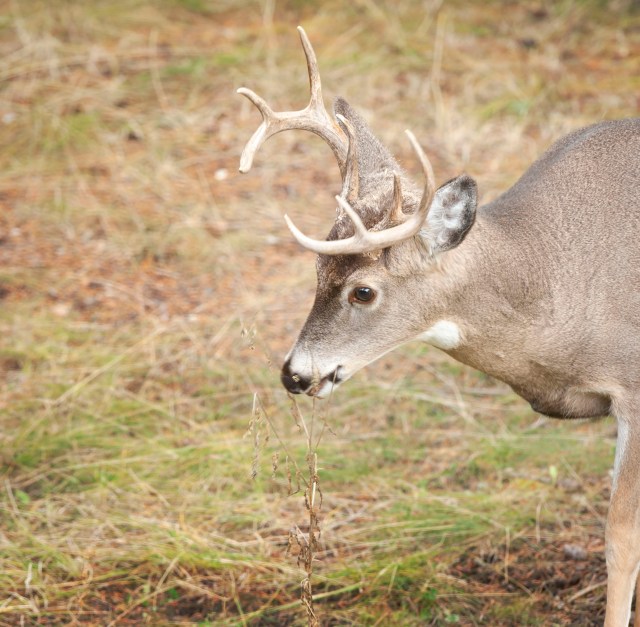
A regal fellow with head held high.
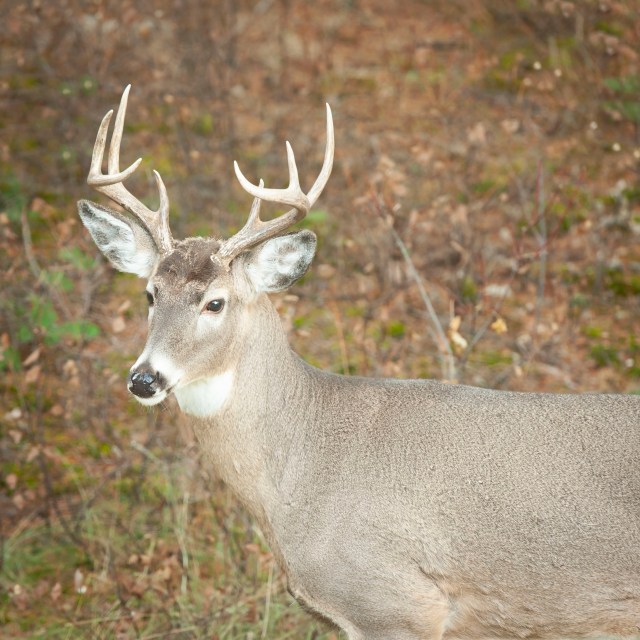
And a wonderful sight that brought some light to a cloudy gray afternoon.
Wishing you a wonderful weekend.
Handsome fellow
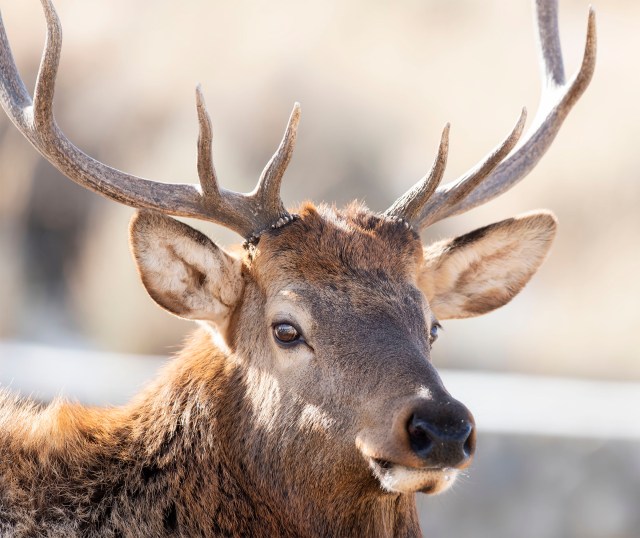
Enjoying a bit of afternoon sunlight a Bull Elk wandered slowly by.
New Discoveries
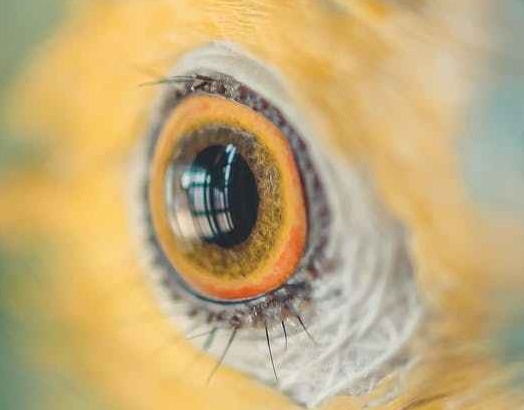
First sighted by birders in the lowland forests of Borneo over a decade ago the Spectacled Flowerpecker has now been studied and classified as a new species. The species was studied by Chris Milensky and Jacob Saucier from the Smithsonian’s National Museum of Natural History while conducting a bird diversity survey. A specimen was captured in the groups mistnet enabling the scientists to collect a DNA sample and confirm that the bird is genetically distant from other known species of flowerpeckers. It is the first new bird species to be found in Borneo for 100 years and a reminder that there are still discoveries to be made.
A quote from Milensky is also a reminder that while there are indeed innumerable scientific discoveries to be made what enables these discoveries is intact habitat for species to exist.
“the discovery of the Spectacled Flowerpecker reflects the boundless biodiversity of the Bornean forests. “Birds are pretty well-studied compared to other organisms, so whenever you find a new bird, you realize just how little you know. Who knows how many insects and invertebrates and other things are still left to be discovered in these forests?” he says. “There are so many other organisms out there that we certainly don’t even know about, that really do require habitat preservation.”
References:
1. Jacob R. Saucier, Christopher M. Milensky, Marcos A. Caraballo-Ortiz, Roslina Ragai, N. Faridah Dahlan, David P. Edwards. A distinctive new species of flowerpecker (Passeriformes: Dicaeidae) from Borneo. Zootaxa, 2019; 4686 (4): 451 DOI: 10.11646/zootaxa.4686.4.1
3.https://www.sciencedaily.com/releases/2019/10/191017141049.htm
Stellar’s Jay: Cyanocitta stelleri
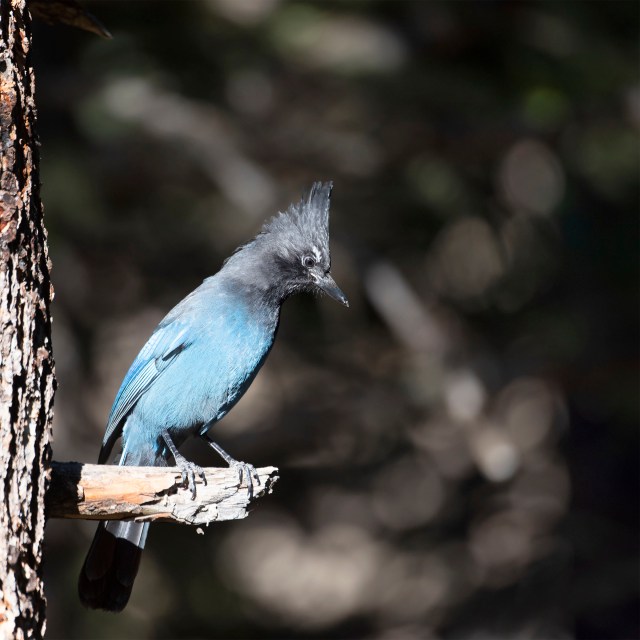
Always Quick to disappear into the darkness of the canopy of spruce trees nearby this Stellar’s Jay sat for just a short while in the rays of the afternoon sun exposing their brilliant blue feathers and wonderful black crest. While their calls may be harsh and somewhat scolding in nature they are a pleasure to see adding a big splash of color to brighten the day.
Youngster
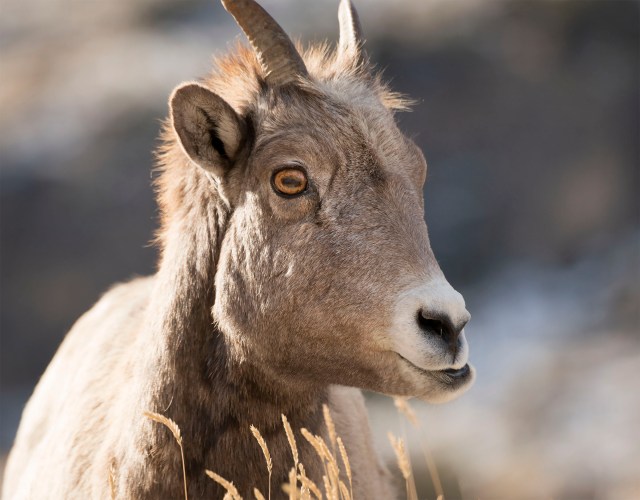
Hitting that awkward teenage stage even happens to Bighorn Sheep.
Swimming through air
An interesting new study by V. B. Baliga, I. Szabo, D. L. Altshuler entitled Range of motion in the avian wing is strongly associated with flight behavior and body mass suggests that rather than the shape of a birds wing per se it is the range of motion in the elbow and wrist joints that determine how a bird swims though the air. Some birds glide smoothly like a bald eagle while other can hover like a hummingbird and this paper suggest range of motion in the joint is the key. A interesting read for those who are interested both in biomechanics and evolutionary biology.


You can find a short summary in Science Daily here.
Little Bear
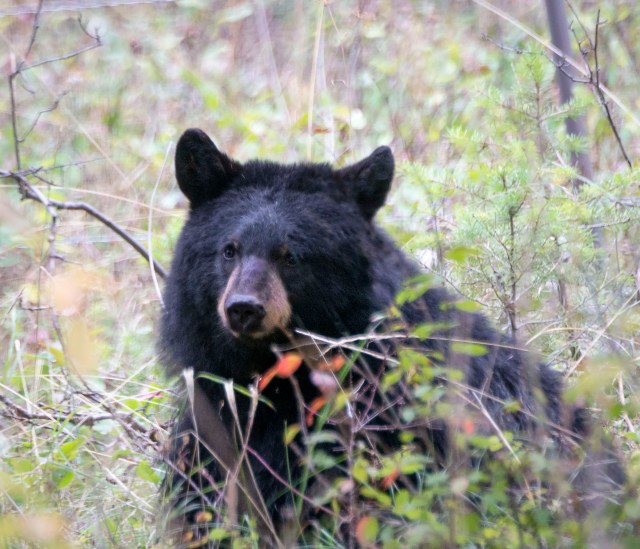
We watched as this little Black bear foraged through the forest nimbley picking Oregon Grape Berries. We did not know Bears ate these little berries but given most of the Choke Cheery bushes had been picked clean this little bear needed to find a few last meals before they retired for the winter and Oregon grape was on the menu that evening.
The first graders
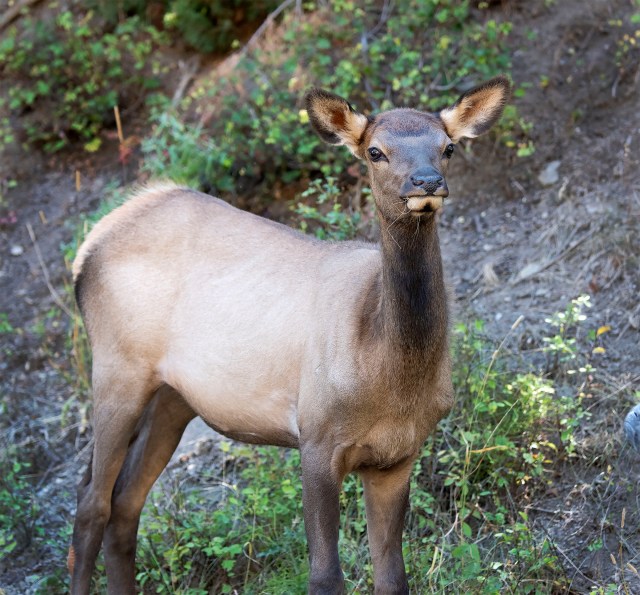
These kids made it through kindergarten and are now on to first grade. Elk and mule deer that were only Fawns and calves just a short time ago are heading into winter as the first snows have hit the ground.
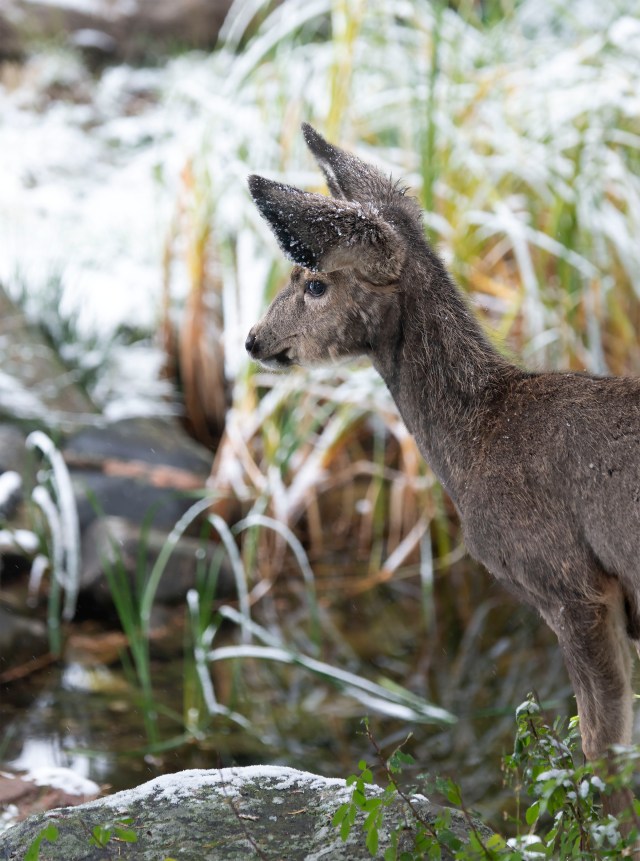
A young mule deer wondering what this white stuff is all about.
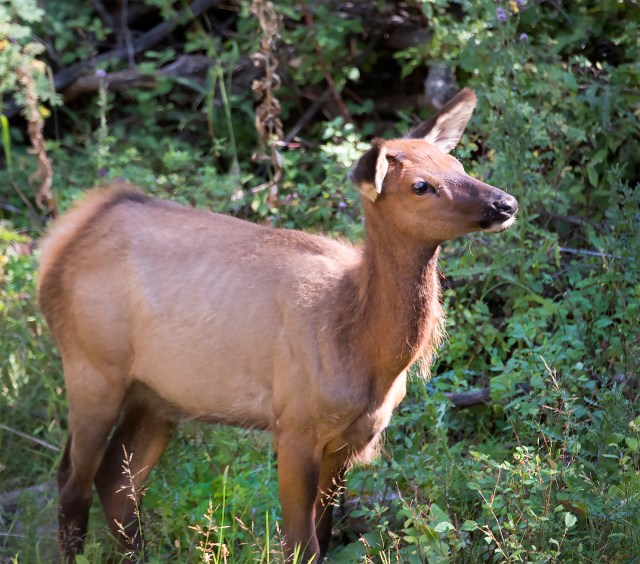
An elk calf ponders their next move just a short time ago when the plants still were rich with green.
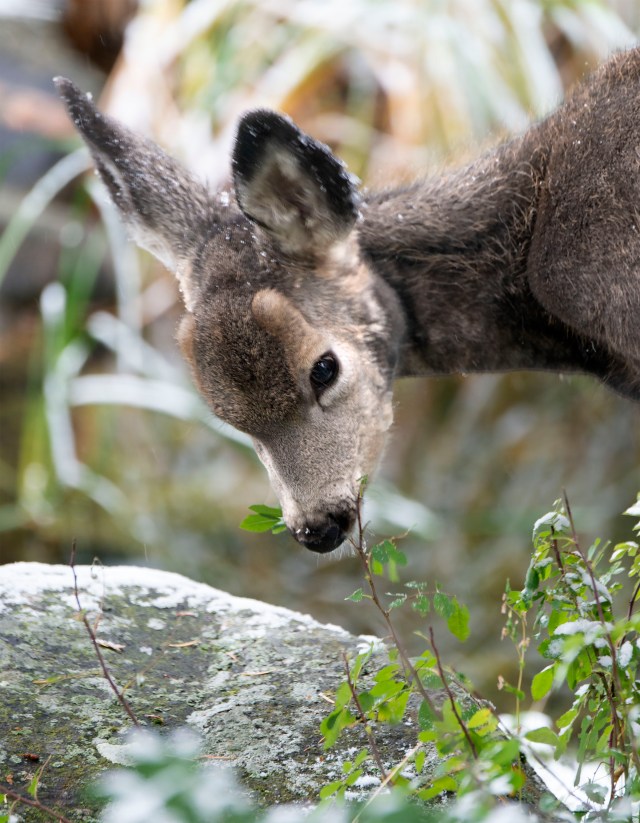
Perhaps a few leaves from this wild rose will do.
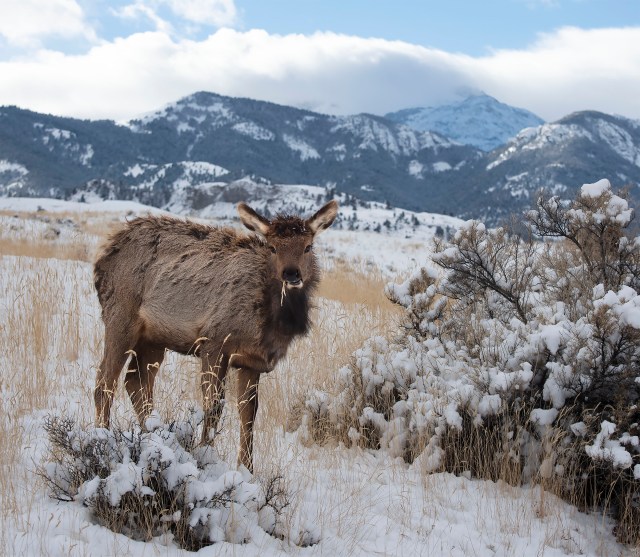
Good luck kids and we hope you make it to second grade next spring.
Happy weekend to all.
Living Color
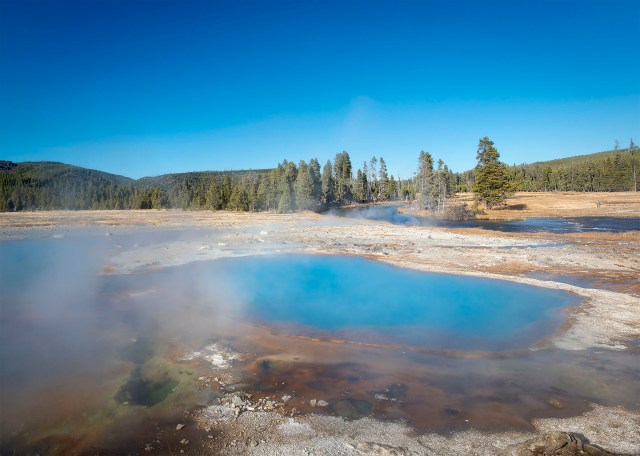
Hot pools sparkle with color on a mostly cloudless autumn day. Blue pools ringed with living color in the form of thermophilic bacteria mix with a bluebird sky at Biscuit Basin.
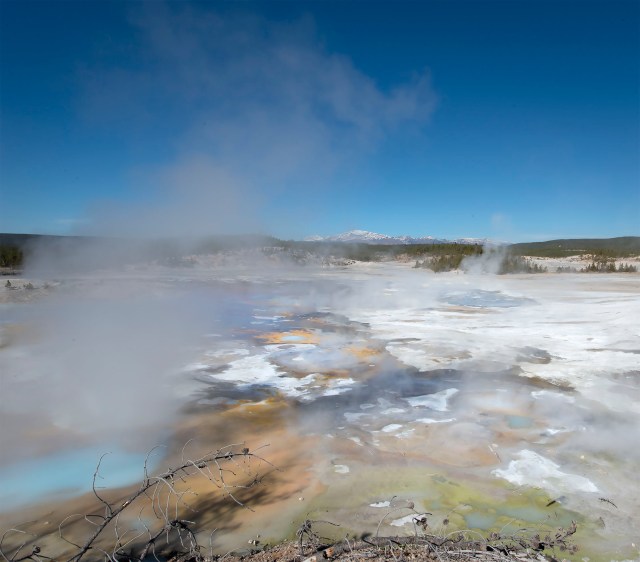
At Norris the color palette is extensive and the views expansive.
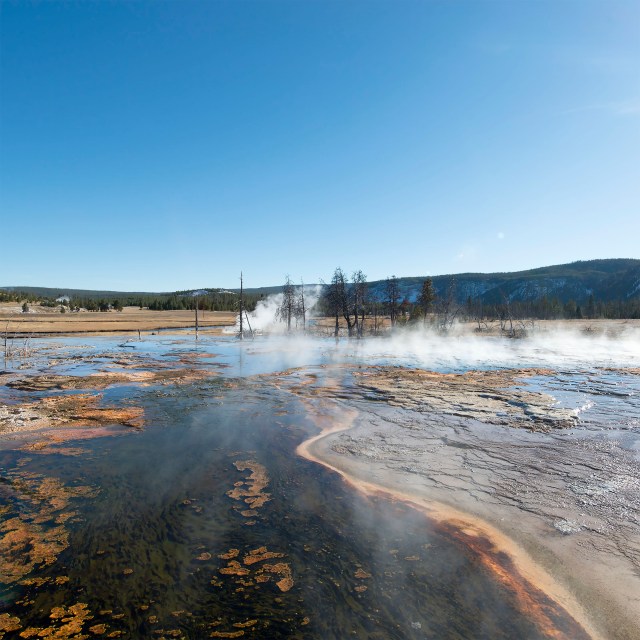
Many species of Bacteria form the colorful mats found in many geyser basins. Thriving in temperatures that range from a comfortable 30C all the way up to 80C and providing a visual confirmation that life is indeed varied and diverse.
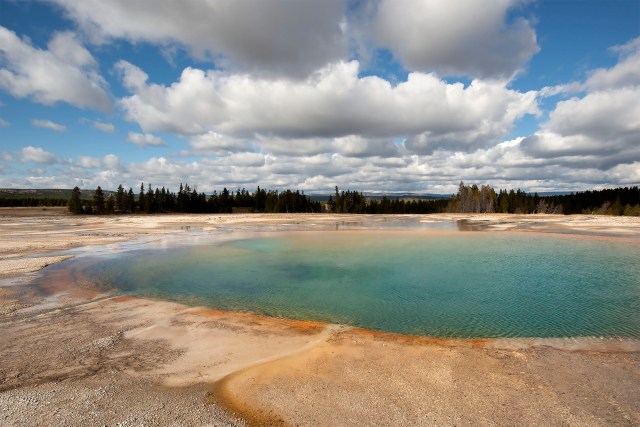
Afternoon clouds rolled though and dotted the sky adding another layer of color to the wonderful landscape below.
 nature has no boss
You must be logged in to post a comment.