Towards meadows edge

GIbbon_meadows_1

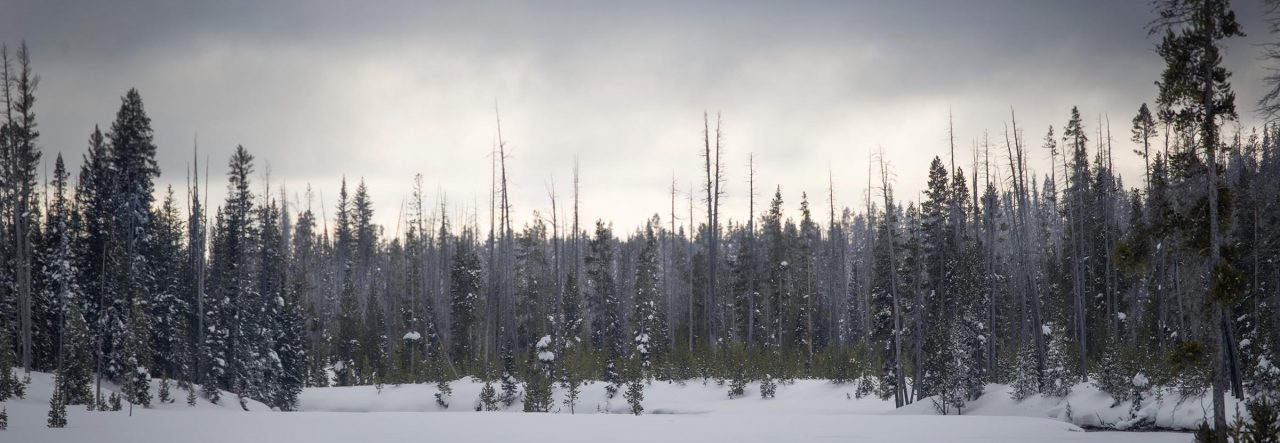
On a silent morning we stopped and spent some time in the heart of a meadow looking out towards the edge.  To the northwest, mountains rise as skies clear all the while  clouds and snow roll in right above.

Gibbon_meadows_3

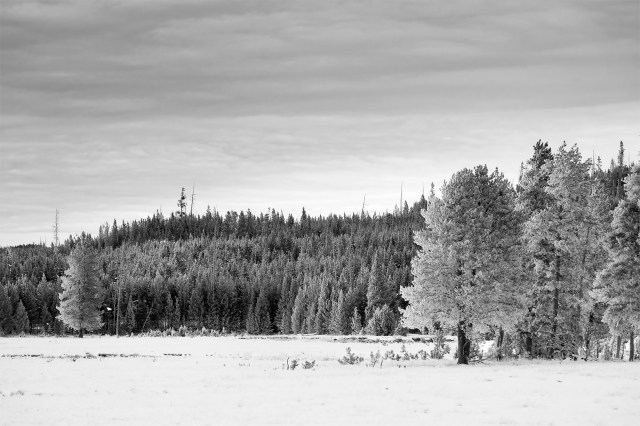
With just a slight turn the mood quickly changes with a dusting of white to the north…

Gibbon_meadows_2

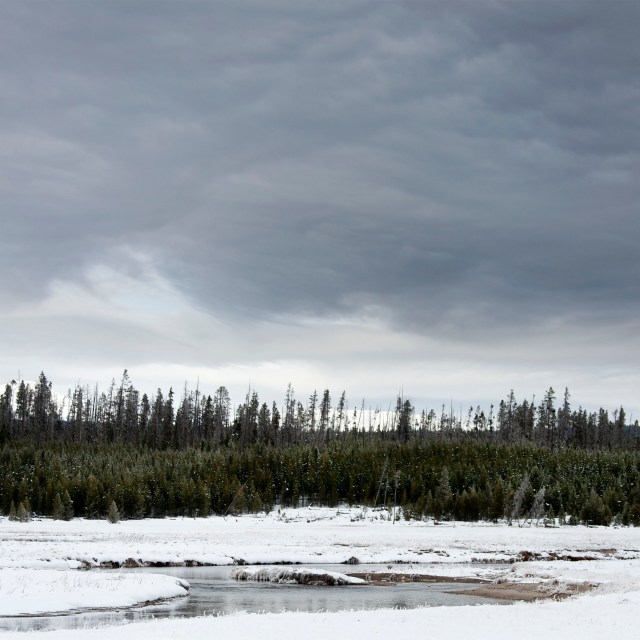
…and to the west a river meanders south and heavy clouds lie overhead…

Gibbon_meadows_4

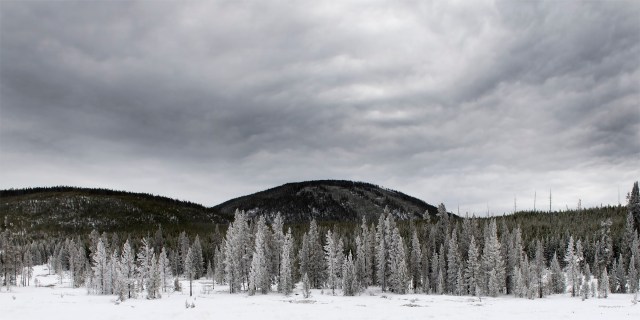
…to the east the hills rolled as the skies above.

As the day progressed the skies cleared and sun shone bright yet what lingers inside is the views towards the meadows edge.

This year: One book at a time.


We don’t know about you but we tend to get over ambitious at times with books, especially reading them. Five or six books sitting proudly on the coffee table in living room each with a bookmark placed about 1/3 into the book. Each book calling your name when you plop down on the sofa to relax. You sit and stare back at them silently wondering how you will finish them all before they are due at the library. You get through one or two wonderful books but always feel like your not reading enough as you solemnly remove the bookmarks form the remaining three and whisk them off and into the return slot at the library. So this year it’s only one book at a time- from front to back- all the way though.

We recently came across a wonderful four part series on the best nature books of 2019 written by the Chicago Review of Books

. It is a very diverse list of nature books that will provide us some guidance in choosing and reading our one-book-at-a time in 2020.

Here are links to each of the four posts. The author of the articles Amy Brady stated in the part four of this series that this year has been the best in recent memory for nature writing. Looking though the lists is almost as fun as reading the books listed.
Part Four
Part Three
Part Two
Part One

Anything catch your eye as a first read from these lists. Maybe because it’s winter and darkness comes early the book Dark Skies: a journey into the wild night By Tiffany Francis-Baker sounds like it might be first up this year.

Juniper Berries

Berries_1

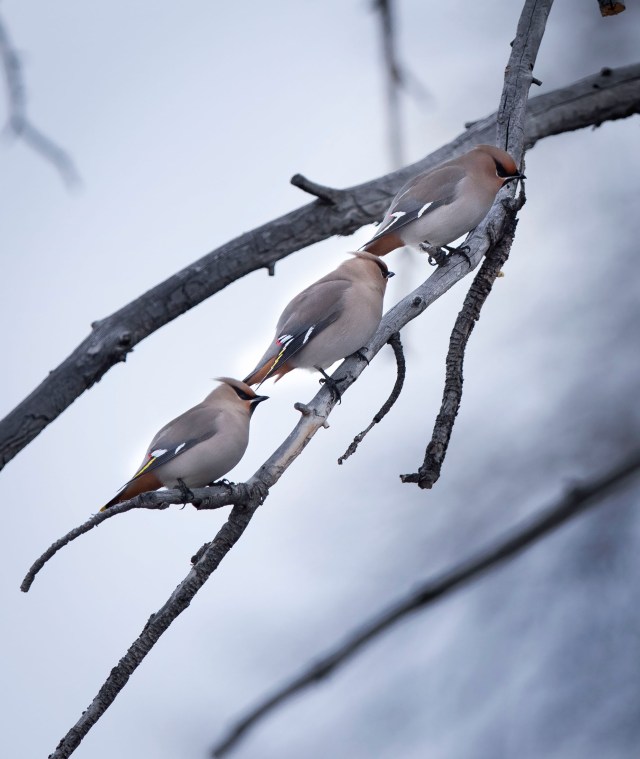
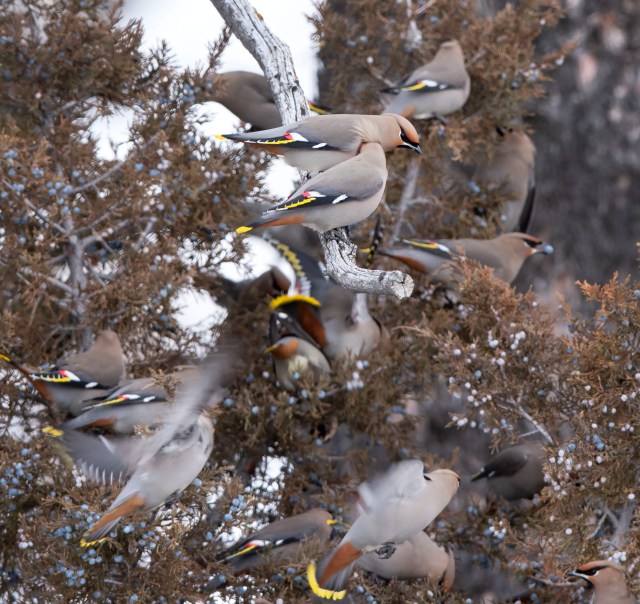
It was an overcast morning and difficult to make out the details but it sure looked like there were a handful birds hanging out in a juniper bush as we speed along a quiet road. We decided to turn around and take a quick look and spotted a beautiful trio of Bohemian Waxwings. These three quickly flew off while we were watching but landed just across a small creek in a juniper loaded with berries and a large flock of Waxwings buzzing about in constant motion picking the berries for their morning meal.

berries_2.jpg

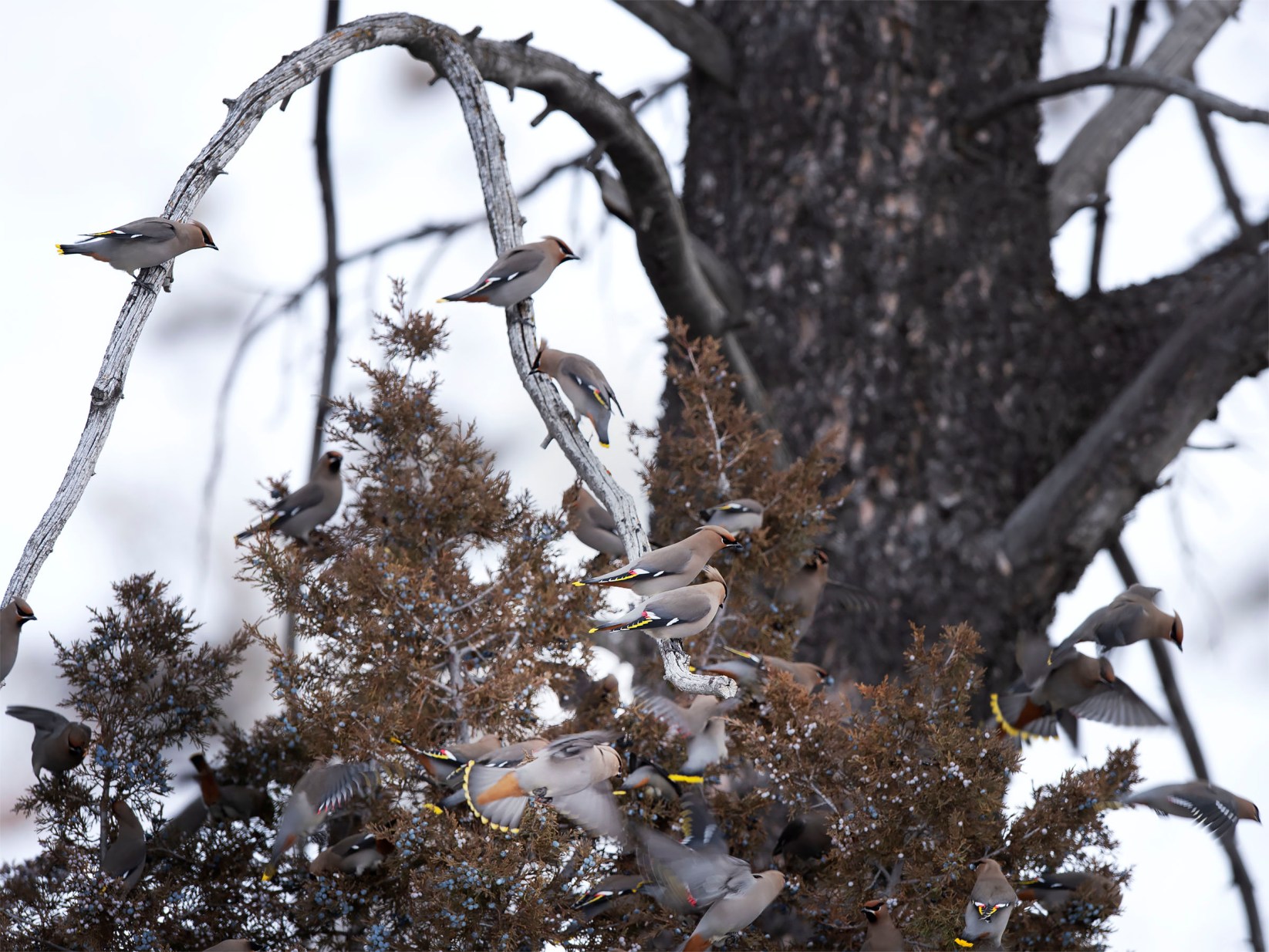
It was a whirlwind of activity with birds coming and going, picking berries, and perhaps, just for a small moment, sitting still.

Berries_3

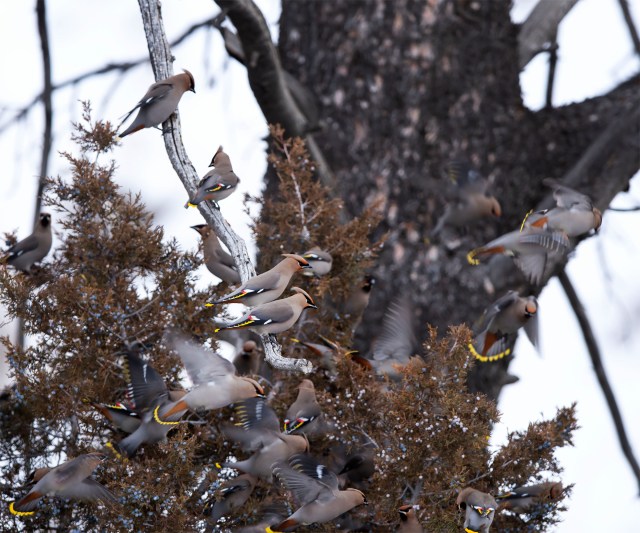
The beautiful colors of these birds were flashing brightly in the dull overcast light and made for quite a show.

Berries_4

The berries and the birds made for a fine start to the day.

Spring loaded

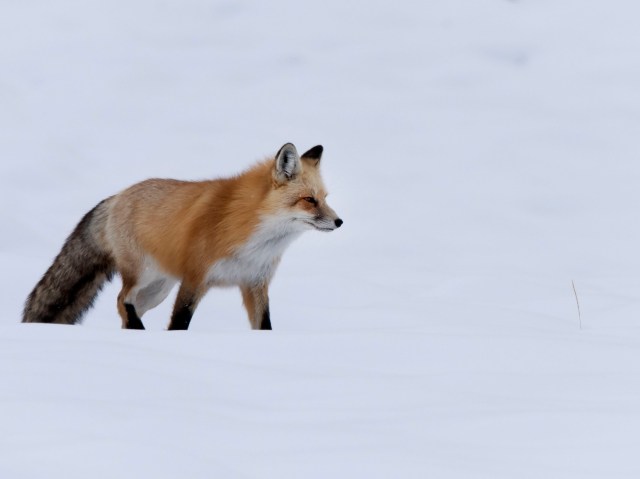
Ermine_021345psd

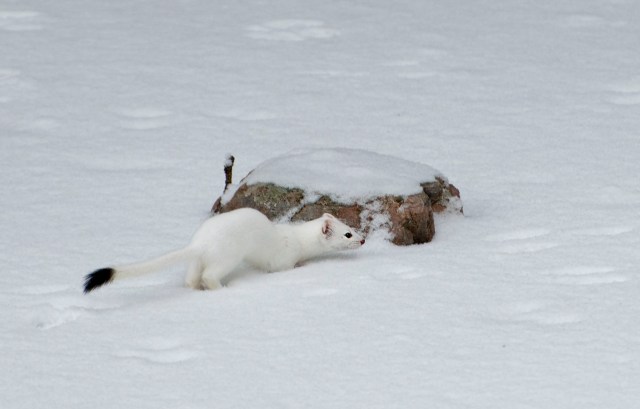
Spring loaded and tightly wound may be an understatement.

Back and forth and all around following the rabbit tracks this Ermine moved so fast it made us dizzy. As he hunted rabbits darted with lightening speed in every direction gravity would allow. Excitedly we watched yet feared for the rabbits lives. Yet when all was said and done we think the Winter Bunn made it out alive.  How she escaped this mighty hunter is a testament to the difficulty of finding a meal even for a hunter as fierce as the Ermine.

Decisions Decisions

A new study reported on in Science Daily suggests that complex decision making occurs in at least one single celled organism. 1

Perhaps our first thoughts when considering single celled organisms is that they are primitive relics of the past with simple physiologies and perhaps only programmed behaviors. However we must consider the simple fact that for several billions of years single cell organisms lived and thrived on the planet and evolved into innumerable species and eventually into multicellular organisms.

Recently a team of researches at Harvard Medical School replicated a century old experiment demonstrating   that  Stentor roeselii  exhibits a complex hierarchy of avoidance behaviors. The evolutionary advantage for the development of this complex avoidance behavior in Stentor roeselii can only be hypothesized but the authors offer this speculation in the paper:

“Such behavioral complexity may have had an evolutionary advantage in protist ecosystems, and the ciliate cortex may have provided mechanisms for implementing such behavior prior to the emergence of multicellularity.”  2

This is an interesting article not only for demonstrating that life, in all it’s forms, may exhibit behaviors we have yet to document but also for the fact that there may be great scientific value in replicating  other forgotten studies from decades past.

Additionally, studies like this one make it clearer that all life is indeed life — and that– is something worth pondering.

References:

  1. Harvard Medical School. (2019, December 5). New study hints at complex decision making in a single-cell organism. ScienceDaily. Retrieved December 11, 2019 from www.sciencedaily.com/releases/2019/12/191205113129.htm
  2. Joseph P. Dexter, Sudhakaran Prabakaran, Jeremy Gunawardena. A Complex Hierarchy of Avoidance Behaviors in a Single-Cell Eukaryote. Current Biology, 2019; DOI: 10.1016/j.cub.2019.10.059