At what cost?

A recent article presented on CNN titled “The insect apocalypse is coming: Here’s what you can do about it.” reports that up to 41% of insect species may face extinction in the coming decades. A major source for this article was a study authored by Dave Goulson at the University of Sussex in the UK. His report is titled “Insect Declines and Why They Matter.
Dr Goulsons report begins with a statement which will likely hit home to many of you

“In the last fty years, we have reduced the abundance of wildlife on Earth dramatically. Many species that were once common are now scarce. Much attention focusses on declines of large, charismatic animals, but recent evidence suggests that abundance of insects may have fallen by 50% or more since 1970. This is troubling, because insects are vitally important, as food, pollinators and recyclers amongst other things. Perhaps more frightening, most of us have not noticed that anything has changed. Even those of us who can remember the 1970s, and who are interested in nature, can’t accurately remember how many butterflies or bumblebees there were when we were children.”

We all know that insects, like em or leave em, are responsible for pollination of three quarters of our food crops. Thus we can expect to pay dearly if insect populations decline as predicted.

Dr Goulson is not alone in his assessment of the rate of potential insect decline. A review published by Francisco Sánchez-Bayo and Kris A.G.Wyckhuys titled “Worldwide decline of the entomofauna: A review of its drivers” reaches similar conclusions citing habitat loss, pesticide use, invasive species and climate change as primary drives of insect loss.1

Both studies suggest we can do a few things to stem the decline in insect populations like:

1 Plant a garden using plants that attract pollinators like bees and butterflies.

2.Create more insect habitat like a log or brush pile. These attract humble insects and invertebrates like woodlice, which recycle nutrients and act as food for birds and small mammals.

3.Voice your opinion to your local authorities. Push for planting native trees that flower on streets and parks and plant wildflowers in road medians.

4. Avoid using pesticides and encourage your friends, family and local government to do the same.

Besides their role in a functional ecosystem insects are darn cool to observe and photograph as well. At what cost we will begin see the beauty of life on earth.

Click on any photo to play slide show.

Reference:
1.https://doi.org/10.1016/j.biocon.2019.01.020

A few links on creating a pollinator friendly garden. Yes we are going into winter but it’s never too early to think about next years garden.

https://www.fws.gov/midwest/news/PollinatorGarden.html
https://www.fs.fed.us/wildflowers/pollinators/gardening.shtml
Seeking Solutions: Half-Earth Project

Golden_mantled_2314

In recent posts we have highlighted findings from a couple of recent studies describing the dramatic decline in avian populations in North America over the last  last 30-40 years. Like many of you, we see the decrease in avian population as a harbinger for the rest of life on earth predicting  a massive decline in biodiversity resulting from the mass extinction of species of all kinds. Protecting  ecosystems and thus the species that inhabit them will be no small task and indeed feels overwhelming.

IMG_6541

One group that is attempting to protect and preserve biodiversity is The Half Earth project founded by Edward O Wilson. Their stated mission is to:

“conserve half the land and sea in order to safeguard the bulk of biodiversity and ensure the long-term health of our planet.”

Half-Earth recently held their annual conference and have posted videos of the lectures on their website. We are working our way through the lectures and hope you can find the time to view a couple that interest you. Be it large or small we need to find time to seek solutions even though we may feel overwhelmed.

YRW_34567


Under a full moon

Crested_butte_winter_2008

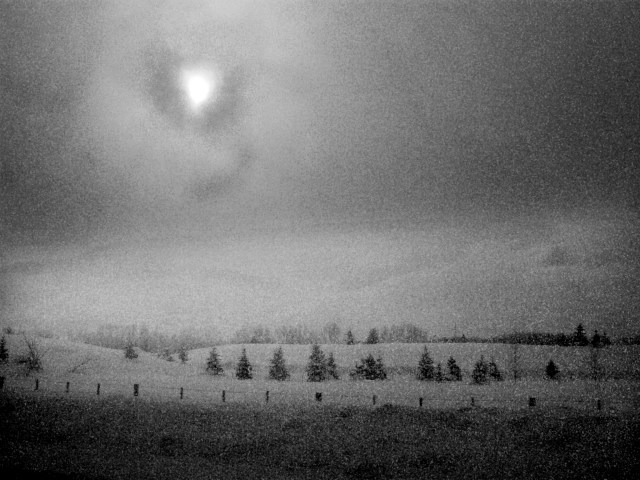
The moon was bright and full last night brightening the sky and even making the snow sparkle with color. Seeing the bright moonlight got us to wondering how moonlight nights might effect animal behavior.

There have been many studies effects so we thought it might be interesting to pass along just a few more recent observations we are aware of.

Several phenomenon related to animal behavior have been attributed to the full moon including increased spawning of corals and other reproductive behavior.

The Barau’s petrel, a tropical seabird species, uses the lunar cycle., unlike many other birds with use the sun or length of day, to time mating.

A recent study by Norevik et al. describes how the full moon synchronizes the initiation of the fall migration in the European Nightjar. The abstracts states:

We found that the daily foraging activity more than doubled during moonlit nights, likely driven by an increase in light-dependent fuelling opportunities. This resulted in a clear cyclicity also in the intensity of migratory movements, with occasionally up to 100% of the birds migrating simultaneously following periods of full moon. We conclude that cyclic influences on migrants can act as an important regulator of the progression of individuals and synchronize pulses of migratory populations, with possible downstream effects on associated communities and ecosystems.1

So as we enjoy another night of moonlight skies we can all ponder what other effects the lunar cycles have on the other inhabitants we share the planet with. So much to study and so much still unknown. Do we need to expand our ecosystem to include the moon? the show universe?

1) Norevik G, Åkesson S, Andersson A, Bäckman J, Hedenström A (2019) The lunar cycle drives migration of a nocturnal bird. PLoS Biol 17(10): e3000456. https://doi.org/10.1371/journal.pbio.3000456