Deep in the Willows

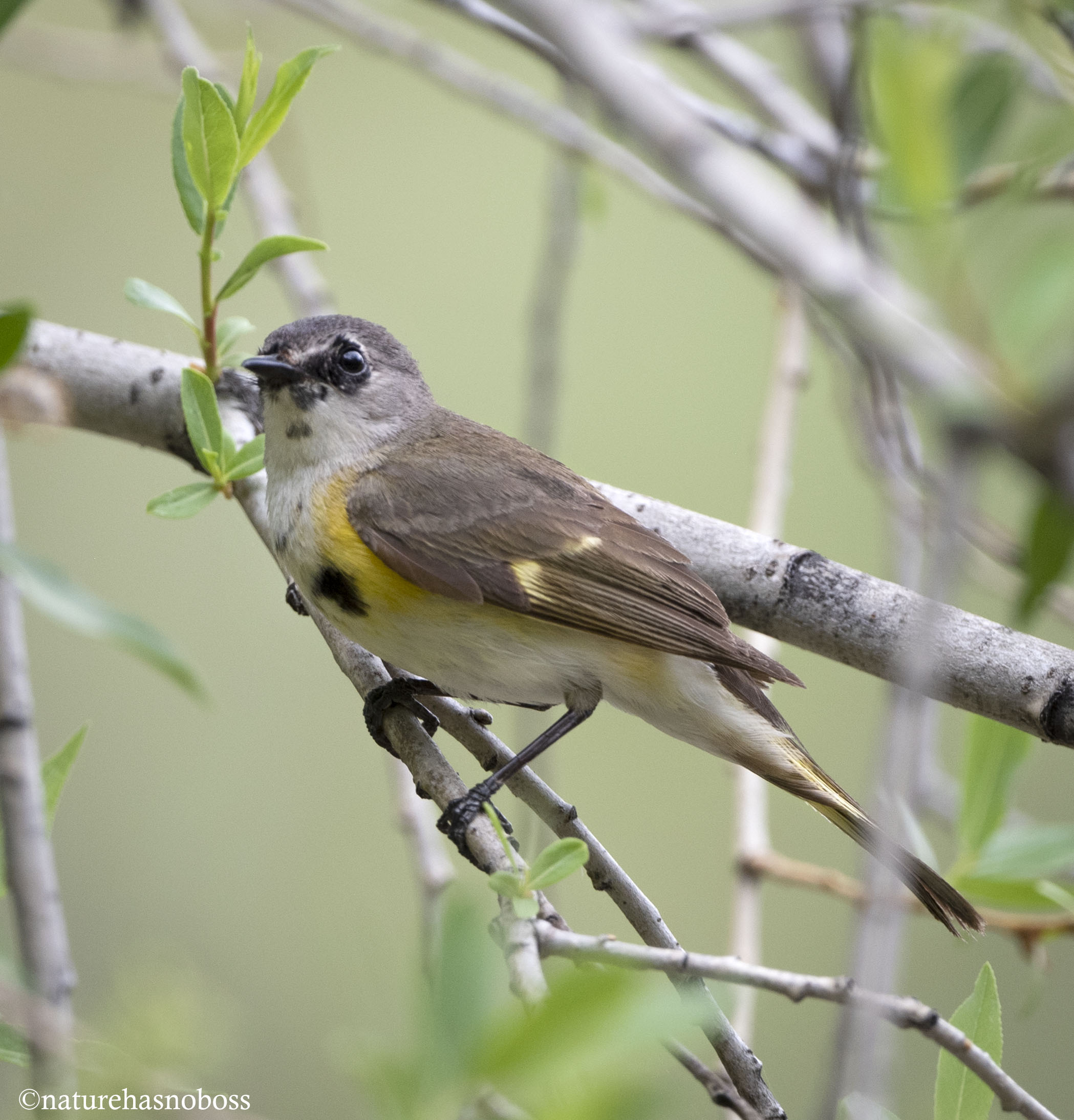
On the opposite side of a field in which we were watching two coyotes prowling we heard the singing of the American Redstart. It had been quite some time since we have seen this unique little black and red warbler so we skedadled over to a thick stand of willows where thought the singing was coming from.

But low and behold, it was not an adult male making all that wonderful noise, it was an immature male hanging out deep in those willows.

Young male American Redstarts have gray-and-yellow plumage, like females, until their second fall. Yearling males sing vigorously in the attempt to hold territories and attract mates. Some succeed, but most do not breed successfully until the following year when they develop black-and-orange breeding plumage.

https://www.allaboutbirds.org/guide/American_Redstart/overview

We had no idea immature males sang so much.
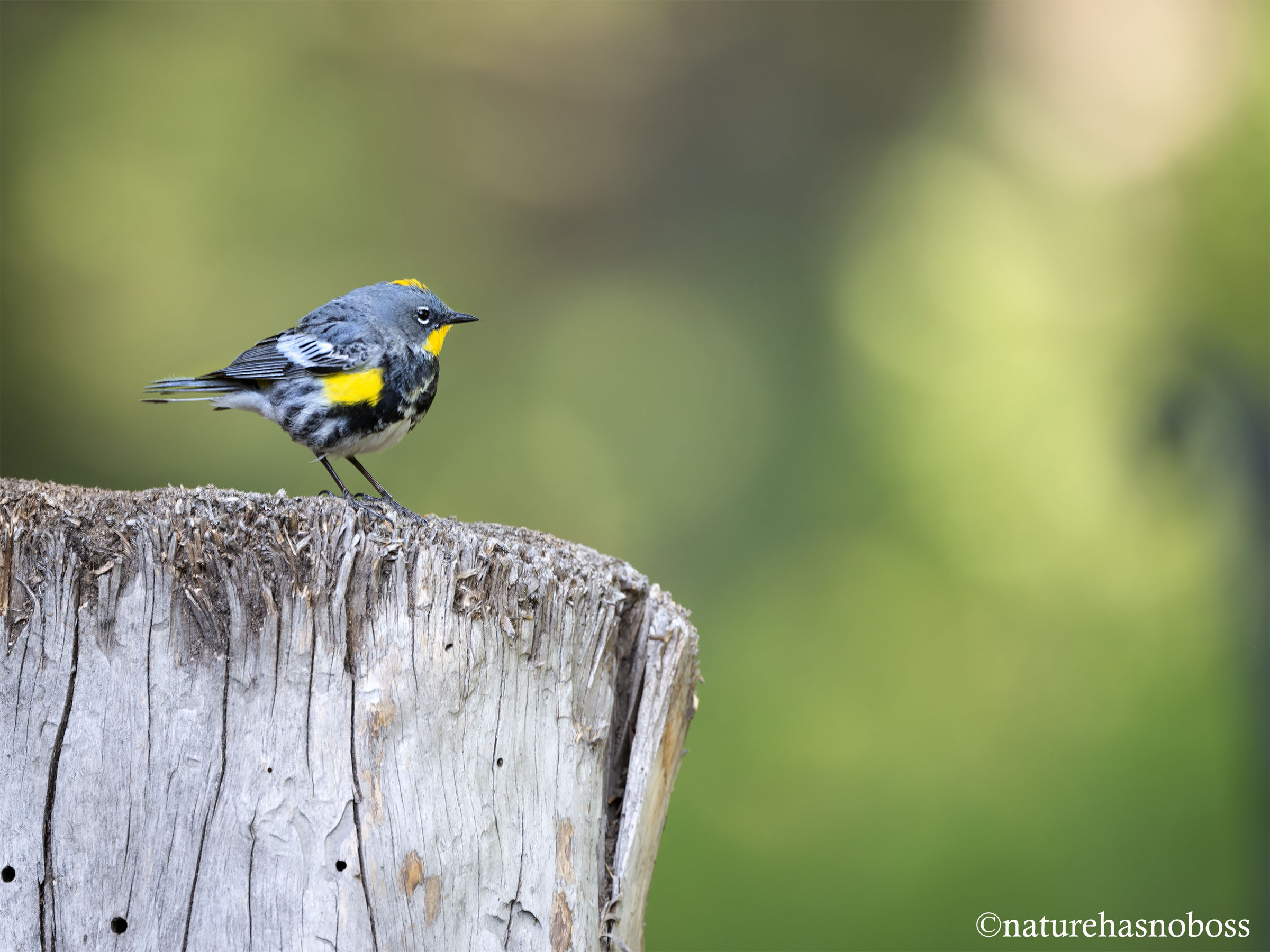
Yellow-rumped

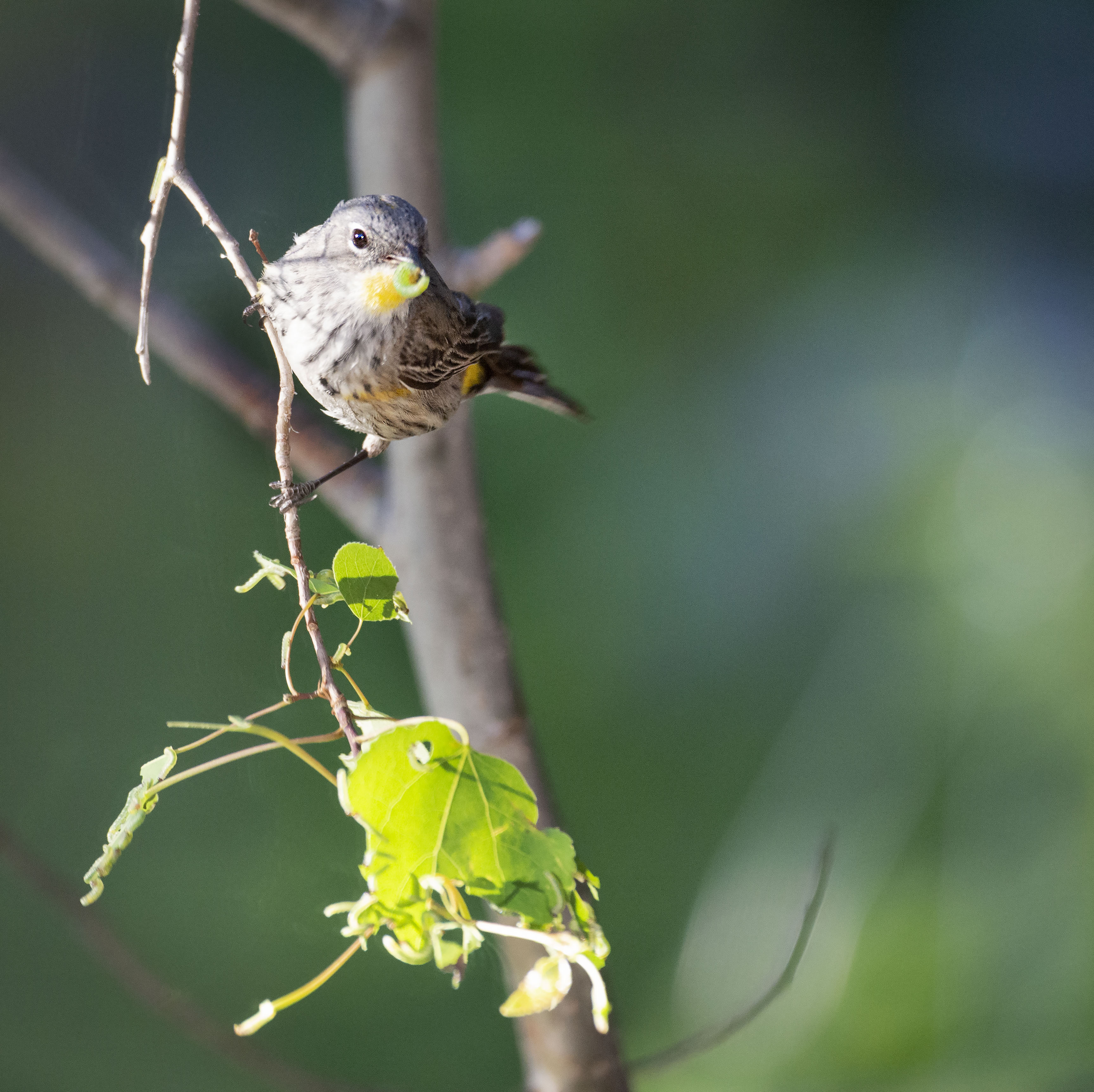
A male Yellow-rumped Warbler makes a rare appearance from the forest canopy to rest on the firewood chopping block. Although we here them all day long in the spring and early summer we only get glimpses of them moving in the canopy of the fir trees high above.

Northern Waterthrush

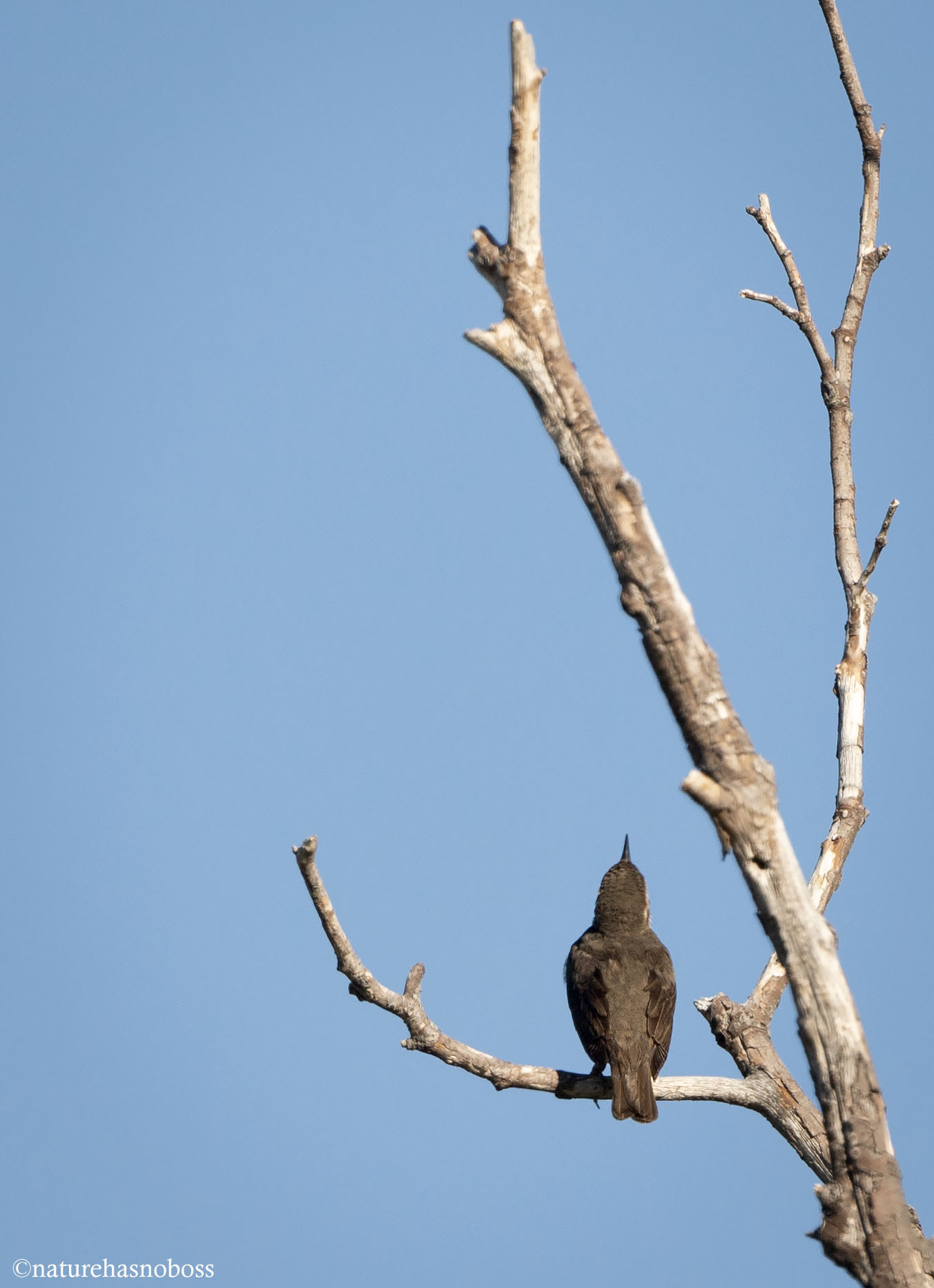
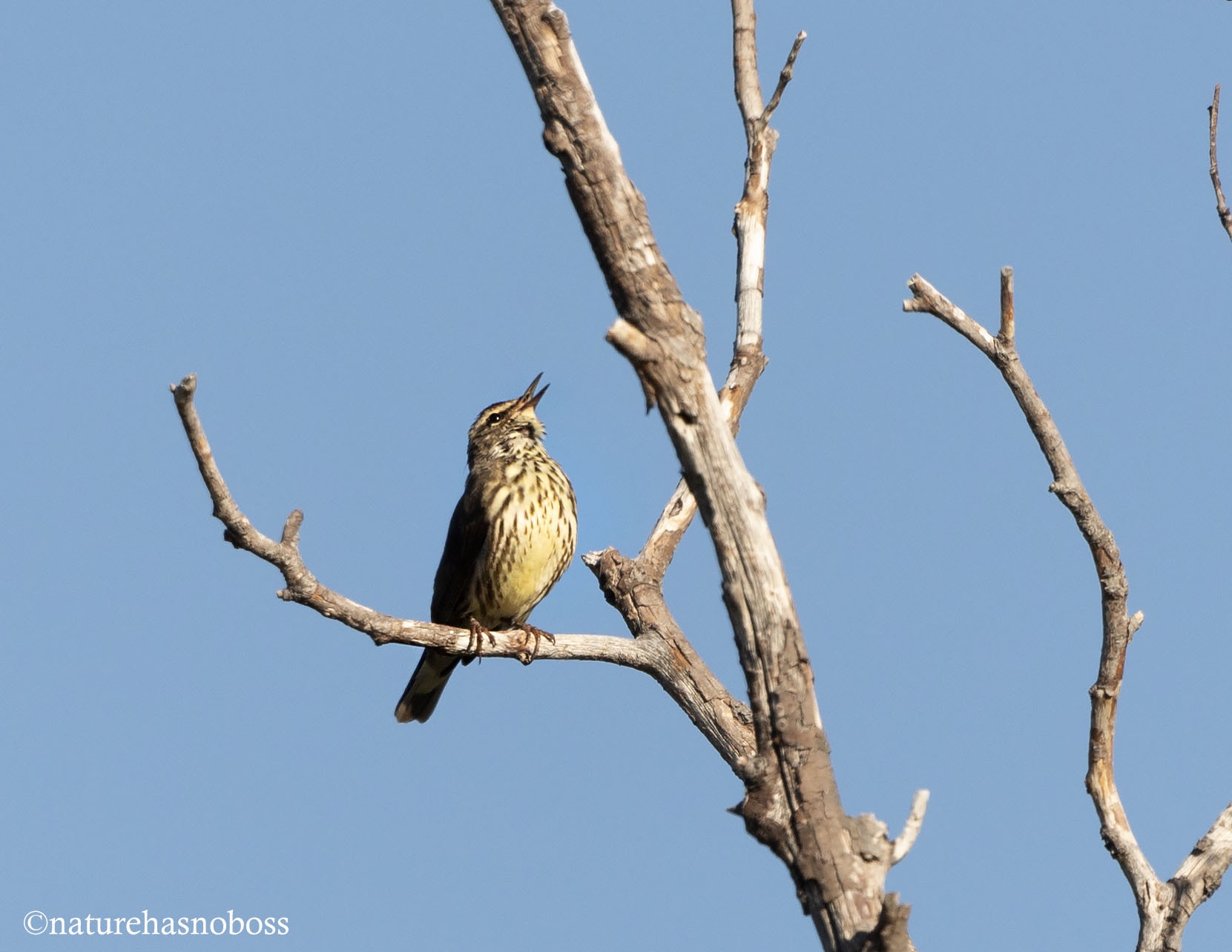
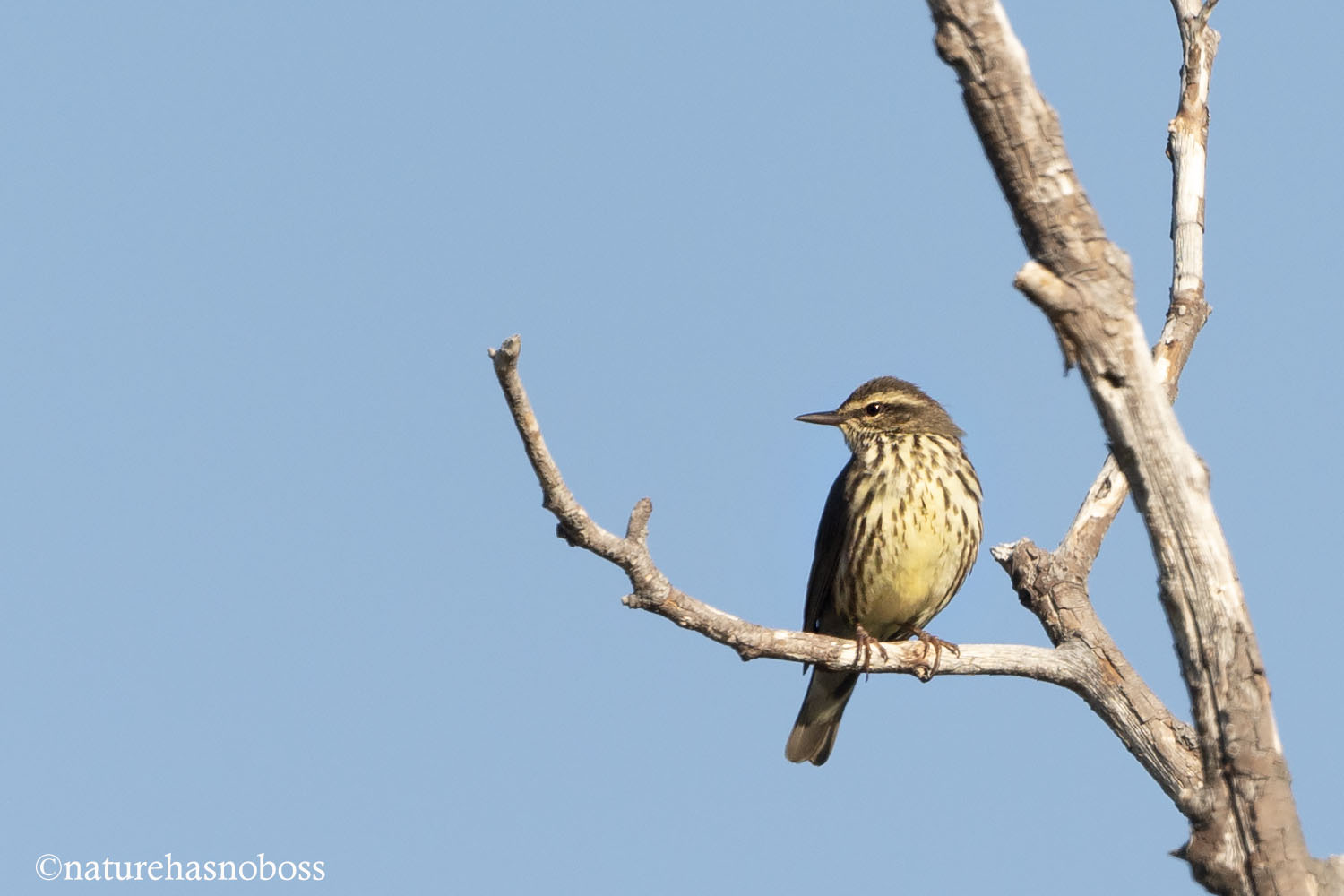
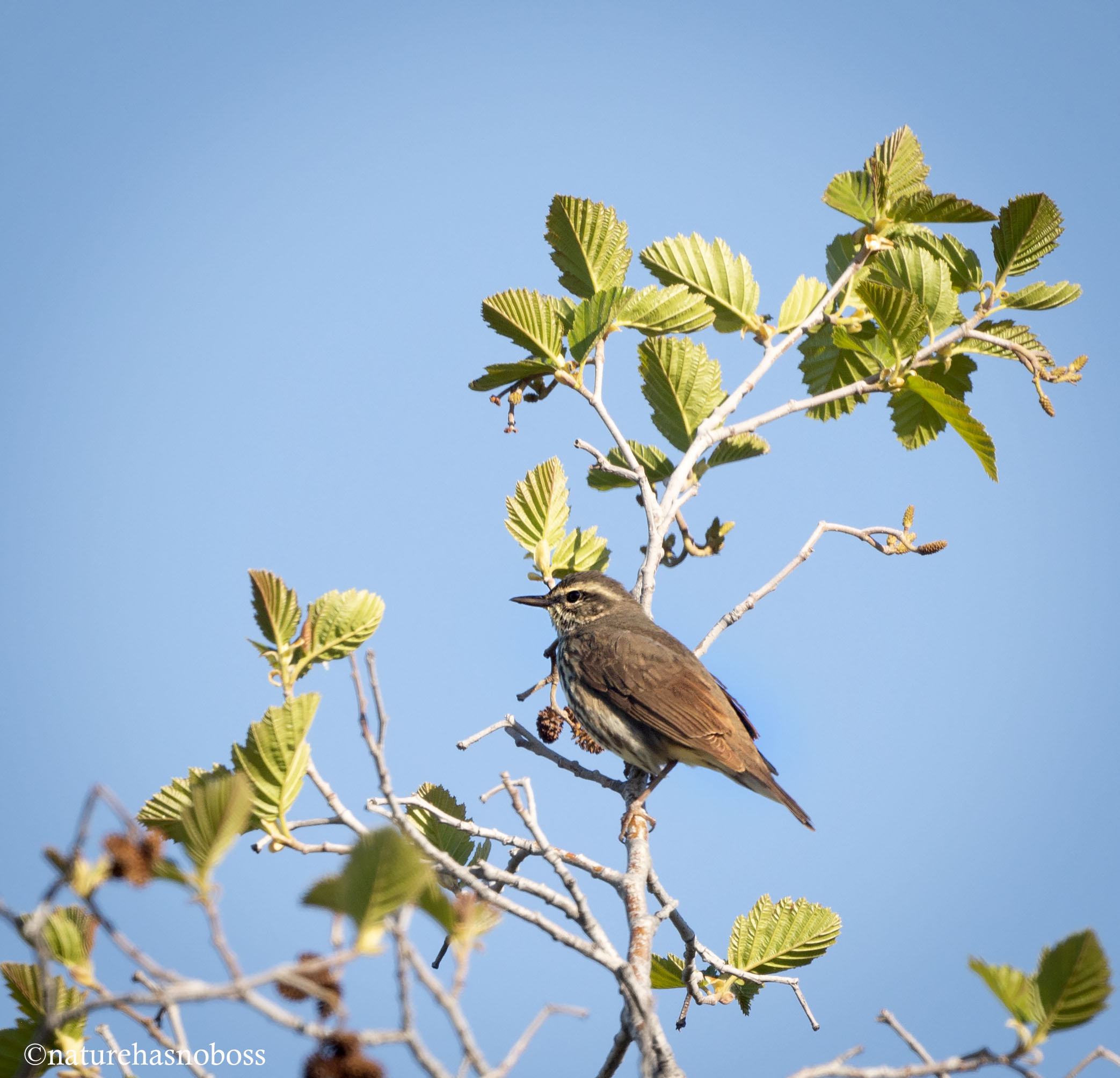
Although he had is back to us we could hear this Northern Waterthrush serenading the females across the creek from a fair distance as we walked through our small wetlands area one morning.

The Northern Waterthrush is often an unseen singer whose rich, sweet whistles lure listeners into its attractive habitats, the wooded swamps and bogs of northern North America. These streaky brown songbirds lack the bold colors of many other warblers and don’t forage in forest canopies. They forage at the water’s edge in bogs and still water, where they hunt aquatic insects and small salamanders, all the while bobbing the rear of the body, much like a Solitary Sandpiper, another denizen of shady swamps.1

This individual had a very sweet song and continued singing off and on for 15-20 minutes while perched up high along the creek.

After about 20 minutes perched in one location they moved nearby for one final look.

Reference:

  1. https://www.allaboutbirds.org/guide/Northern_Waterthrush/overview

Seen and heard

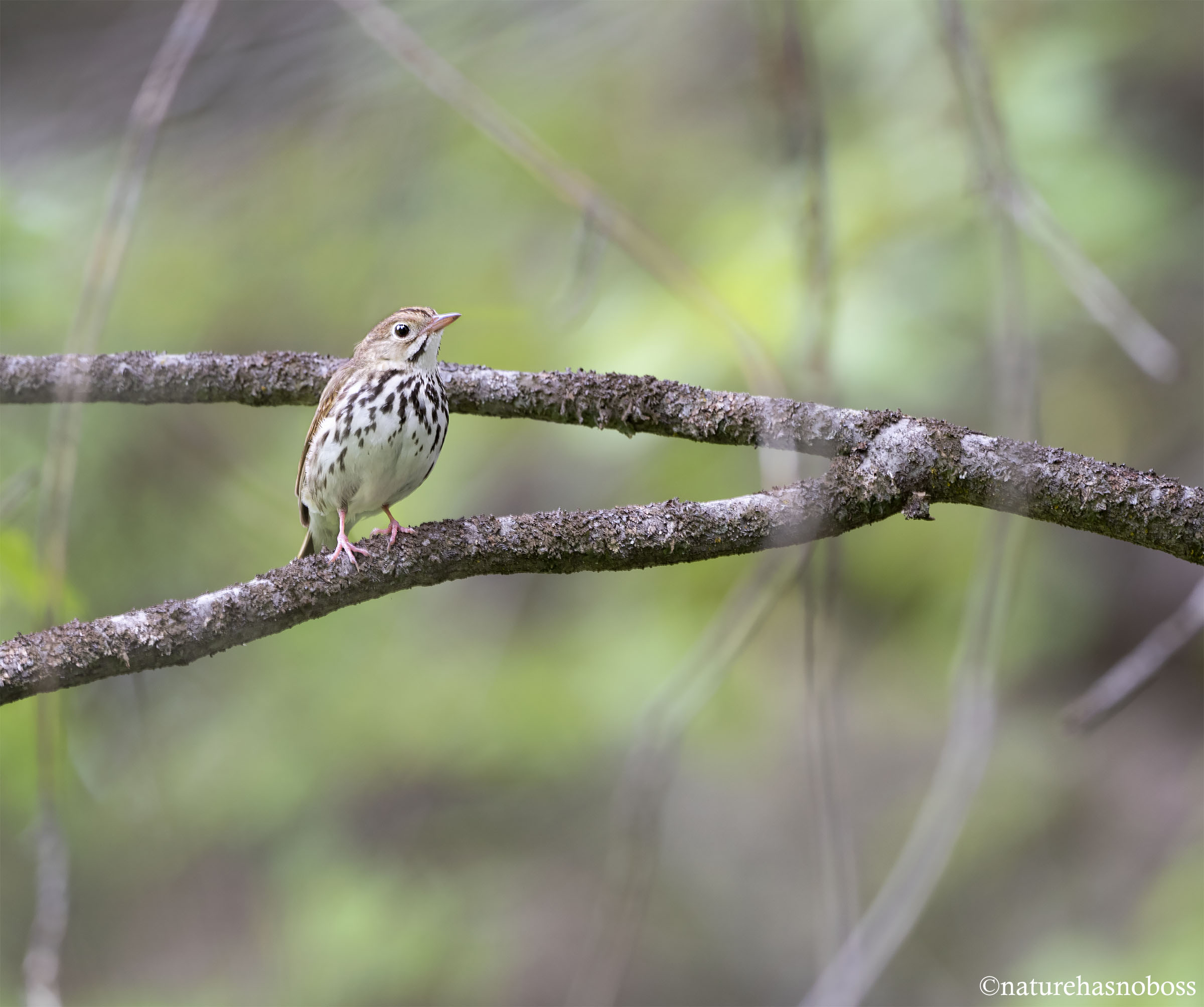
In the forest just up the road we have heard the calling of an Ovenbird for the last two summers without successfully seeing one. Their frequent calling had us looking in trees and forest floor but to no avail. This year we have gotten lucky and finally seen and actually gotten of a photograph of these little forest swelling warblers. Who would think such a little bird, and in this case can sweet looking bird, could make such a racket.