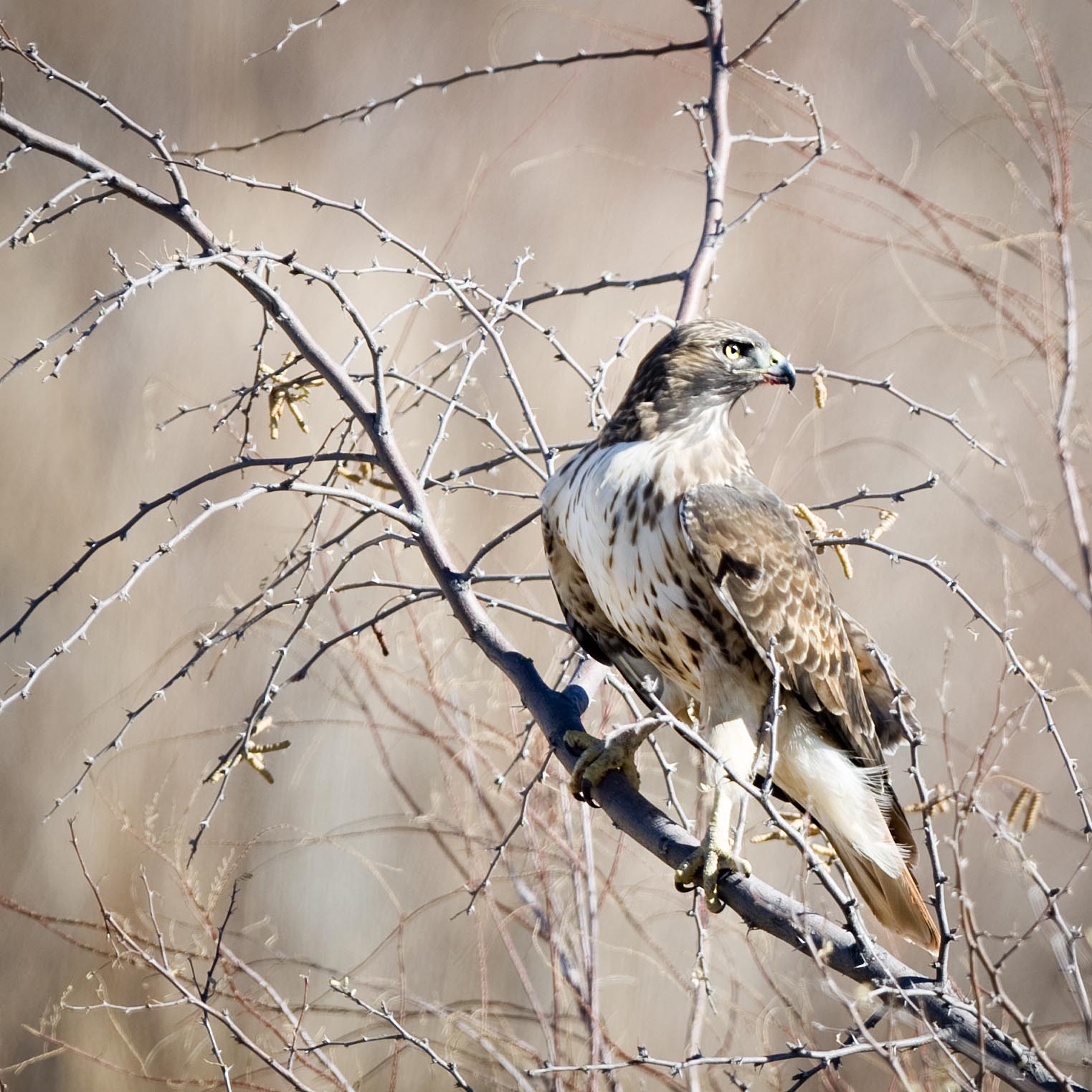
On Saturday at mid-morning we spotted this Coopers hawk tidying up a bit on a broken old Cottonwood branch. He looked like he has had a bit of a rough time lately with his feathers looking downright scruffy. After a half hour or so of preening his feathers were back in fine order and he was off again hunting in nearby woods.
Tag: zen
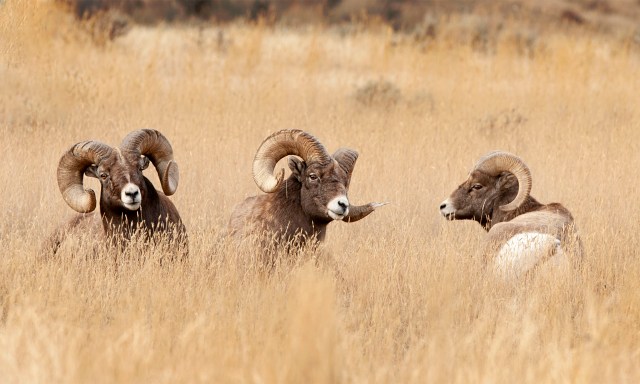
Laying low.

Three big guys enjoying the golden grass and just laying low.
Maybe that is a cue for the weekend just lay low and kick back or, better yet, get outside a bit then kick back.
Have a wonderful weekend however you choose to spend it.
Decisions Decisions

A new study reported on in Science Daily suggests that complex decision making occurs in at least one single celled organism. 1
Perhaps our first thoughts when considering single celled organisms is that they are primitive relics of the past with simple physiologies and perhaps only programmed behaviors. However we must consider the simple fact that for several billions of years single cell organisms lived and thrived on the planet and evolved into innumerable species and eventually into multicellular organisms.
Recently a team of researches at Harvard Medical School replicated a century old experiment demonstrating that Stentor roeselii exhibits a complex hierarchy of avoidance behaviors. The evolutionary advantage for the development of this complex avoidance behavior in Stentor roeselii can only be hypothesized but the authors offer this speculation in the paper:
“Such behavioral complexity may have had an evolutionary advantage in protist ecosystems, and the ciliate cortex may have provided mechanisms for implementing such behavior prior to the emergence of multicellularity.” 2
This is an interesting article not only for demonstrating that life, in all it’s forms, may exhibit behaviors we have yet to document but also for the fact that there may be great scientific value in replicating other forgotten studies from decades past.
Additionally, studies like this one make it clearer that all life is indeed life — and that– is something worth pondering.
References:
- Harvard Medical School. (2019, December 5). New study hints at complex decision making in a single-cell organism. ScienceDaily. Retrieved December 11, 2019 from www.sciencedaily.com/releases/2019/12/191205113129.htm
- Joseph P. Dexter, Sudhakaran Prabakaran, Jeremy Gunawardena. A Complex Hierarchy of Avoidance Behaviors in a Single-Cell Eukaryote. Current Biology, 2019; DOI: 10.1016/j.cub.2019.10.059
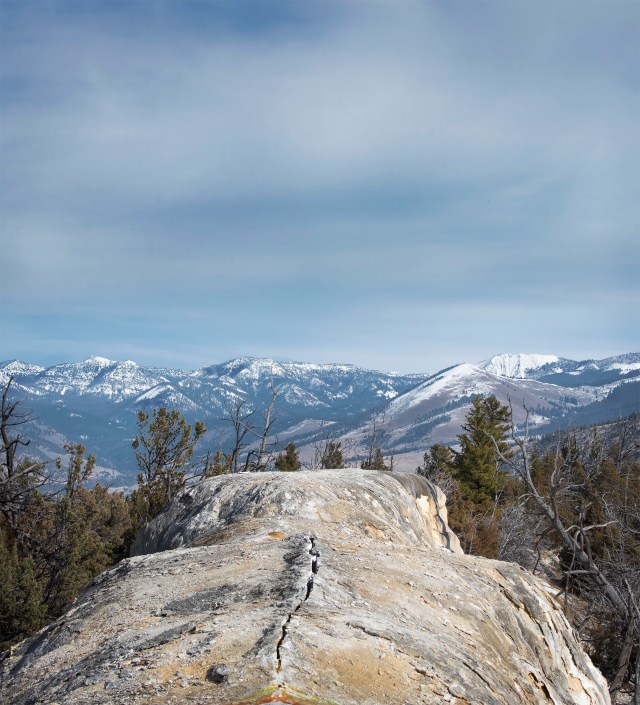
Cracked

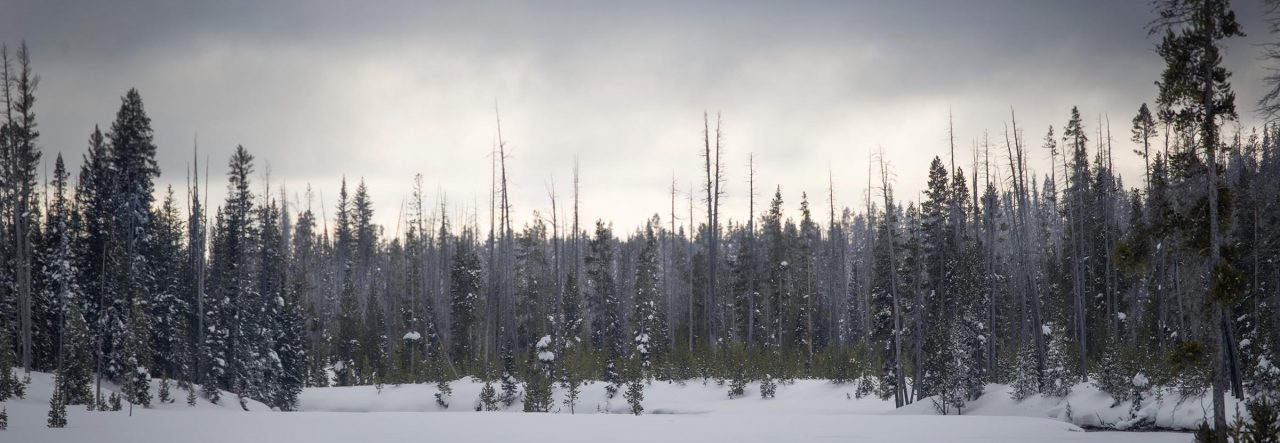
I think there is a geology lesson, or three, to be learned here. Looking out towards the Absaroka mountains along the backbone of earth cracked open from the forces within.
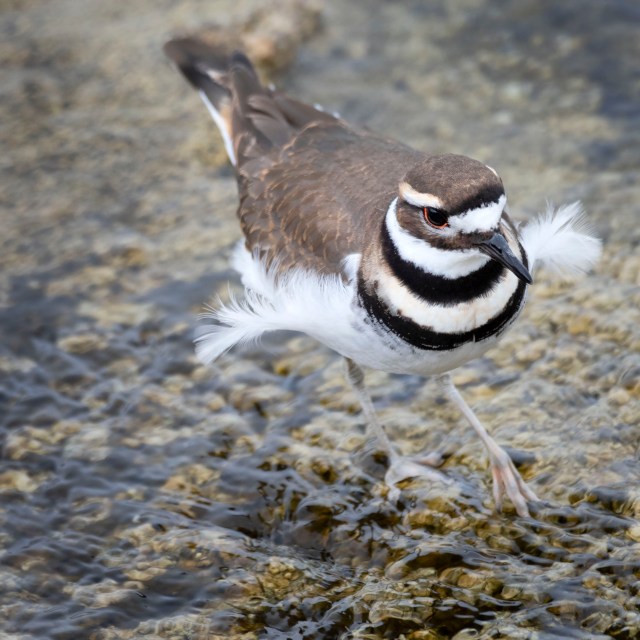
Windy but warm

A Killdeer foraging for ephydrid flies in the warm thermal pools on what became a windy afternoon. The warm thermal pools allow the flies to thrive even in winter and provide birds like this Killdeer a tasty early winter meal on a blustery afternoon.
Where river meets the sea.

A quiet morning where the river meets the sea. All is good. The grass is green, the rain has stoped and life in many forms hauled up on the beech to spend a quiet day.
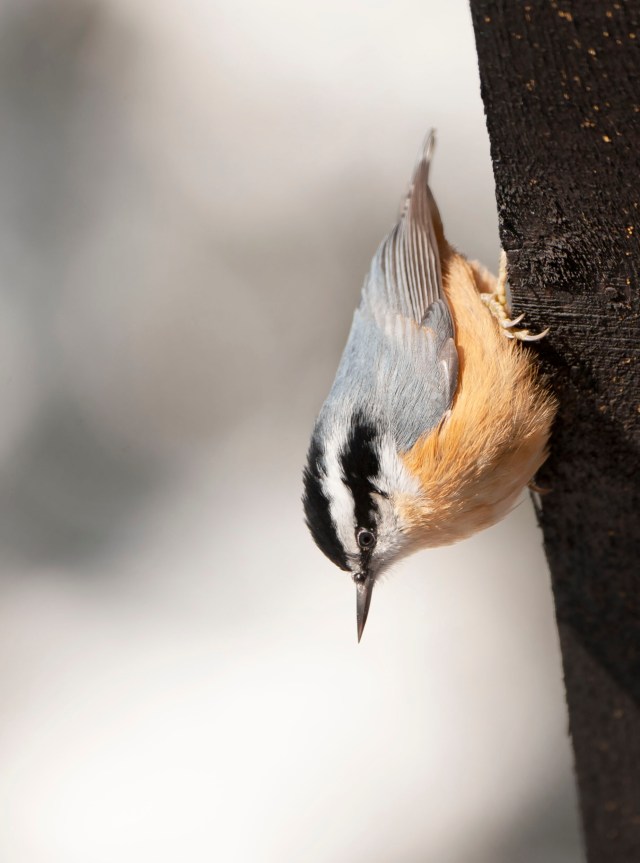
Red Breasted Nuthatch

One of our favorites and a constant companion through the season is the diminutive Red Breasted Nuthatch weighing in at about 10 grams yet feisty as all can get out and with a song to match.
Just think how different and special it must be to have the ability to view the world upside down like this little nuthatch can.
Song birds are shrinking
Bergmann’s rule posits that populations and species of larger sizes are found in colder regions while in warmer regions species are smaller.
A study published yesterday in the Journal Ecology Letters reports that over the pervious four decades there has been, on average, a 2.4 percent decrease in the size of the length of the tarsus bone, a standard marker for bird size, in a sample population of over 70,000 birds from 52 species. The changes in tarsus length were correlated with the increase temperature. The lead authors of the study suggested two explanations for the decrease in body size.
In addition, the study found consistent increases in the wing length of 1.3 percent in 40 of the species. The reason for in increase in wing length is unclear but the authors hypothesized that increasing wing length may represent a compensatory adaptation to maintain migration as reductions in body size have increased the metabolic cost of flight. Like many of the consequences of climate change, the changes measured in bird size, are not perceptible to the naked eye.
There is a good summary of the study here by the Audubon society.
Click any image for slide show.


You must be logged in to post a comment.