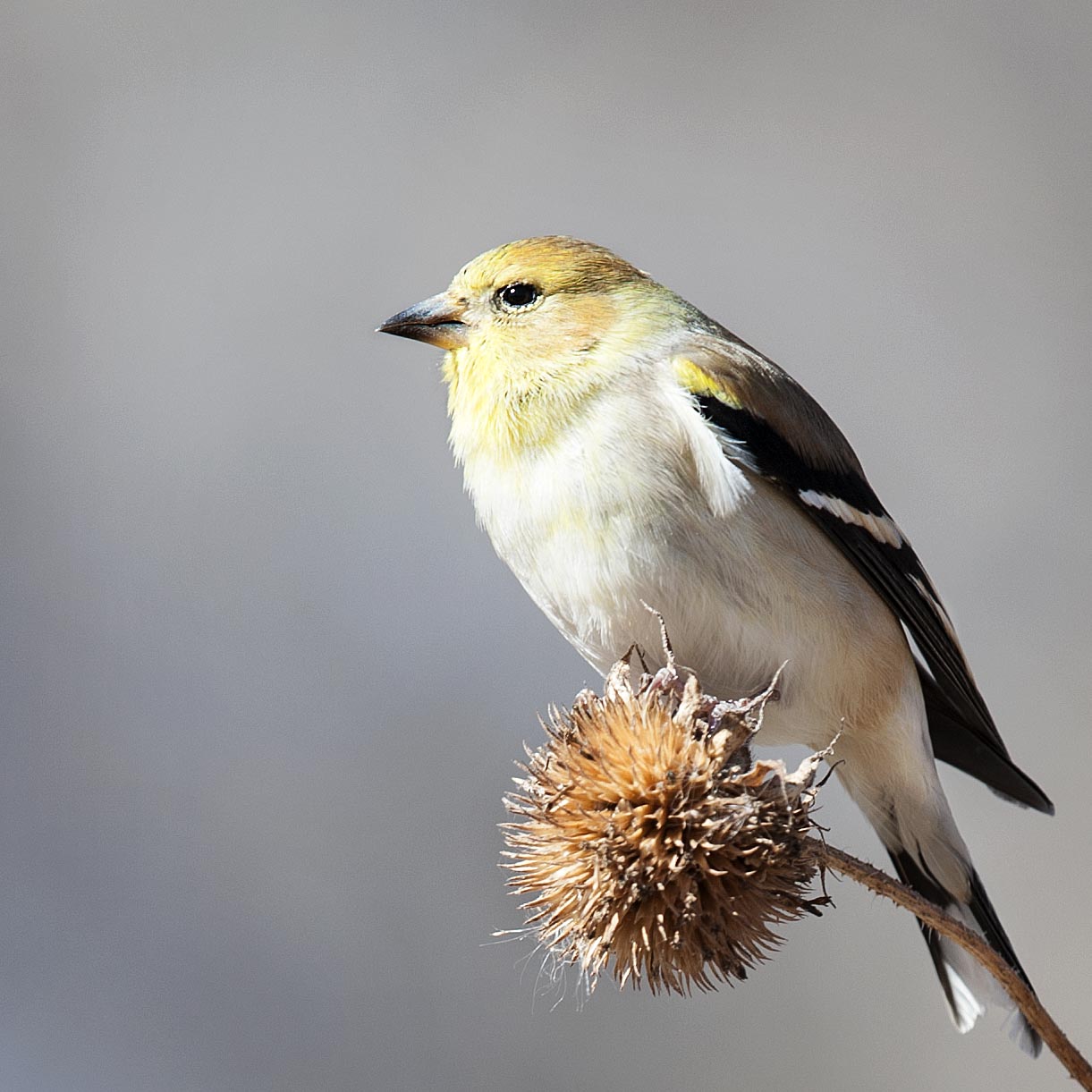
An American Goldfinch was working over these thistle plant pretty good for an afternoon meal and from the looks of it this chubby guy is well versed at extracting thistle seeds.
Tag: bird watching
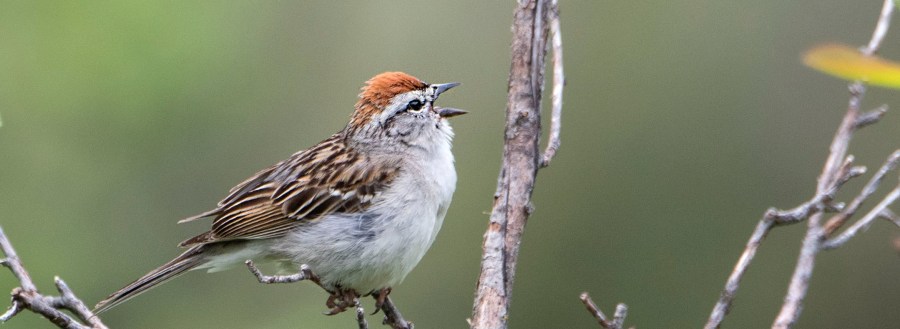
Song birds are shrinking
Bergmann’s rule posits that populations and species of larger sizes are found in colder regions while in warmer regions species are smaller.
A study published yesterday in the Journal Ecology Letters reports that over the pervious four decades there has been, on average, a 2.4 percent decrease in the size of the length of the tarsus bone, a standard marker for bird size, in a sample population of over 70,000 birds from 52 species. The changes in tarsus length were correlated with the increase temperature. The lead authors of the study suggested two explanations for the decrease in body size.
In addition, the study found consistent increases in the wing length of 1.3 percent in 40 of the species. The reason for in increase in wing length is unclear but the authors hypothesized that increasing wing length may represent a compensatory adaptation to maintain migration as reductions in body size have increased the metabolic cost of flight. Like many of the consequences of climate change, the changes measured in bird size, are not perceptible to the naked eye.
There is a good summary of the study here by the Audubon society.
Click any image for slide show.


Townsend’s Solitaire

One of our frequent winter visitors is the Townsends Solitaire. Usually sitting high up on a tree or on top of a juniper bush singing either a wonderful melodious song or calling out a high pitched tew-tew-tew.
Western Grebe
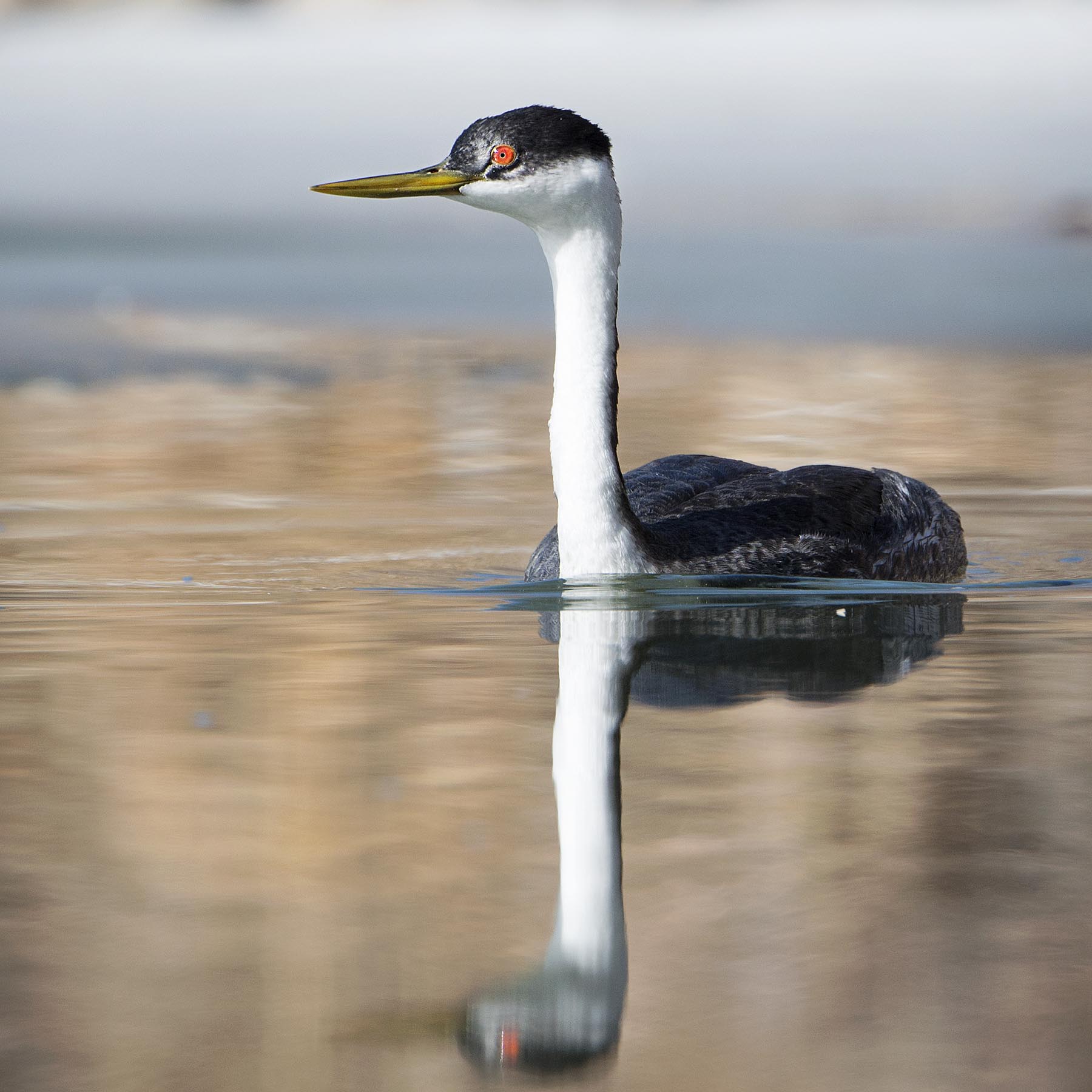
We usually do not see Grebes on the local pond during winter in our neck of the woods. However, last week, this Western Grebe was swimming in a small section of a local pond that remained unfrozen. Perhaps she if off course in migration and landed here to rest and refuel. Although it was a pleasure to see her, I hope she takes advantage of this weeks thaw to get back on track and is gone the next time I visit this pond.
New Discoveries
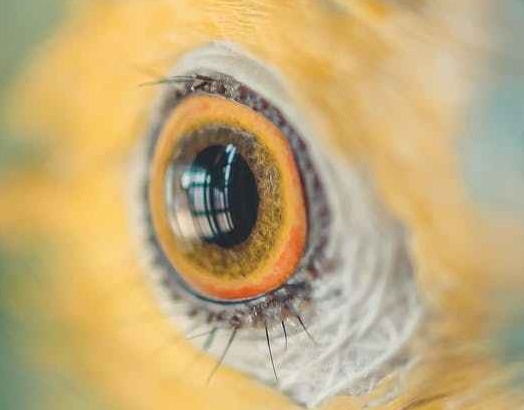
First sighted by birders in the lowland forests of Borneo over a decade ago the Spectacled Flowerpecker has now been studied and classified as a new species. The species was studied by Chris Milensky and Jacob Saucier from the Smithsonian’s National Museum of Natural History while conducting a bird diversity survey. A specimen was captured in the groups mistnet enabling the scientists to collect a DNA sample and confirm that the bird is genetically distant from other known species of flowerpeckers. It is the first new bird species to be found in Borneo for 100 years and a reminder that there are still discoveries to be made.
A quote from Milensky is also a reminder that while there are indeed innumerable scientific discoveries to be made what enables these discoveries is intact habitat for species to exist.
“the discovery of the Spectacled Flowerpecker reflects the boundless biodiversity of the Bornean forests. “Birds are pretty well-studied compared to other organisms, so whenever you find a new bird, you realize just how little you know. Who knows how many insects and invertebrates and other things are still left to be discovered in these forests?” he says. “There are so many other organisms out there that we certainly don’t even know about, that really do require habitat preservation.”
References:
1. Jacob R. Saucier, Christopher M. Milensky, Marcos A. Caraballo-Ortiz, Roslina Ragai, N. Faridah Dahlan, David P. Edwards. A distinctive new species of flowerpecker (Passeriformes: Dicaeidae) from Borneo. Zootaxa, 2019; 4686 (4): 451 DOI: 10.11646/zootaxa.4686.4.1
3.https://www.sciencedaily.com/releases/2019/10/191017141049.htm
Waiting in the wind
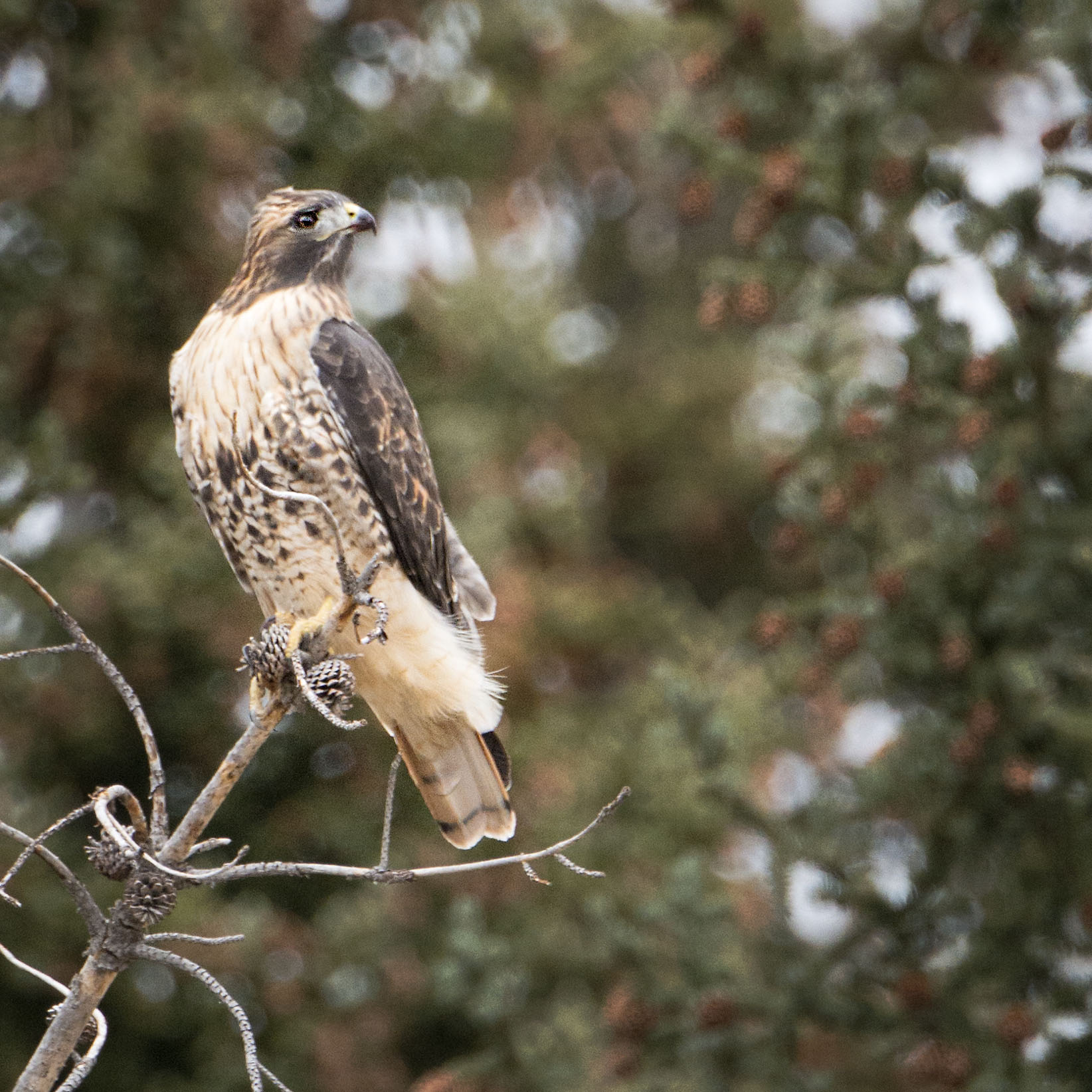
A Red-Tailed Hawk waiting patiently for a meal to appear in the field below on a very windy day. It always amazes me how birds are able to hang on to the smallest of branches even on the most windy of days. Medicine Bow National Forest, WY.
After a snow
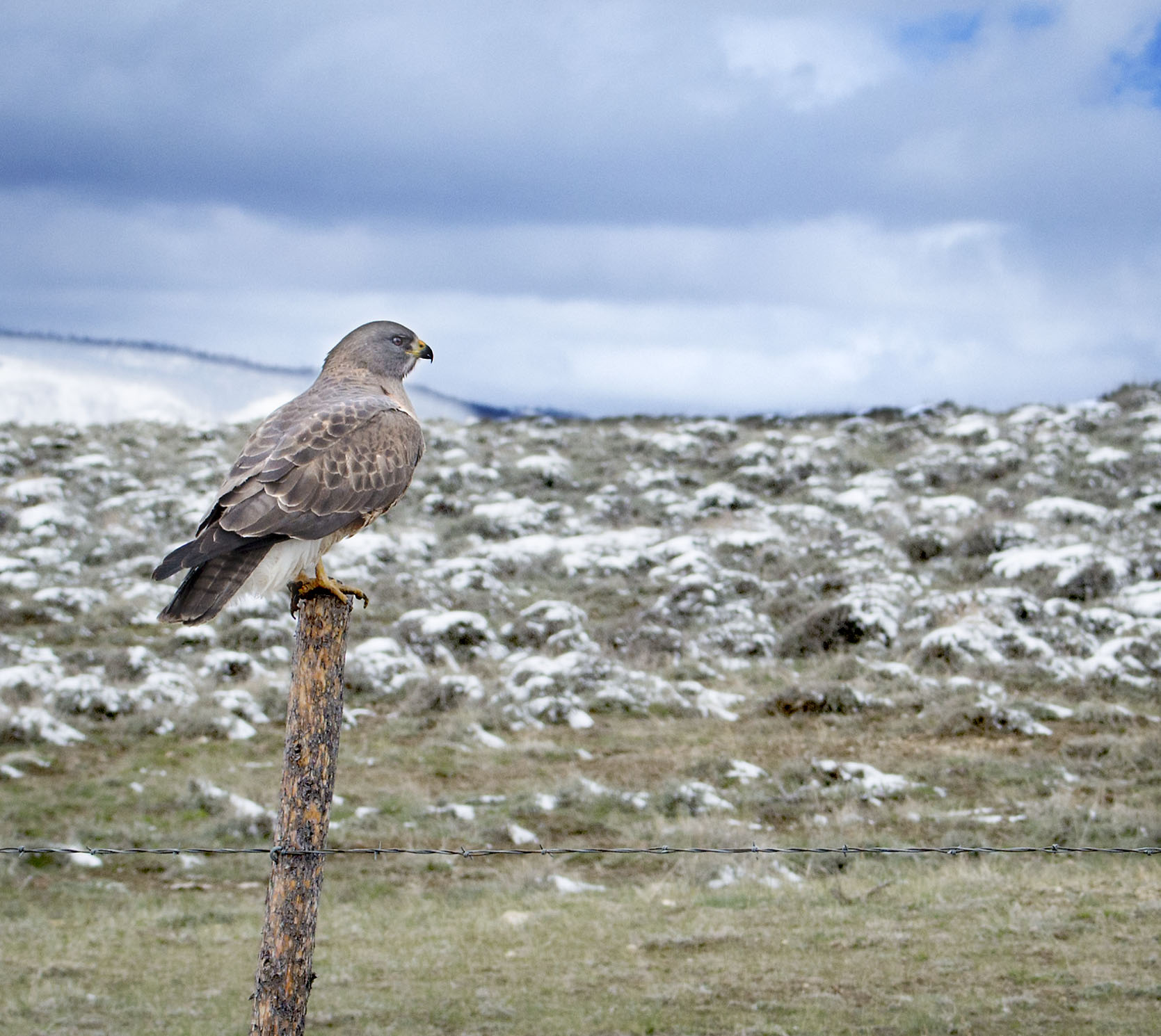
After a snowy evening and long cold night a Swainsons Hawk uses a fence post to keep an eye out for a morning meal. Photographed on a quiet stretch of road in Northern Colorado.
Male Ruffed Grouse: Bonasa umbellus
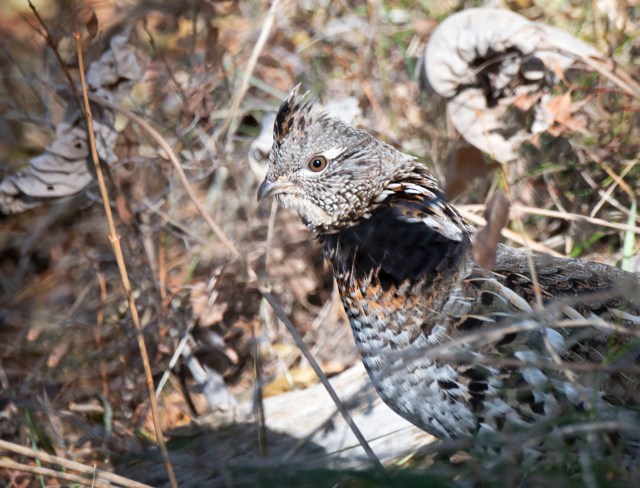
We caught each other by surprise this afternoon. Both walking quietly through the woods me on the trail he through the brush. Once we eyed each other I reached for the camera and got a quick photo. Head held high gave me the once over before quickly flying off into the woods. A quick and satisfying encounter for me and given I was not a hunter for him as well.
Stellar’s Jay: Cyanocitta stelleri
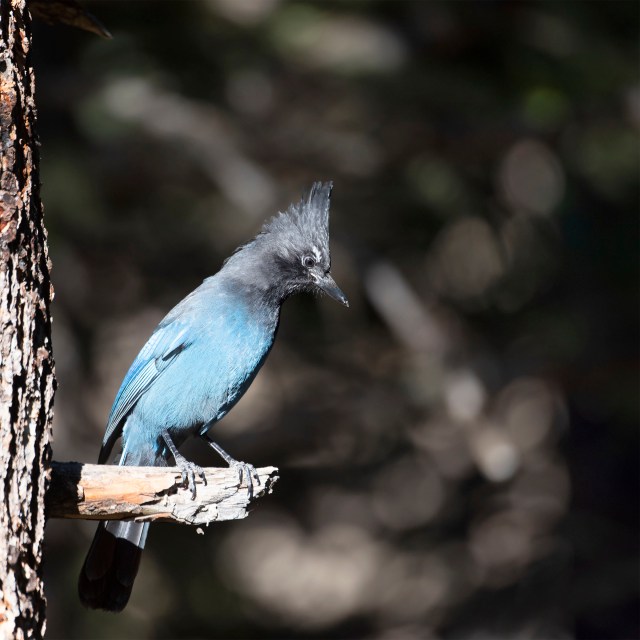
Always Quick to disappear into the darkness of the canopy of spruce trees nearby this Stellar’s Jay sat for just a short while in the rays of the afternoon sun exposing their brilliant blue feathers and wonderful black crest. While their calls may be harsh and somewhat scolding in nature they are a pleasure to see adding a big splash of color to brighten the day.
Onward and upward

A small Brown Treecreeper eyes the way onward and upward with the hopes of finding a small grub along the sloping landscape of a cottonwood tree. Photographed along Clear Creek in Denver, CO.
 nature has no boss
You must be logged in to post a comment.