
How fun it would be to see what this Cormorant sees. Mendocino Coast, CA.
For the next couple of weeks we will be posting some of our favorite posts from the past as we take a small respite from the digital world.

How fun it would be to see what this Cormorant sees. Mendocino Coast, CA.
For the next couple of weeks we will be posting some of our favorite posts from the past as we take a small respite from the digital world.
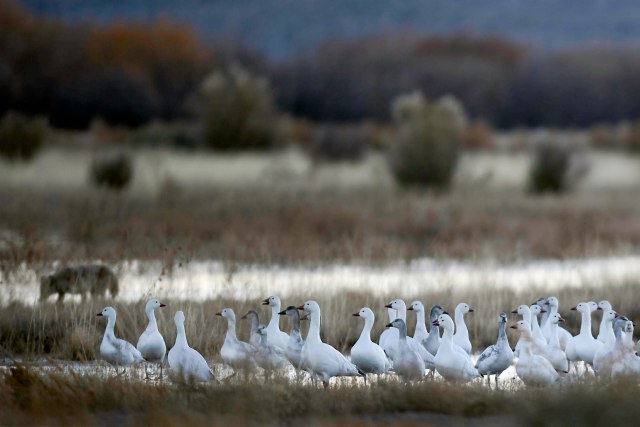
Although the snow geese and the coyote seemed content to be going about their respective business in the pre-dawn light I think this might change as the day goes on.
For the next couple of weeks we will be posting some of our favorite posts from the past as we take a small respite from the digital world.
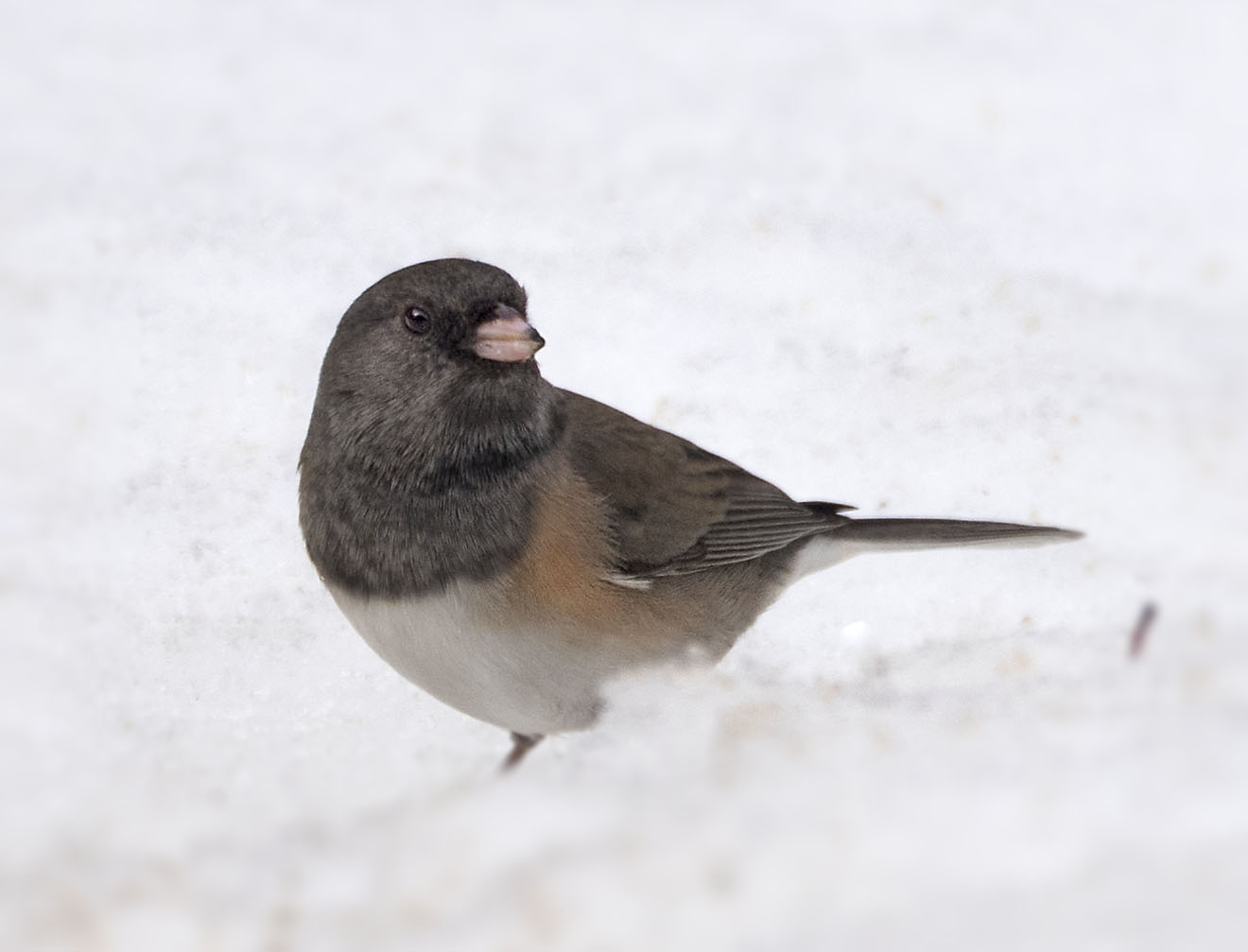
One of our favorite winter visitors are the dark eyed Juncos. They always bring a bit of color to a cold snowy afternoon.
For the next couple of weeks we will be posting some of our favorite posts from the past as we take a small respite from the digital world.

It rained and it rained and it rained but this Gull just took it it in stride perched on a magnificent weathered log along the Northern California Coast.
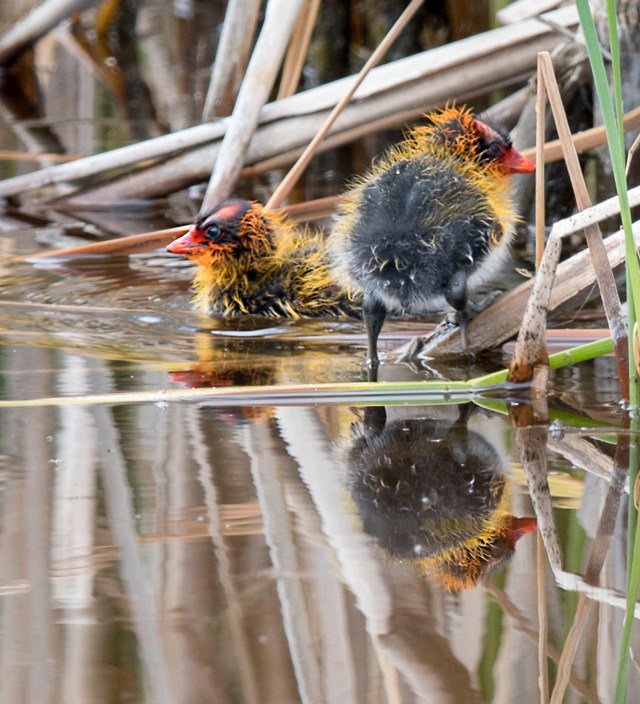
That is a question a team of biologists have been asking for quite some time and, as is typical in science, the answer was not what they first expected. Previous studies conducted by this same laboratory concluded that coot parents preferentially feed chicks that display brighter coloration. The goal of the present study was to determine why this was the case.
The researchers noted that coots lay between 8-10 eggs and these eggs hatch in the order they were laid. Additionally coots are nest predators and lay eggs in other coots nests. One hypothesis was that the chicks hatched from predatory eggs were the more brightly colored chicks and thus would have gotten fed more. This turned out to be false. The researchers discovered that the chicks hatched from the latter laid eggs were the more brightly colored. Typically chicks hatched latter in a brood have to catch-up to their larger siblings if they are to survive. The researcher noted that if these smaller and brightly colored latecomers survived the parents would use their coloration as a way to preferentially feed these chicks more and allow them to catch-up to their earlier siblings. 2
A wonderful survial strategy reveled in a nicely done study. Hat’s off to science and to the coot.


References:
1. University of California – Santa Cruz. “The mysterious case of the ornamented coot chicks has a surprising explanation: The bright colors of the chicks of American coots help their parents choose favorites, according to a new study.” ScienceDaily. ScienceDaily, 31 December 2019. www.sciencedaily.com/releases/2019/12/191231111817.htm.
2. Bruce E. Lyon, Daizaburo Shizuka. Extreme offspring ornamentation in American coots is favored by selection within families, not benefits to conspecific brood parasites. Proceedings of the National Academy of Sciences, 2019; 201913615 DOI: 10.1073/pnas.1913615117

Noisy yes, but oh so beautiful, especially in flight, a Black-billed Magpie sits quietly on a snowy afternoon. The magpies in our area are very skittish and difficult to sneak up on for a photograph. We see them all the time but even a quick look in their direction has them flying away.
Intelligent and pretty good looking and a fine way to brighten a cold snowy day.
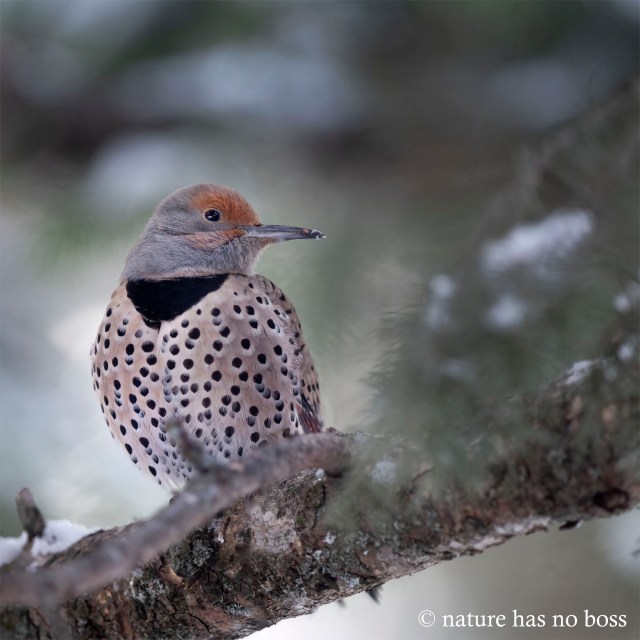
I really don’t know how you could dress better than this?
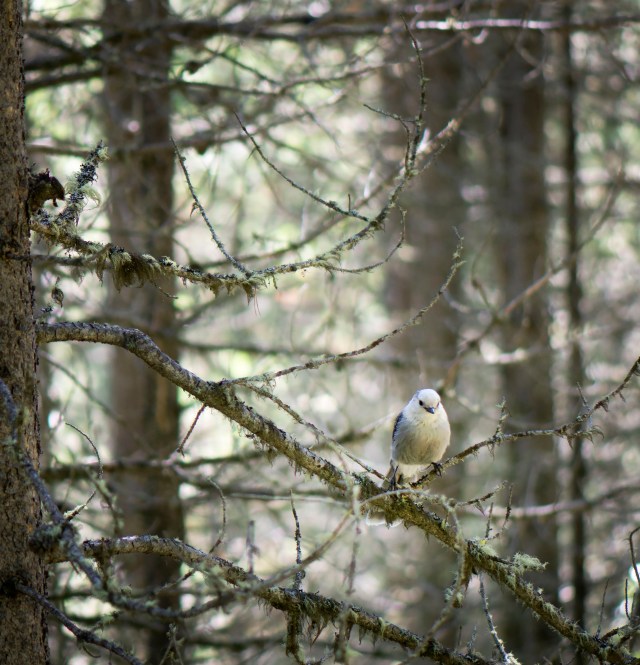
Feeling right at home in a lichen filled forest.
Both us and the Canada Jay.
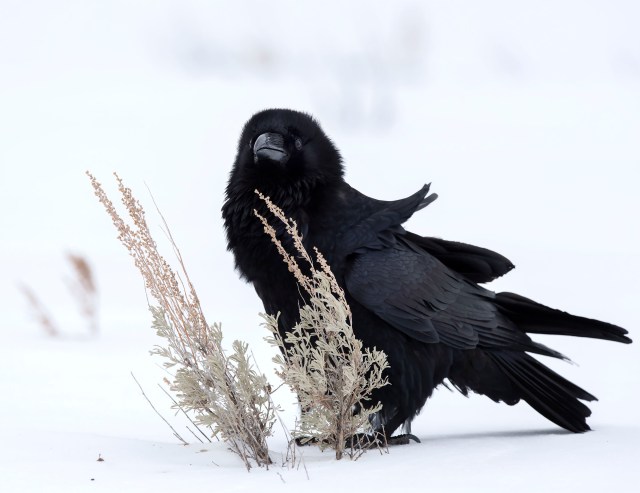
With the tips of a sage bush just poking above the snow a Raven endures the winter winds and cold while searching for the next meal.
From afar a black and white scene yet bursting with color the closer we got.
Happy Friday and a great weekend to all.
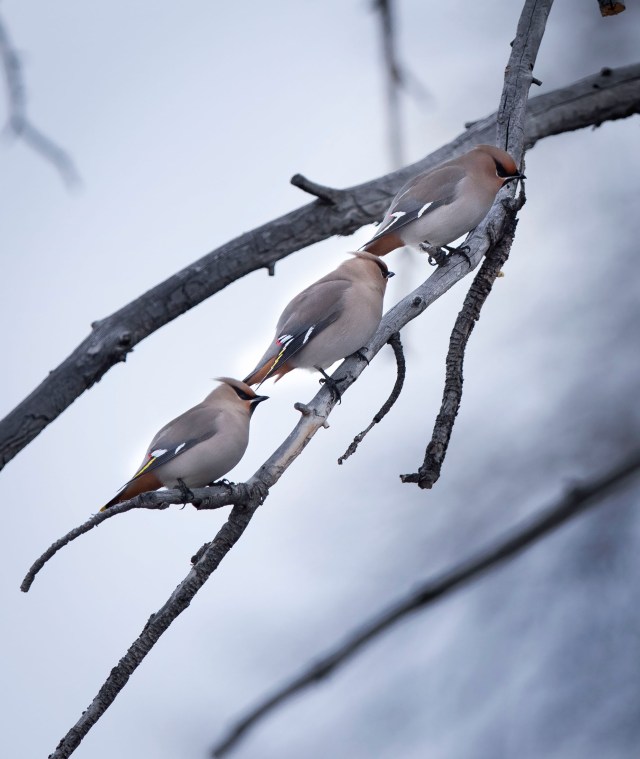
It was an overcast morning and difficult to make out the details but it sure looked like there were a handful birds hanging out in a juniper bush as we speed along a quiet road. We decided to turn around and take a quick look and spotted a beautiful trio of Bohemian Waxwings. These three quickly flew off while we were watching but landed just across a small creek in a juniper loaded with berries and a large flock of Waxwings buzzing about in constant motion picking the berries for their morning meal.
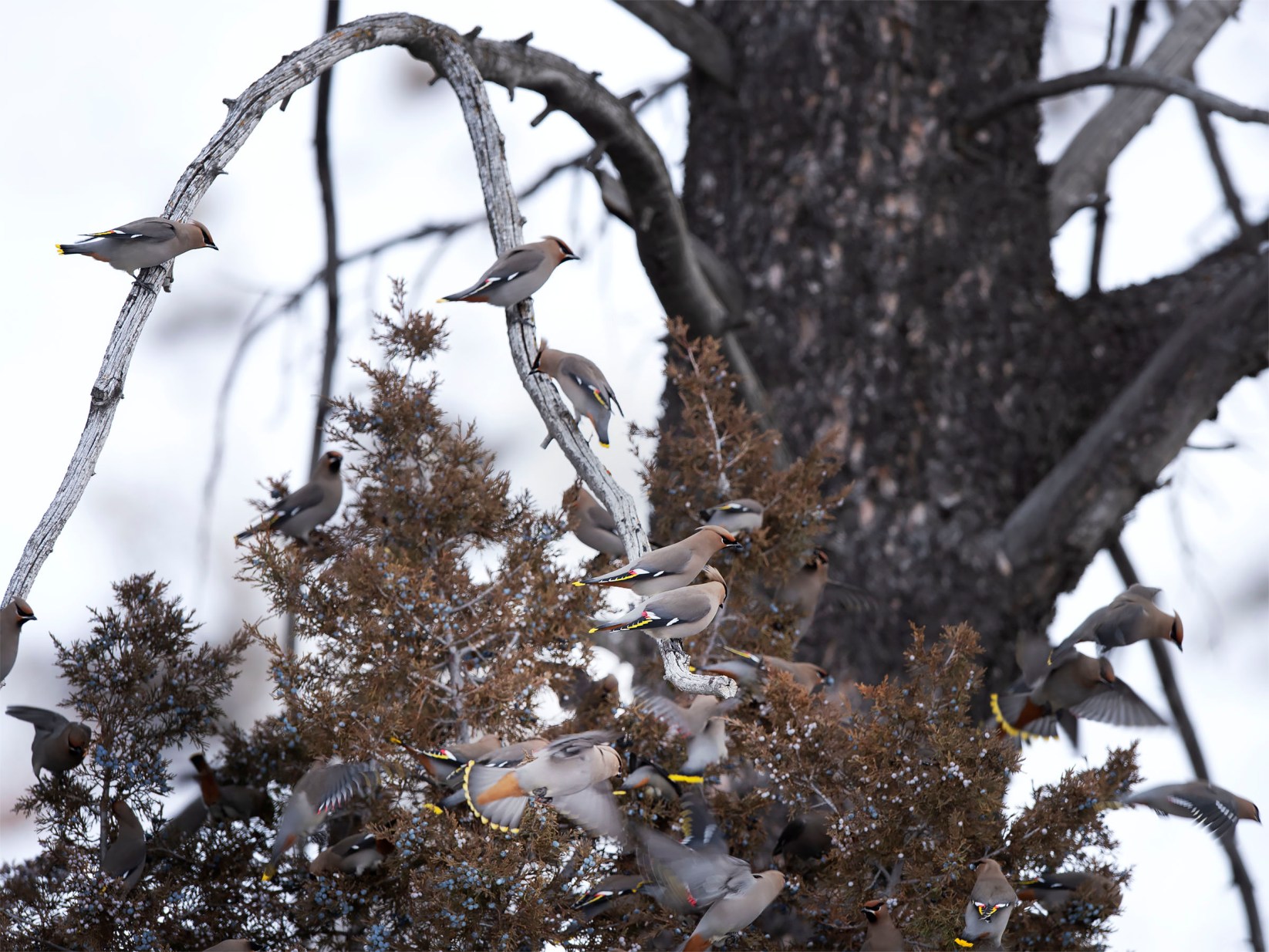
It was a whirlwind of activity with birds coming and going, picking berries, and perhaps, just for a small moment, sitting still.
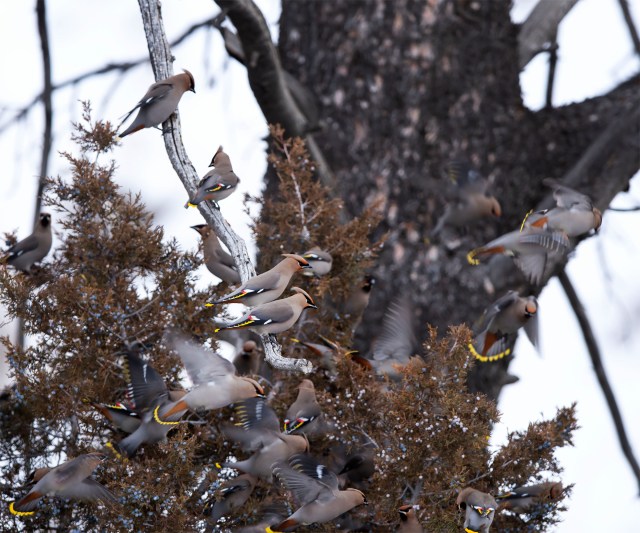
The beautiful colors of these birds were flashing brightly in the dull overcast light and made for quite a show.
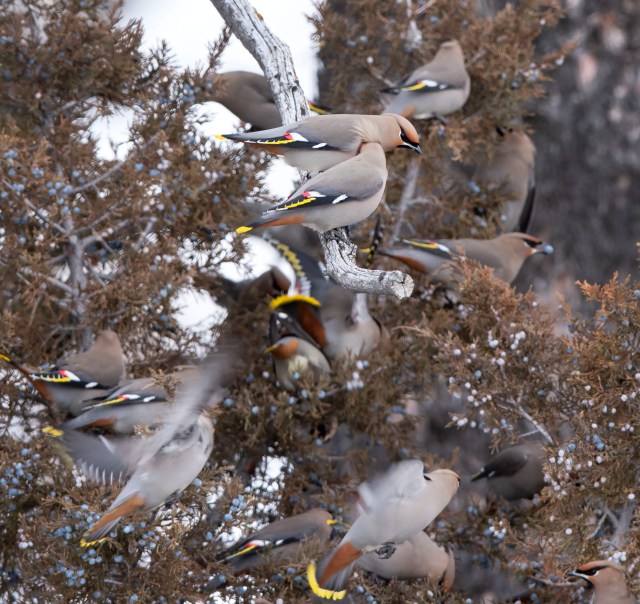
The berries and the birds made for a fine start to the day.
 nature has no boss
You must be logged in to post a comment.