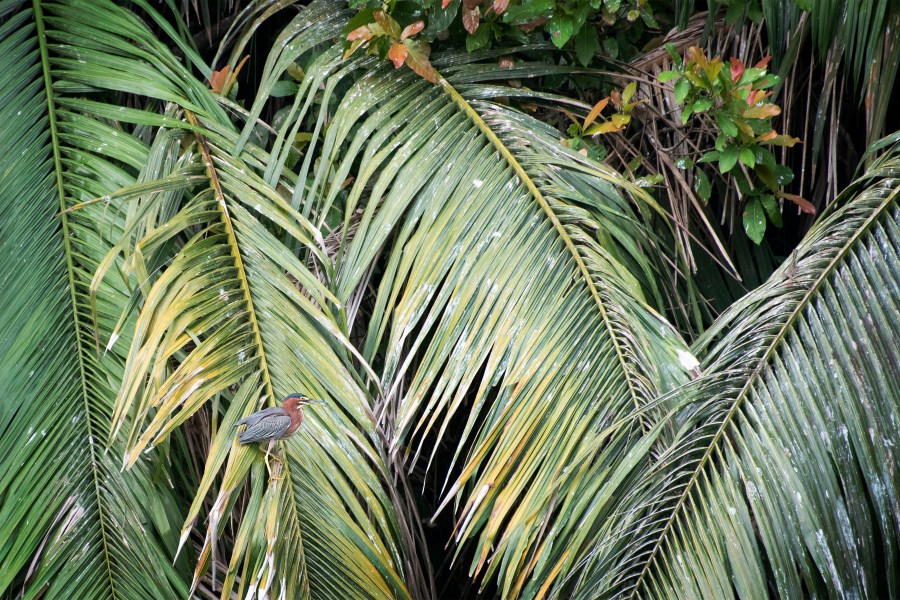
A Green Heron perches upon a gigantic palm frond making what we consider a fairly large bird look small by comparison. Photographing the Flora and Fauna as one always presents quite a challenge yet tells a story that’s important to hear.
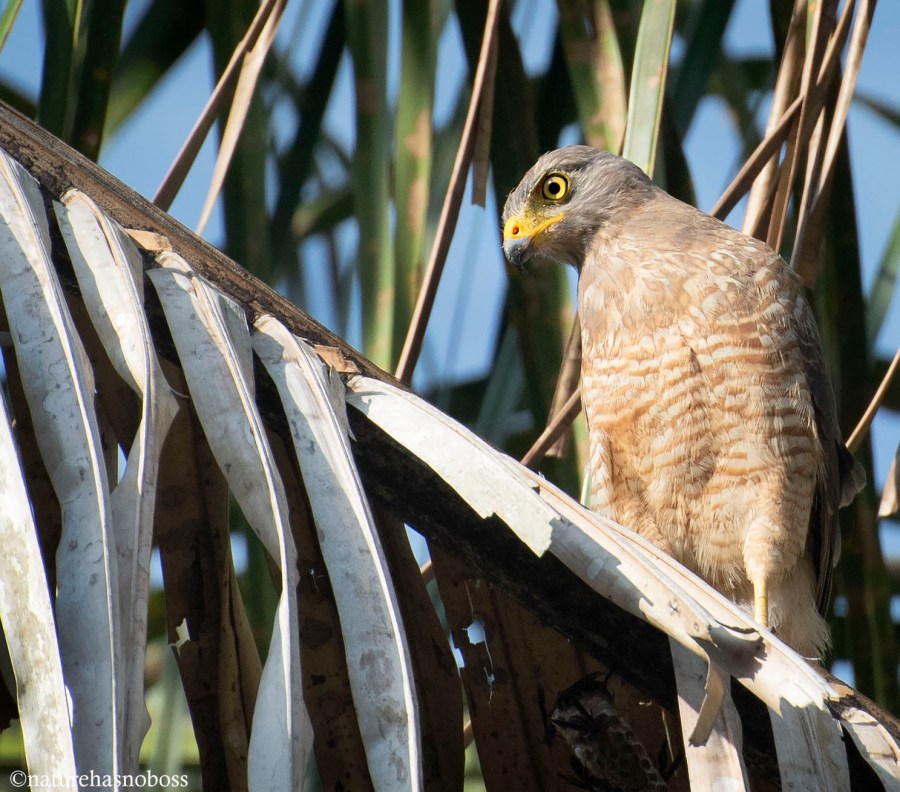
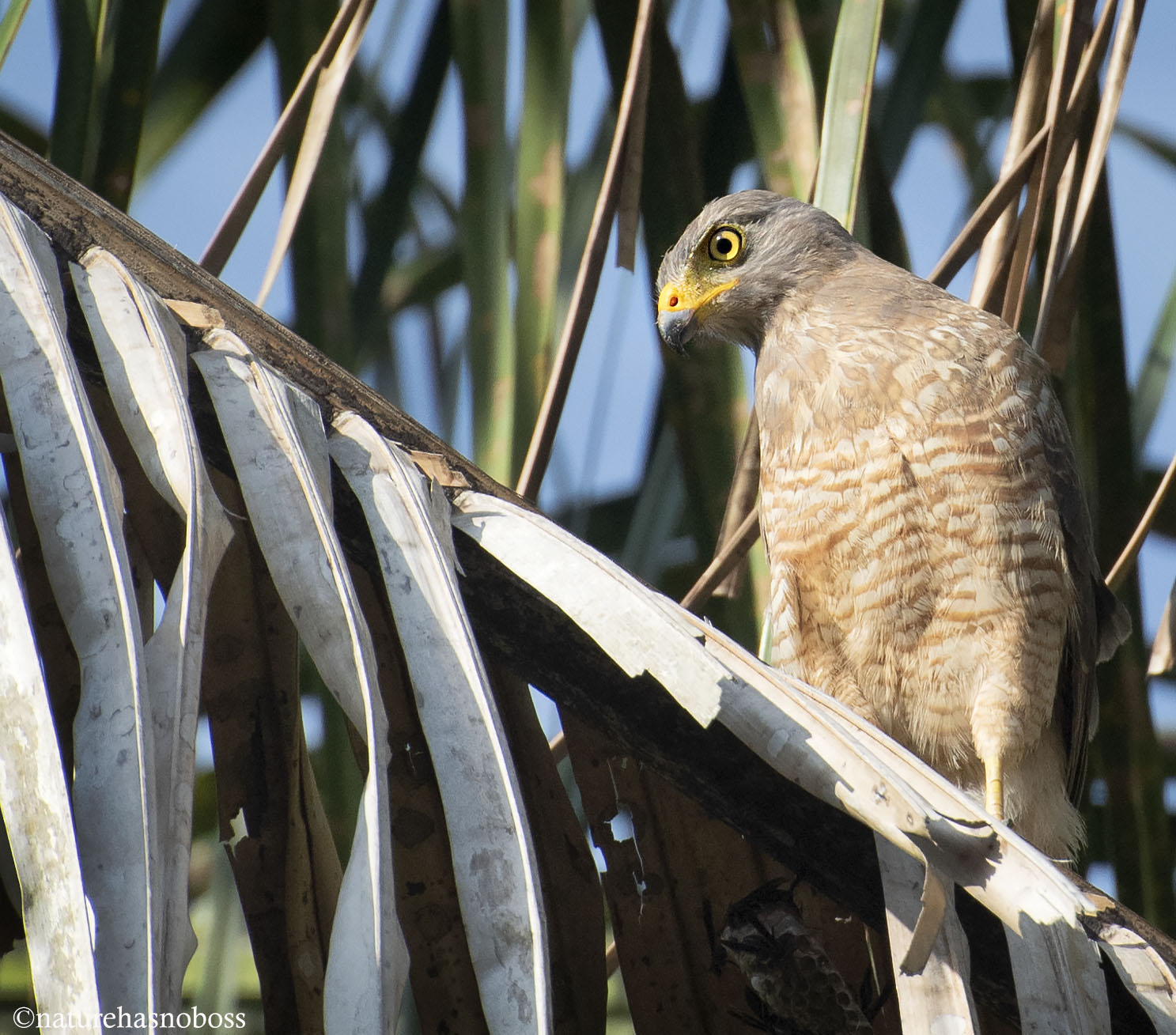
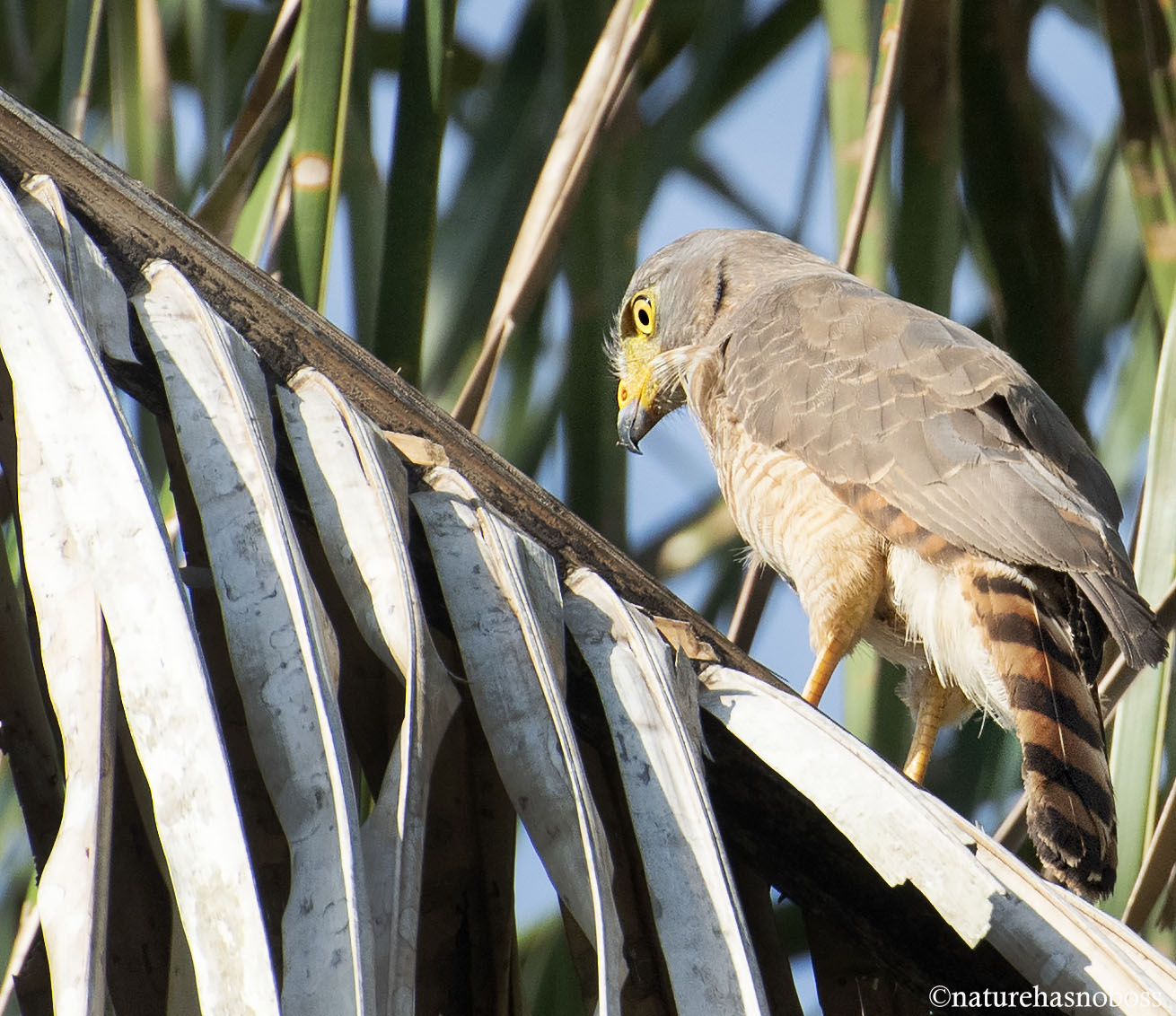
The Roadside Hawk is on the most common raptors encountered at the edge of forests and cleared fields ranging from Northern Mexico all the way south to Argentina. There are at least 12 subspecies with most being similar in appearance with a grey head, yellow cere, rufous banding across the breast and striped tail. The Roadside Hawk is opportunistic and hunts insects, reptiles and small mammals. We encountered this individual several years ago on a large palm tree peering out into some cleared pasture.
A intense looking hunter and a good look at the banded tail.
Reference:Bierregaard, R. O., P. F. D. Boesman, and G. M. Kirwan (2020). Roadside Hawk (Rupornis magnirostris), version 1.0. In Birds of the World (J. del Hoyo, A. Elliott, J. Sargatal, D. A. Christie, and E. de Juana, Editors). Cornell Lab of Ornithology, Ithaca, NY, USA. https://doi.org/10.2173/bow.roahaw.01
A tiny Yellow Rumped Warbler found the bull kelp a perfect perch for hunting sand flies and other small insects on the beach. This girl would quickly dart down form the kelp to snag a small meal and quickly return to her perch. Seeing her sitting on the head of the bull kelp made us realize just how small she was. We watched a documentary about songbirds the other night called The Messenger.
It is a very timely reminder about what a world without song birds would be like.
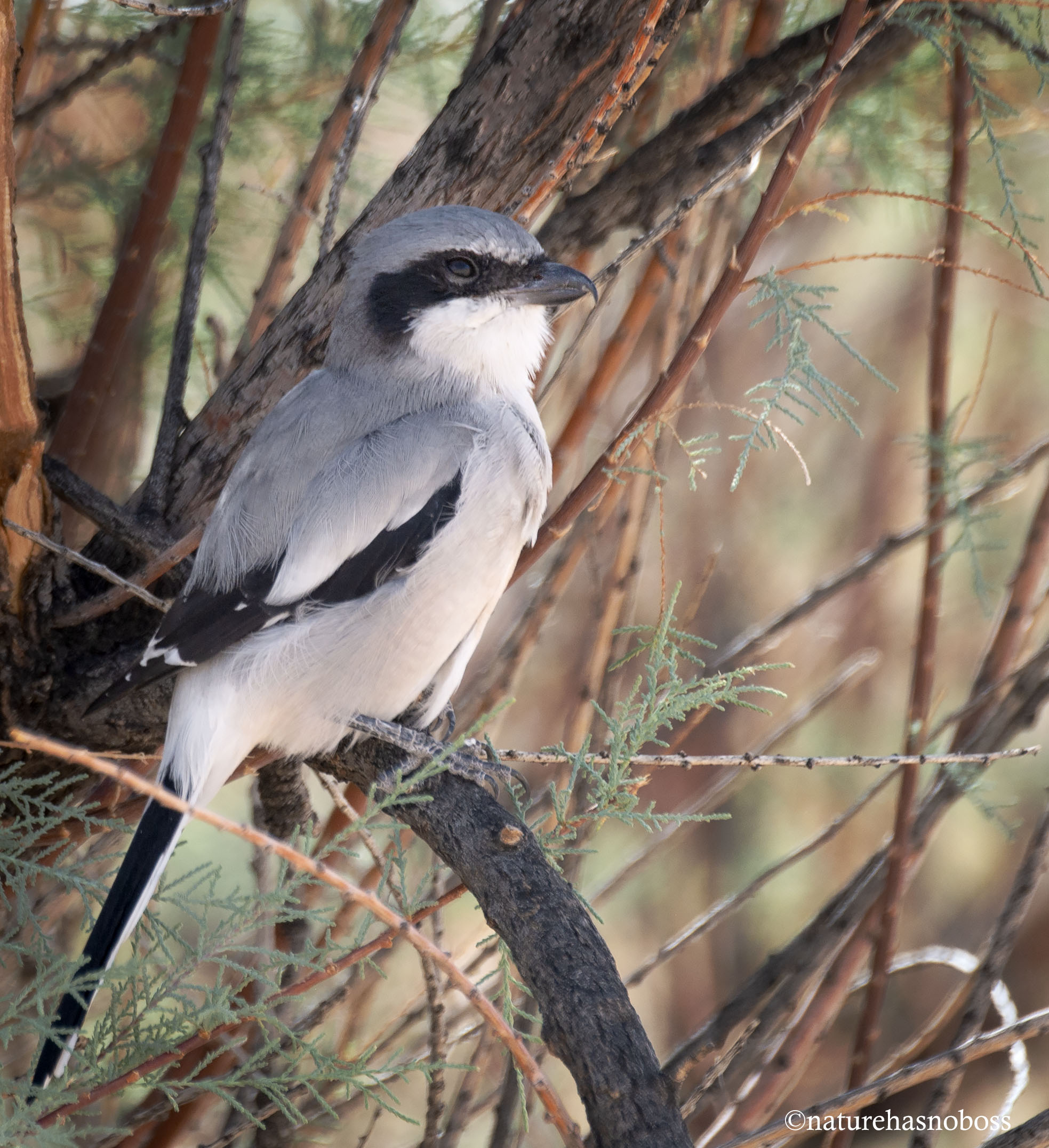
Somewhat hidden away we heard this Loggerhead Shrike singing away while enjoying lunch at a campsite last fall. This Shrike had a wonderful song that was similar yet more melodic than the example on the Cornell website. This bird was quite content and let us photograph it for quite some time. A wonderful experience indeed.
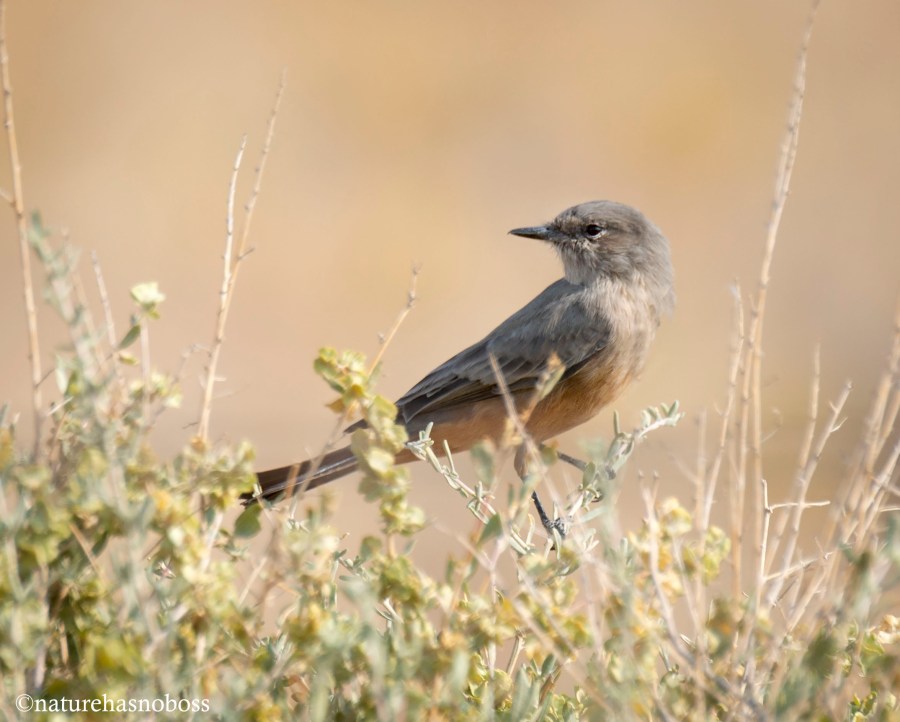
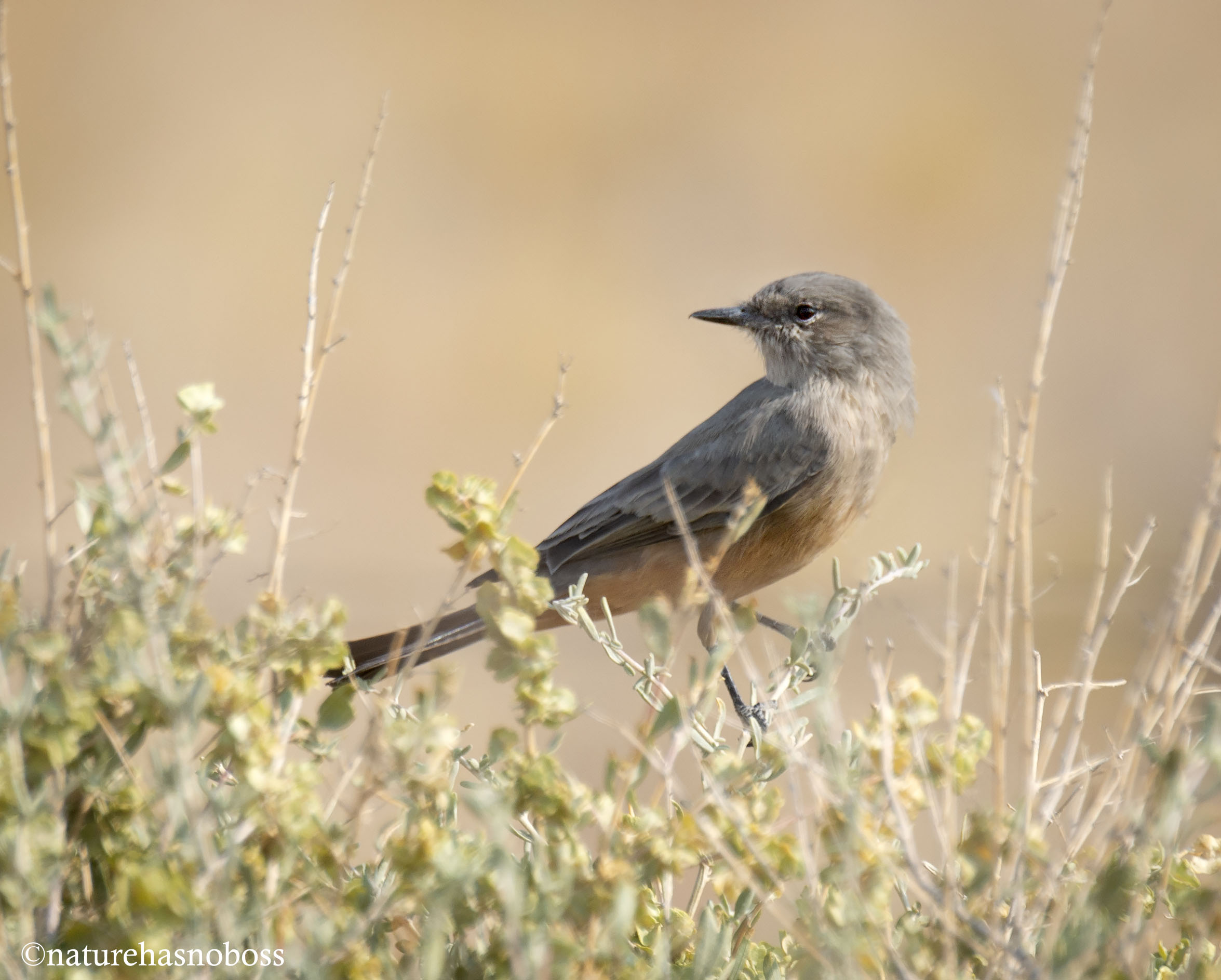
The Say’s Phoebe is a quiet, slightly understated and delightful flycatcher found in dry habitats of the Western United States. This day we found a Phoebe perched upon a shrub hunting for insects on the ground below. It would sally out in typical flycatcher fashion and return to a similar location in this shrub sometimes with meal in beak.
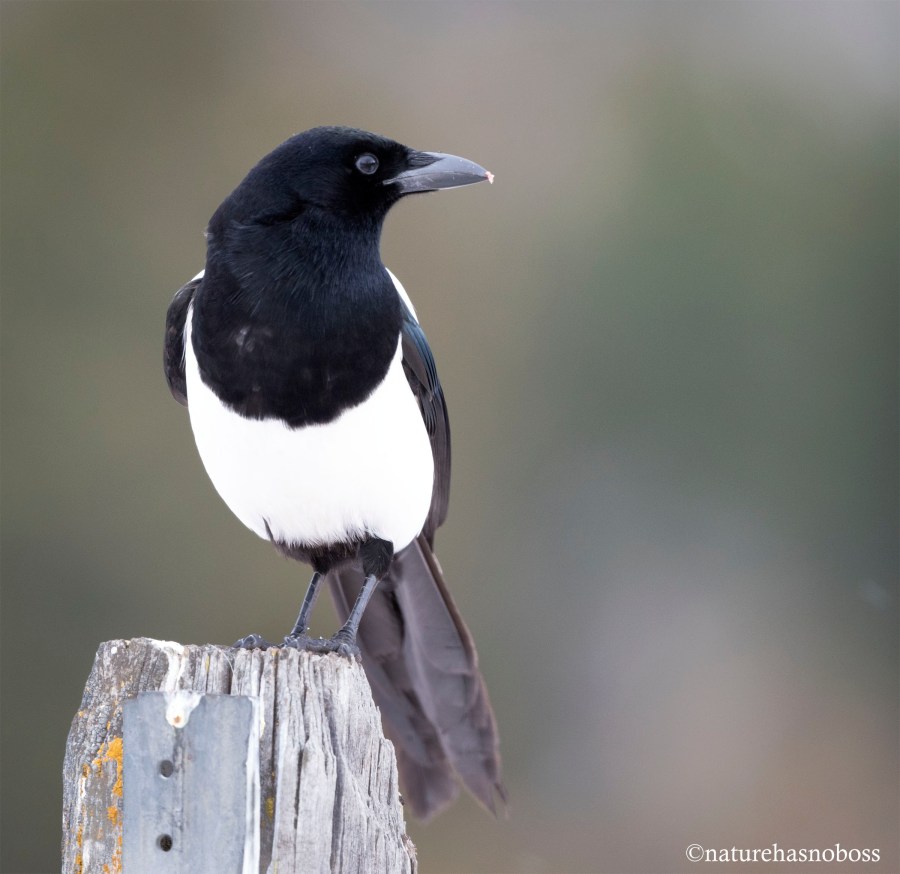
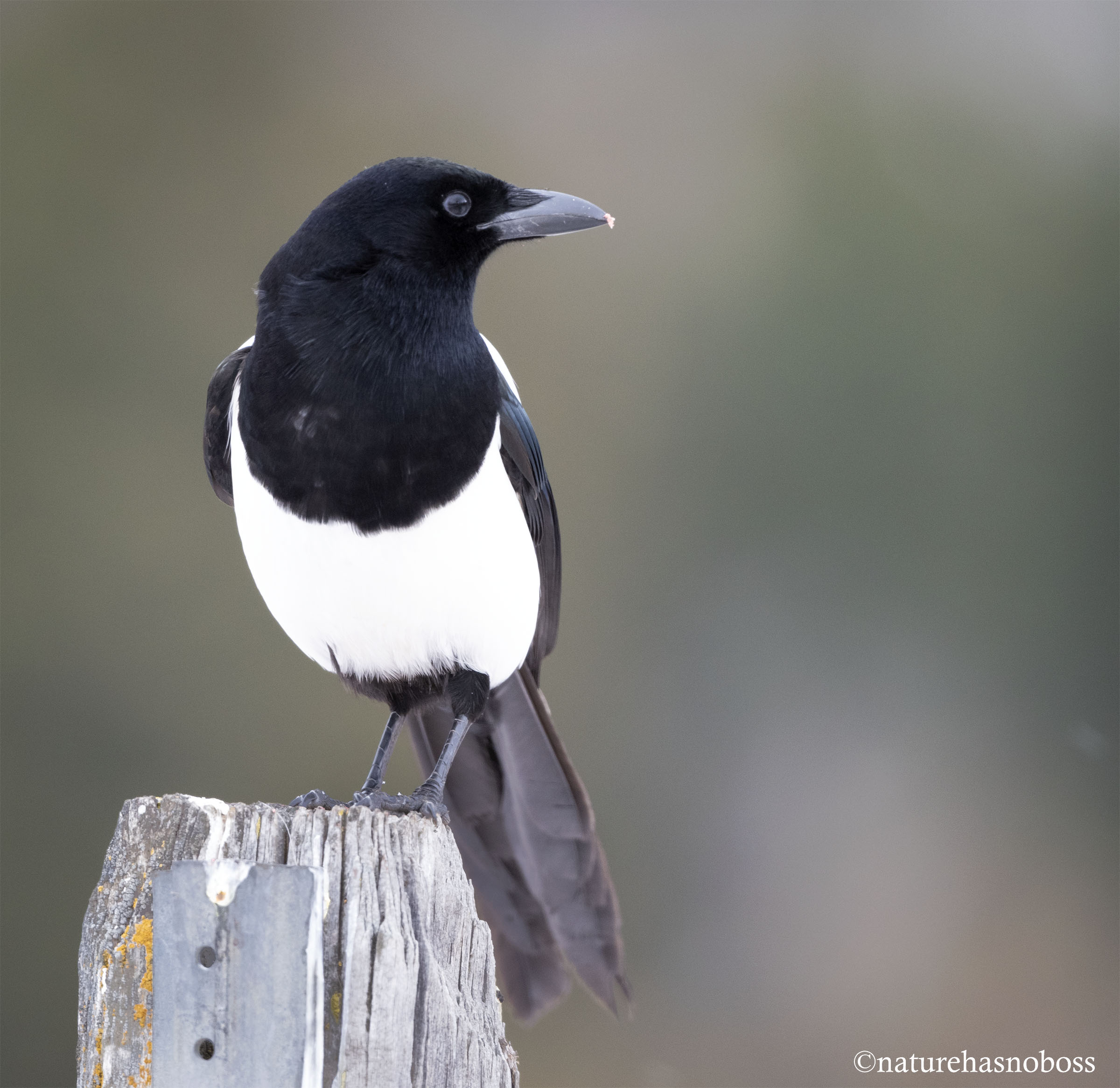
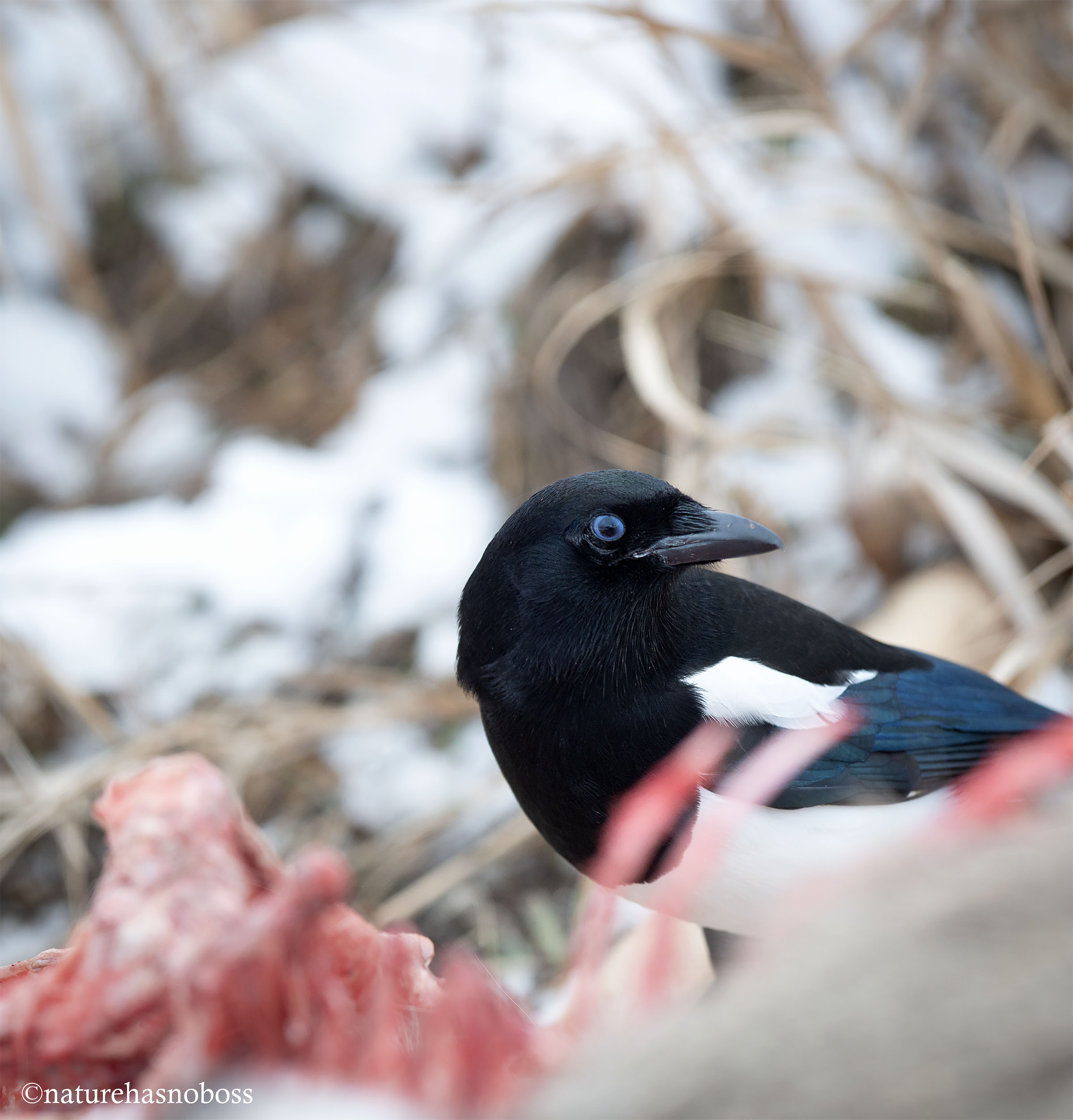
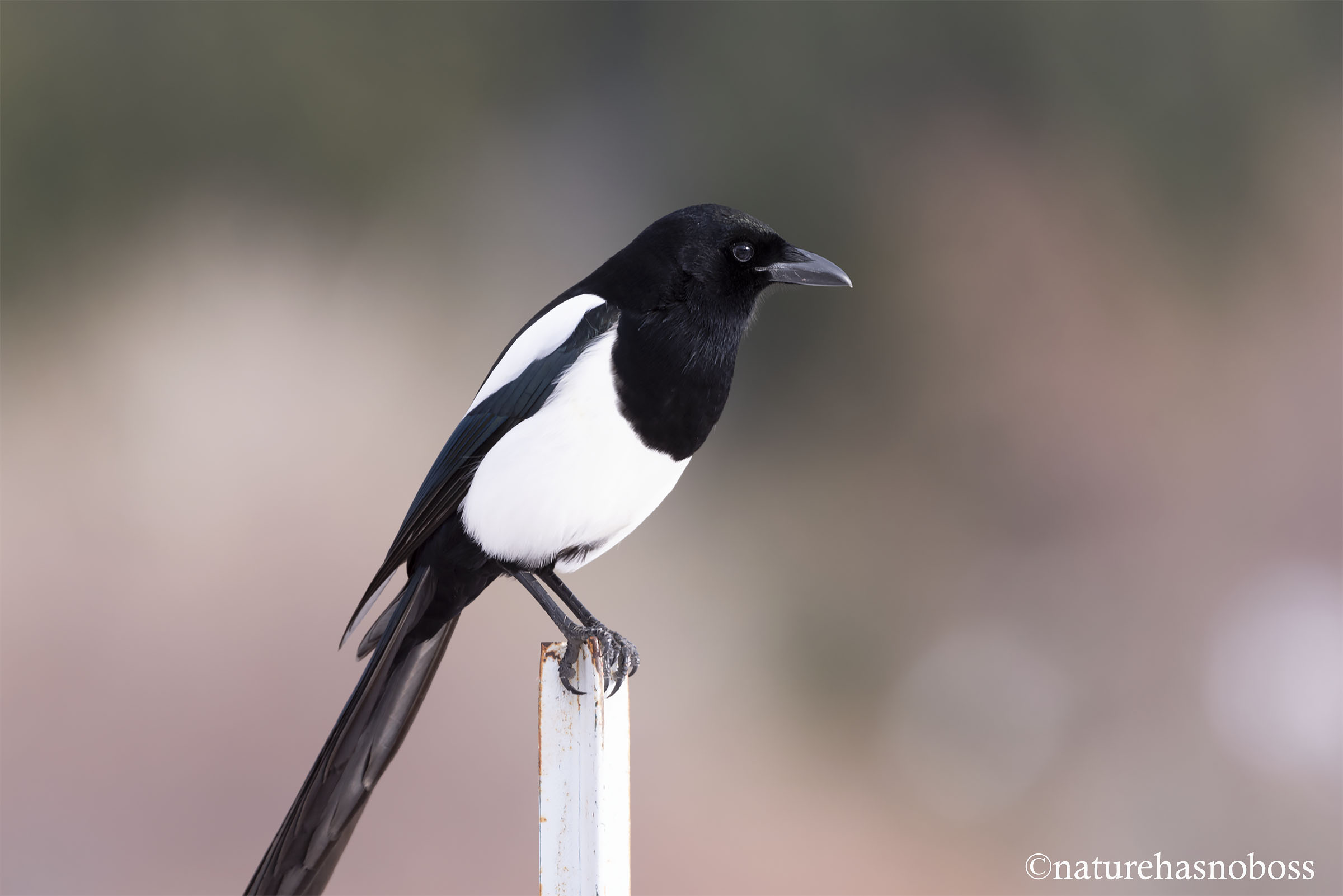
A Black-billed Magpie rests on a fencepost while over a dozen and perhaps more other Magpies feast on a Mule Deer Carcass nearby. In our neck of the woods Magpies are shy and typically fly off well before we can get a camera pointed on them. This day their attraction to the nearby feast overshadowed thier reluctance of humans and we got to observe them close-up for a significant amount of time.
We seldom see the blue in the eyes of magpies but this day was an excepting.
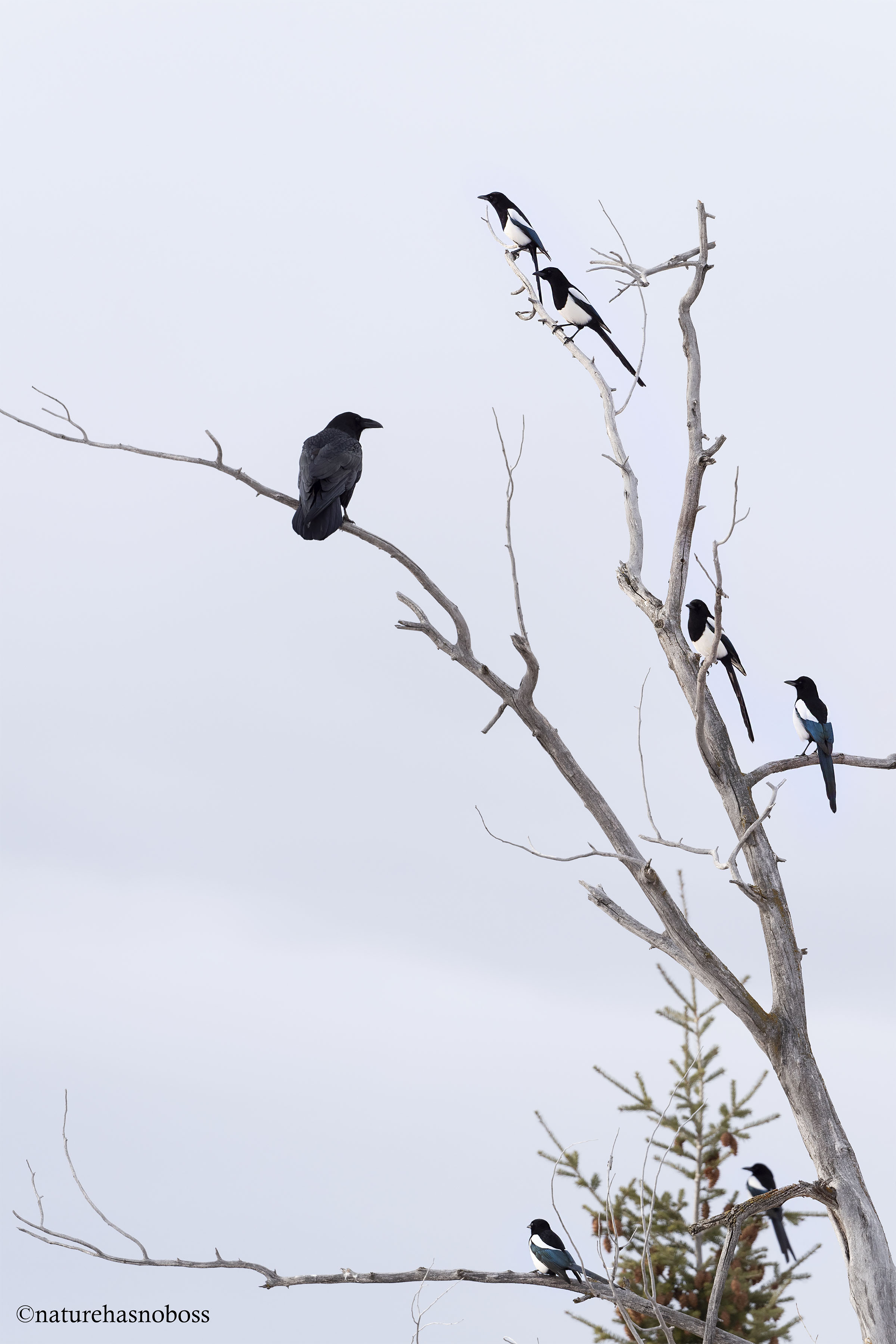
Seven Black-billed Magpies keep an eye out on a Corvid relative the Common Raven who also had an interest in the nearby Mule Deer carcass. Needless to say, a seven to one advantage kept the meal out of reach for the Raven.
Each fall we leave the coneflowers alone in the garden hoping that finches will come by and get a nice meal. Until last week we had not had a finch visit. Well that all changed as a lone American Goldfinch wandered by and quickly took a liking to dried, but full of seeds, Coneflowers.
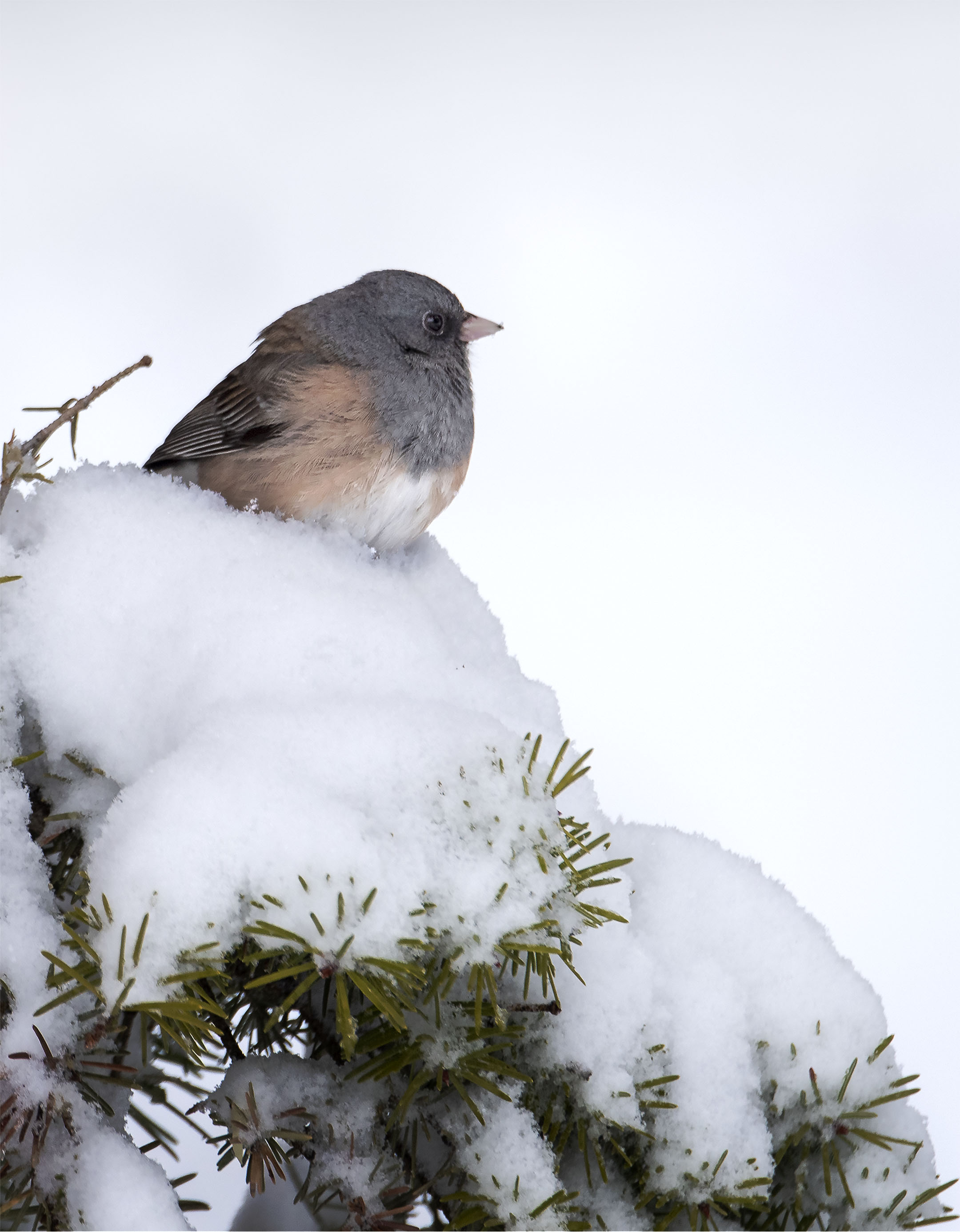
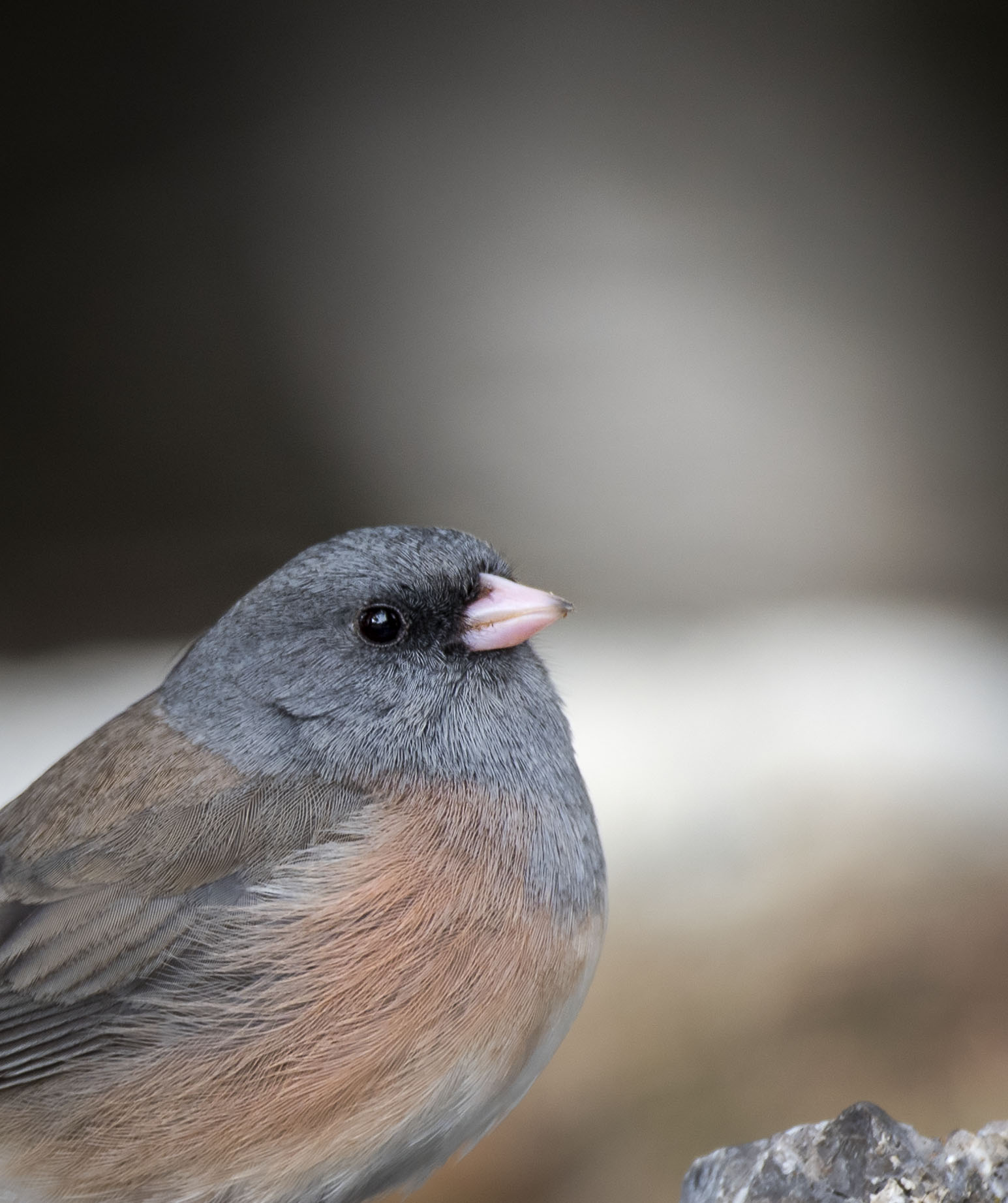
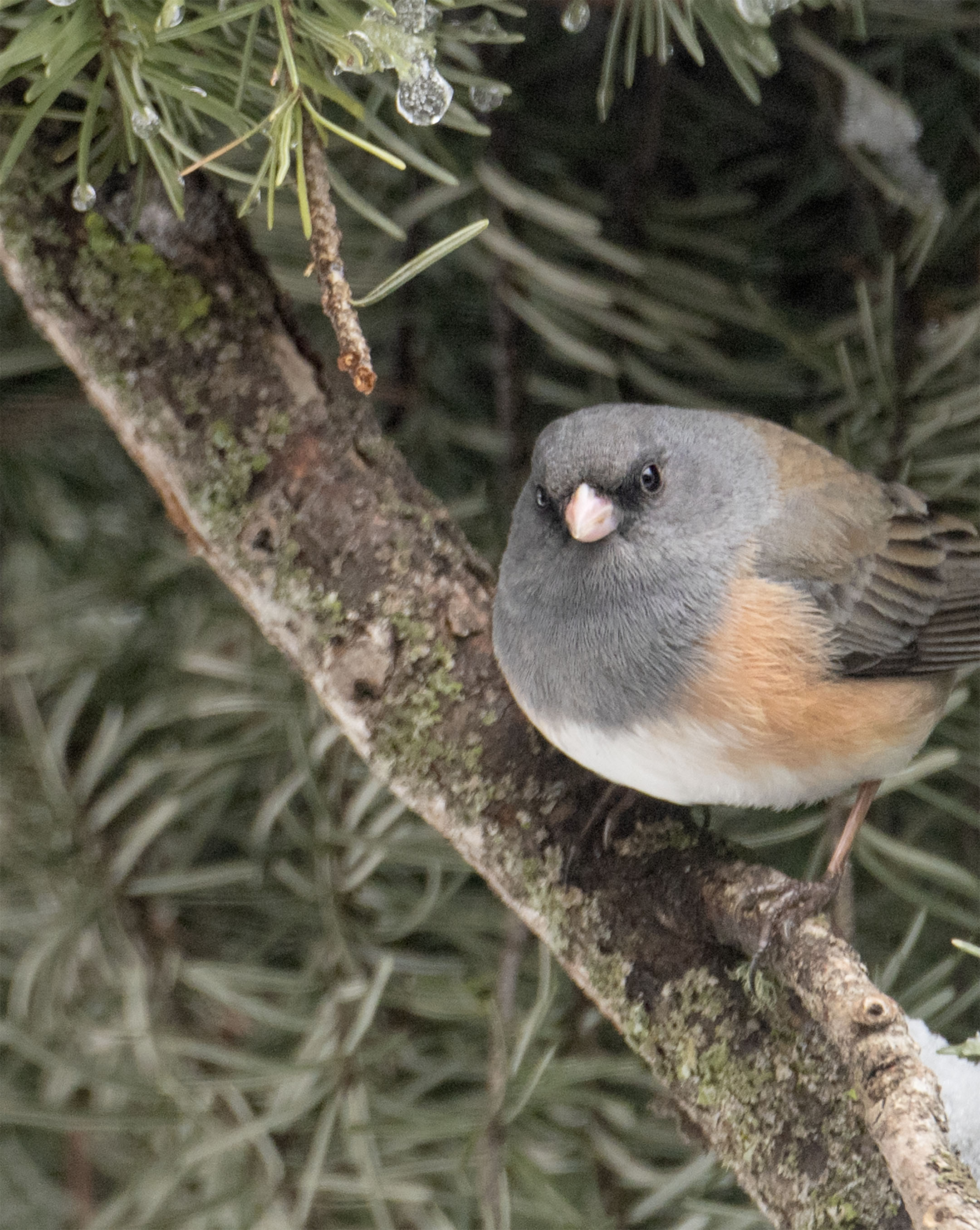
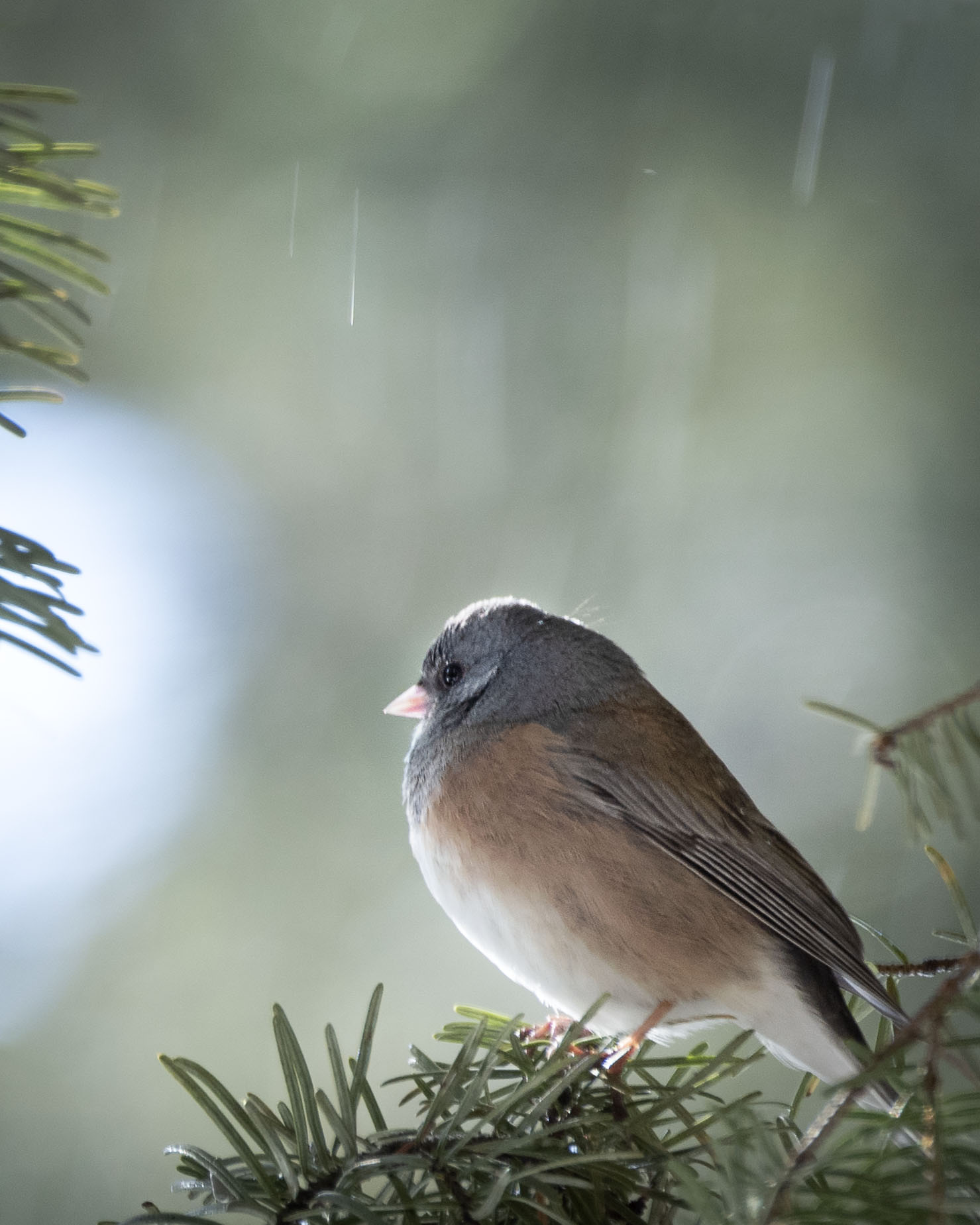
A little tribute to a good friend that we often hear singing from the junipers and shrubs which line the fields close by. Dark-eyed Juncos keep us company rain or shine and through wind and snow.









 nature has no boss
You must be logged in to post a comment.