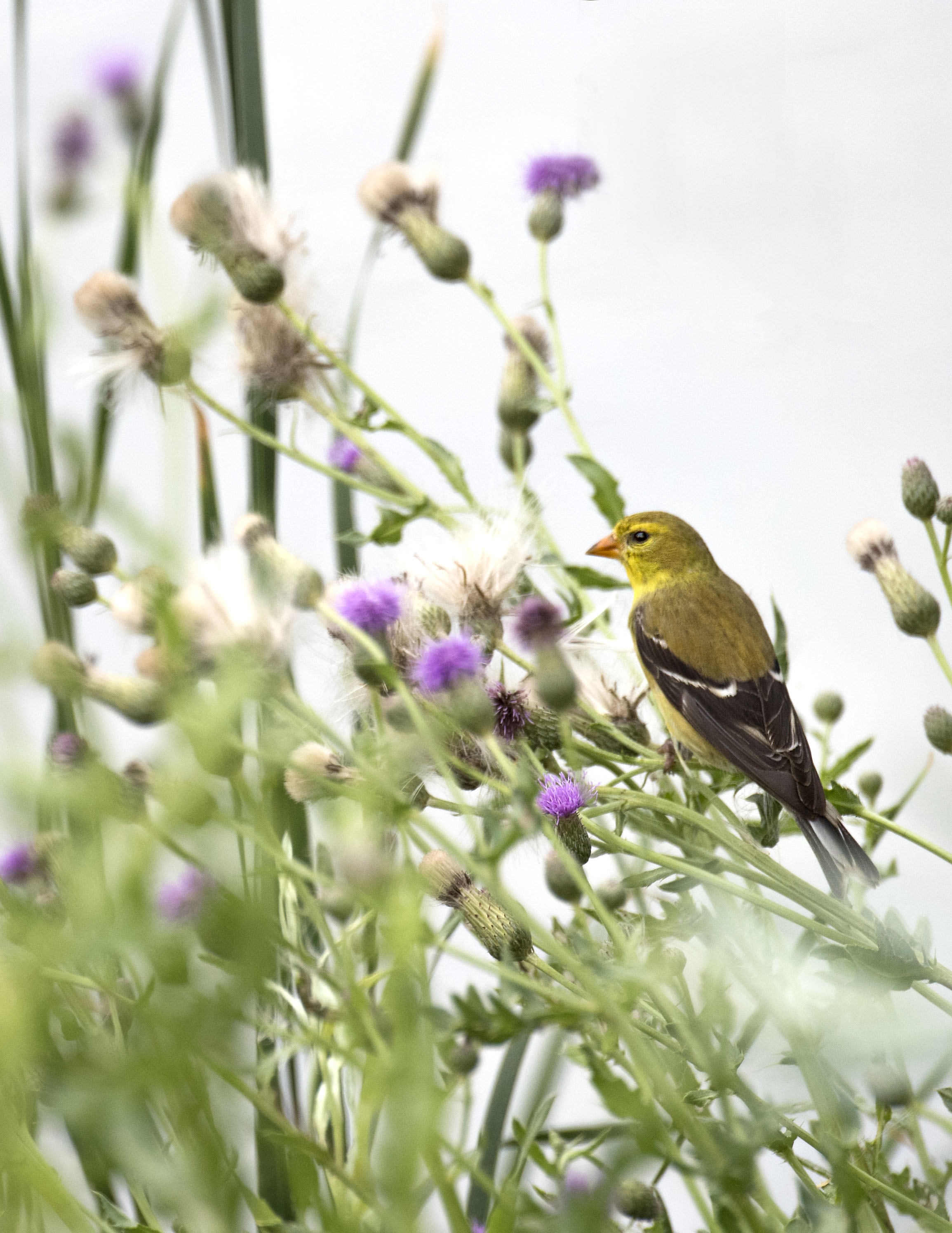
A Female American Goldfinch enjoying the Thistle on a cloudy summer afternoon.
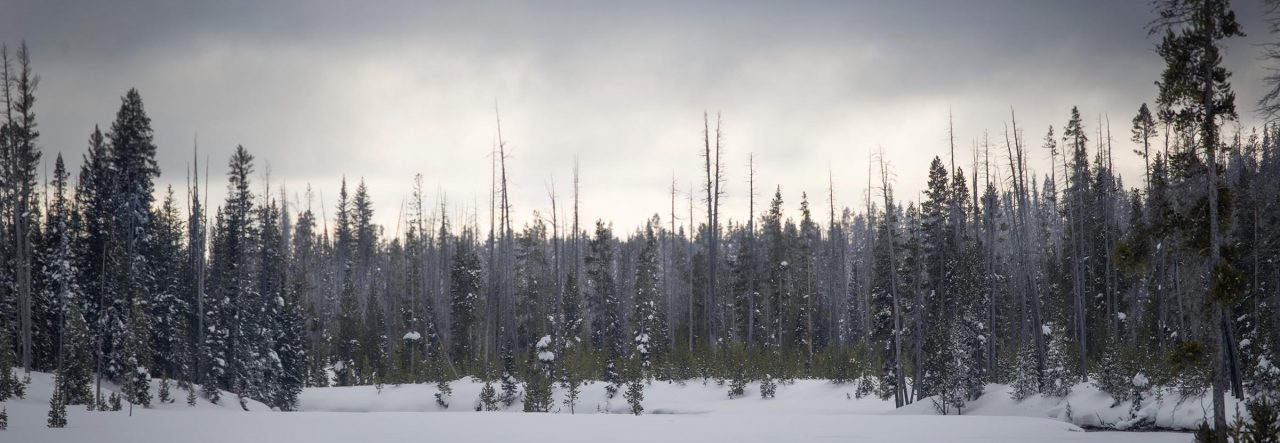
A Female American Goldfinch enjoying the Thistle on a cloudy summer afternoon.
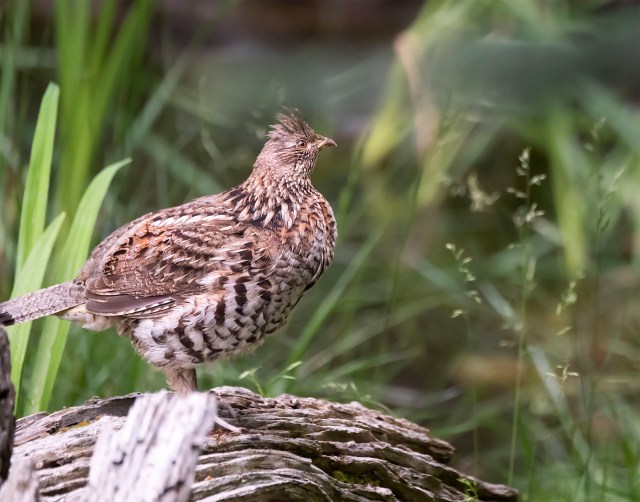
A ruffed grouse emerges from the deep grass to perch for a moment on a beautiful weathered log. It was not long before they hopped down and disappeared from sight just a quickly as they appeared.
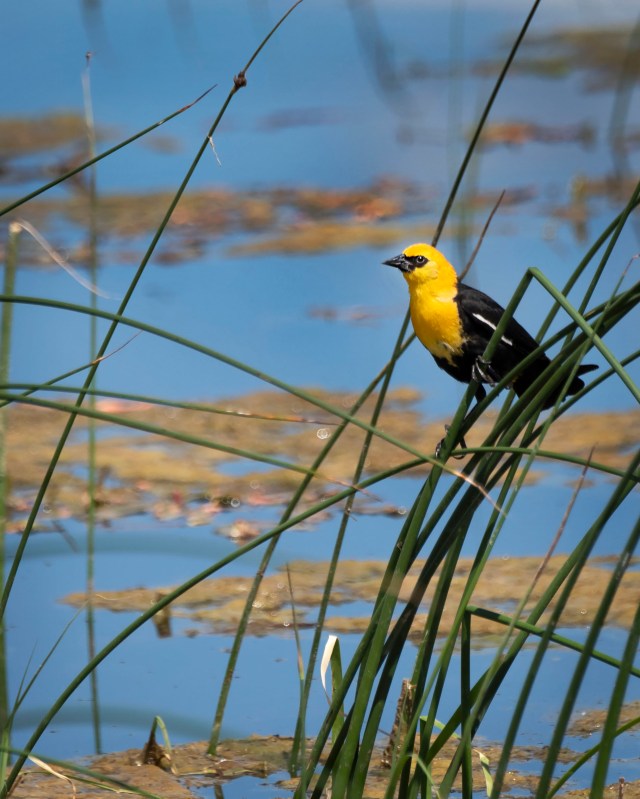
A blue sky reflecting in the waters with a Yellow-headed Blackbird perched along the cattails. That little bit of muck growing on the pond suggests that summer is moving right along.
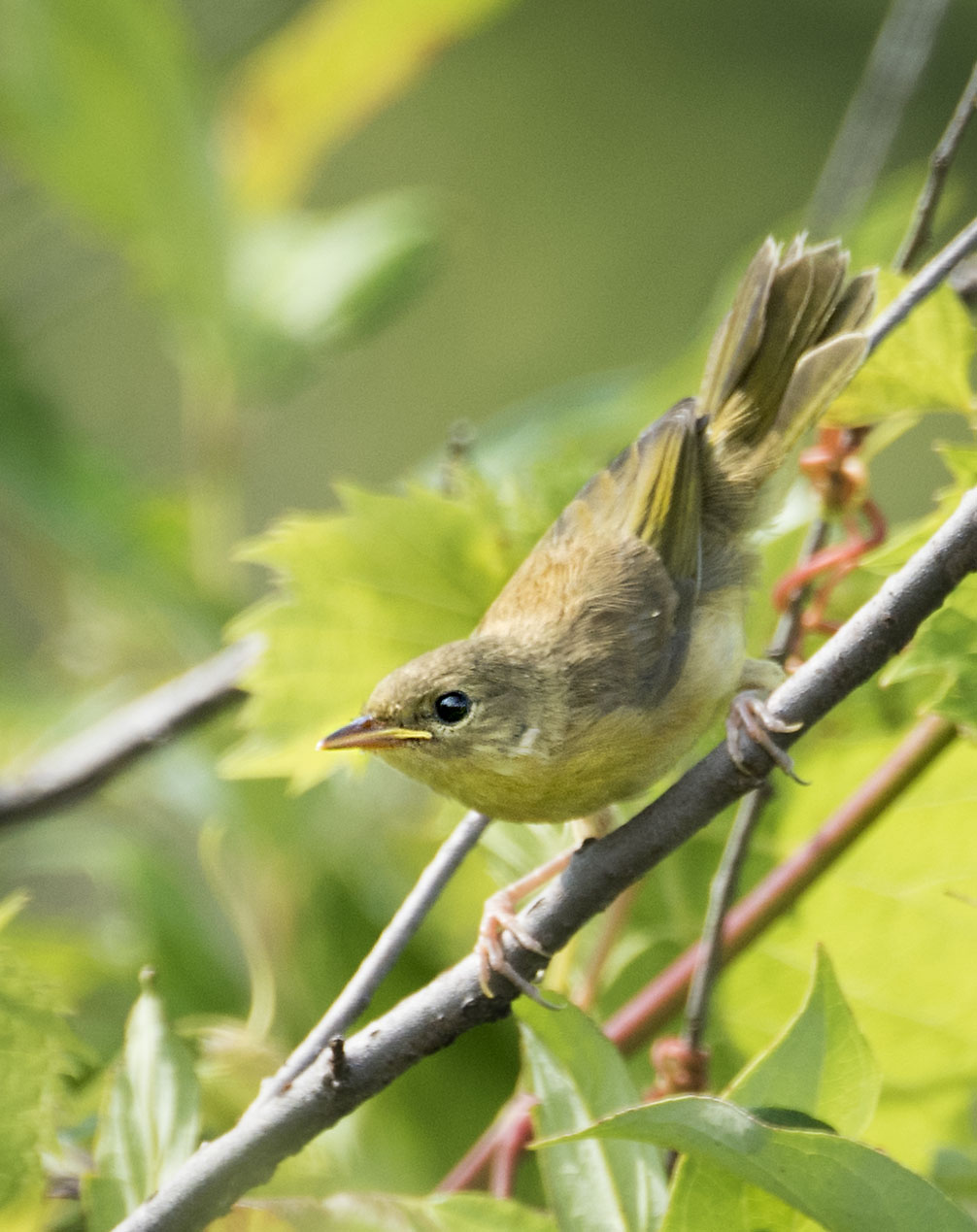

We spotted this Female Common Yellowthroat quickly moving in and out of the bushes while on a morning walk. While we most often see the males perched out in the open singing we very rarely have seen the female out in the open like this. She only stayed for a minute or two then flew off into a marshy area several hundred yards away.
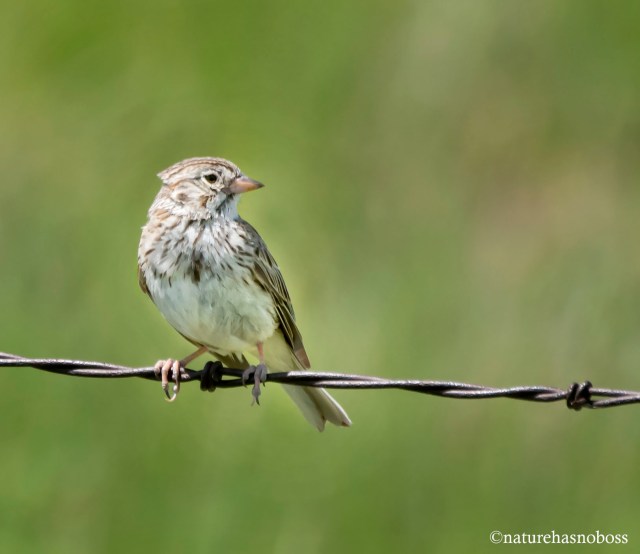
With talons that could be mistaken for the barbs of the fence itself a sparrow (Vesper?) eyes their next meal hidden somewhere in the green green grass beyond the fence.
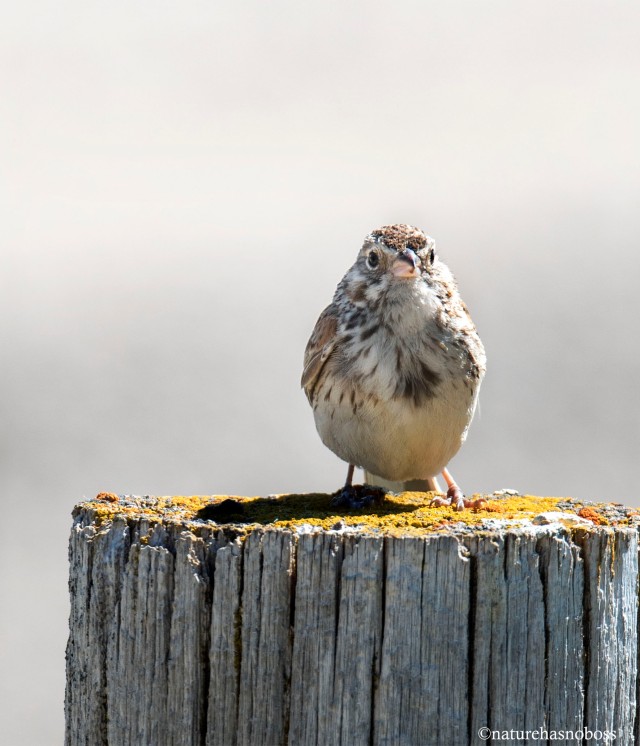
A lichen covered post seemed a suitable perch for this sparrow. Shades of brown, gray and orange all similar yet all distinct.
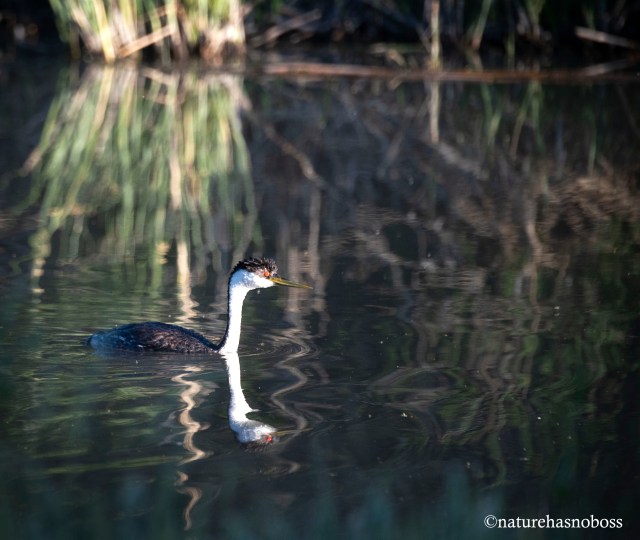
A Western Grebe swimming silently into the wonderful evening light.
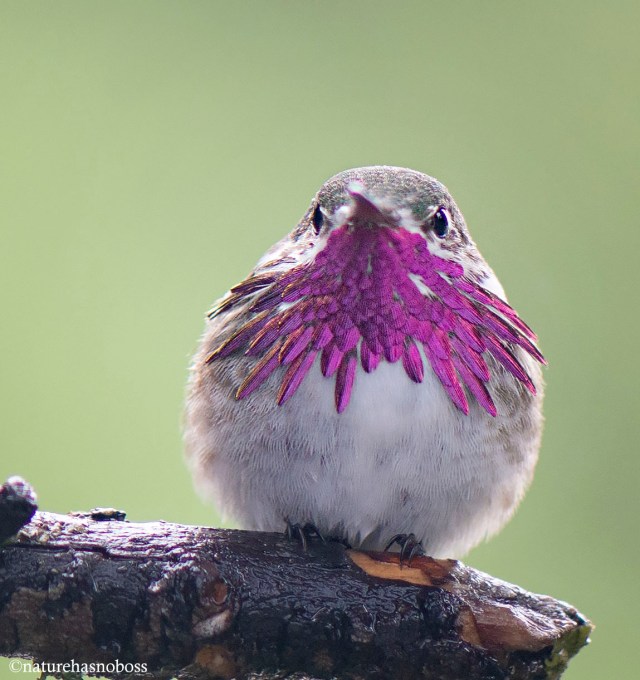
Getting face-to-face with a male Calliope Hummingbird who we affectionately call “Tiny”.
As in…… hey, Tiny is here, when we see them perched in the trees or at the hummingbird feeders.
Calliopes are smallest bird around yet unmatched in energy, spunk and attitude and this guy was no exception especially. Especially on attitude.
Named after Calliope the muse of eloquence and epic poetry “Tiny” is poetry indeed.
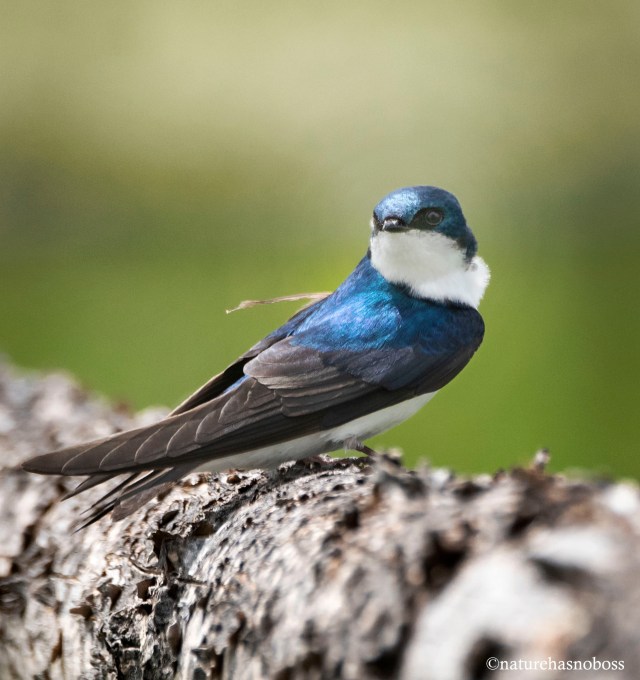
A Tree Swallow takes a break form their aerial acrobatics and hangs on tight along the fence line on a windy summer afternoon.Watching these birds forage on small flying insects is something we nice tire observing.
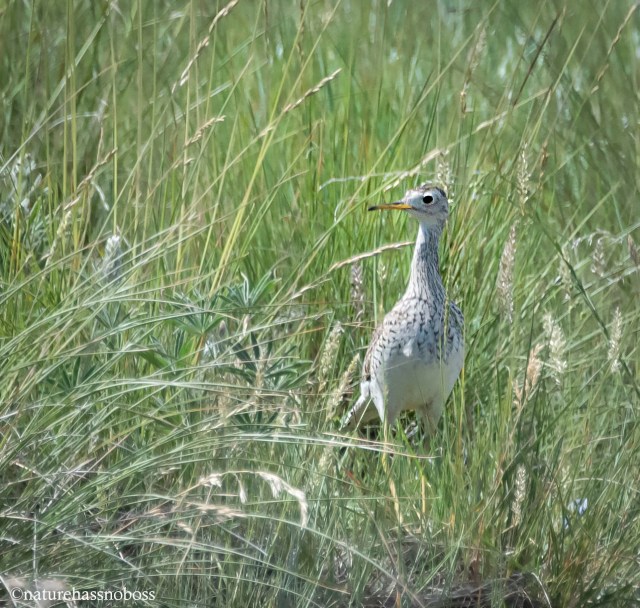
It’s hard to believe but the Upland Sandpiper will begin its journey south less than a month from now. Upland Sandpipers breed in the northern prairies yet spend most of the year (8 months or so) in Central and South America. Standing about a foot tall with that big eye and relatively short bill these birds forage on foot through short grass habitats looking for insects.
“Upland Sandpiper’s association with native prairie is so strong that scientists consider it to be an “indicator species,” along with Sprague’s Pipit and Baird’s Sparrow, that can indicate the quality a habitat. Thus, the absence of these three birds in a patch of prairie would indicate to biologists that there is likely a problem with the habitat.“1
We were thrilled to be able to watch this bird foraging for several minutes before they moved into the tall grass a short distance away and disappeared from sight. Now you see them now you don’t.
Reference:
1. All About Birds: Upland Sandpiper.
 nature has no boss
You must be logged in to post a comment.