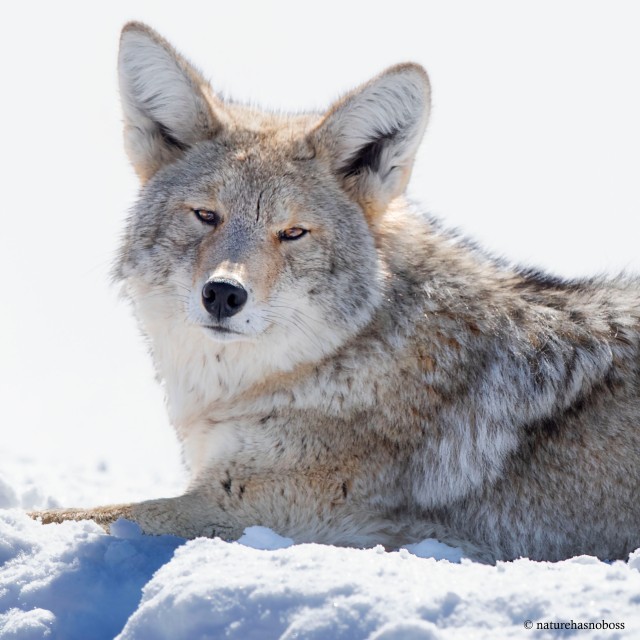
A loungemaster if ever there was one.
Mid-day sun after a snowy and cold late March evening made for perfect lounging weather and this Coyote sure took advantage of it.

A loungemaster if ever there was one.
Mid-day sun after a snowy and cold late March evening made for perfect lounging weather and this Coyote sure took advantage of it.
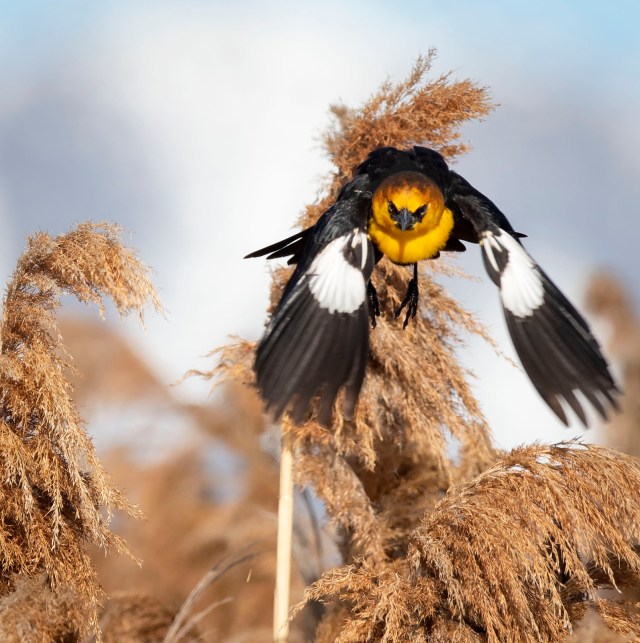
Good things are heading your way. In this case it’s a Yellow Headed Blackbird that has returned to the marsh and that means spring is sure to follow.
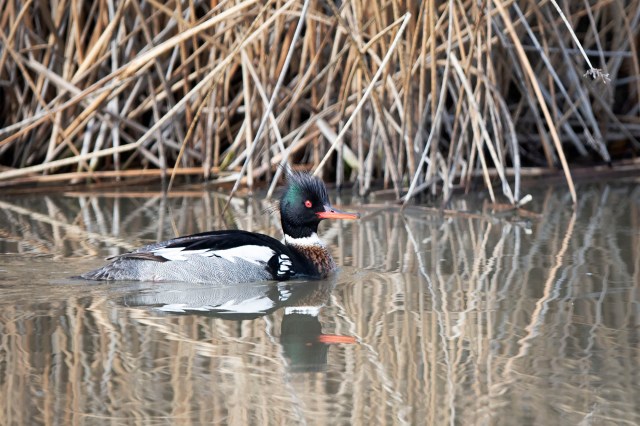
Looking fine as can be in his breeding plumage a male Red-Breasted Merganser swims quietly along in the cattails confidant he will attract a mate.
References:
1. The Cornell Laboratory of Orinthology, All about birds Website, https://www.allaboutbirds.org/guide/Red-breasted_Merganser/lifehistory
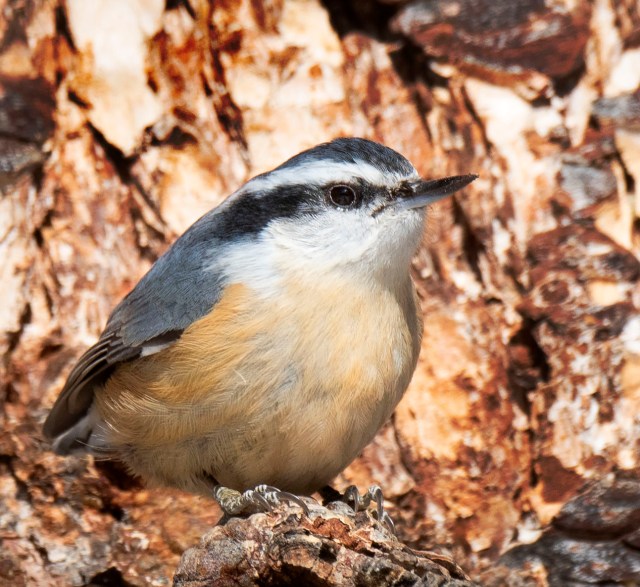
Earlier this week we featured the Mountain Chickadee who by our accounting is the most prevalent species hanging around our neighborhood this winter. A close second, and perhaps on some days the most prevalent species, is the Red-Breasted Nuthatch. Sitting quietly in an old spruce this particular Nuthatch presented us a nice photo opportunity on a warm March afternoon. It won’t be long before they scatter to higher grounds and prepare for breeding season but until then we savor the opportunity to listen to their honk-honk-honk from the trees nearby.
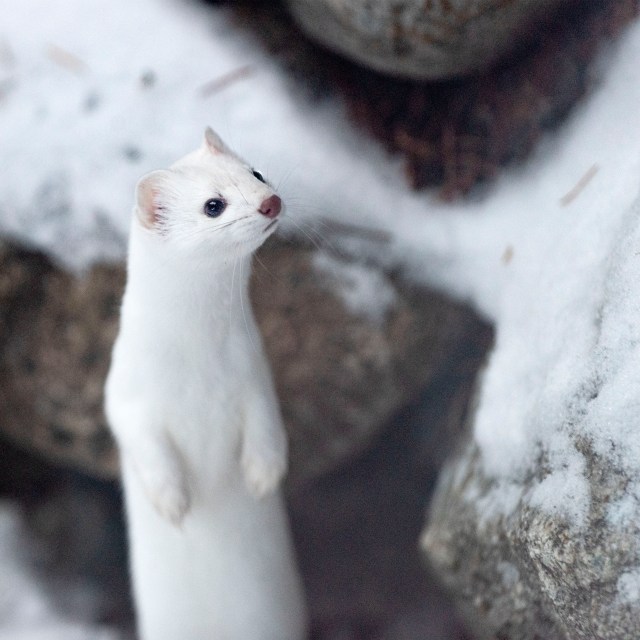
Who Me?
An Ermine stands tall and looks a bit perplexed when asked a simple question?
Do you per chance know where have all the rabbits gone?
We started the winter with several in the yard but have seen none these last few weeks.
Have a wonderful weekend.
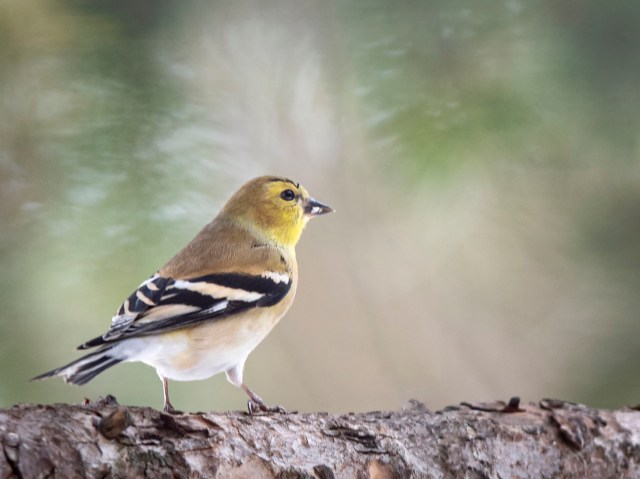
A nice morning treat was a visit by a Goldfinch this week. Not a regular in the winter here by any means. This guy flew in and stayed just the morning before moving along on his way. Wherever that might have been. A splash of color on a overcast February morning.

The path meanders
One foot in front of the other.

Two male goldeneyes working hard to impress a female in the late afternoon light. These guys will likely only be around here a few more weeks. As spring arrives most of the waterfowl leave my area. Their yearly coming and going gives rhythm to life. Have a great trip north and someday we hope to join you.
For the next couple of weeks we will be posting some of our favorite posts from the past as we take a small respite from the digital world.
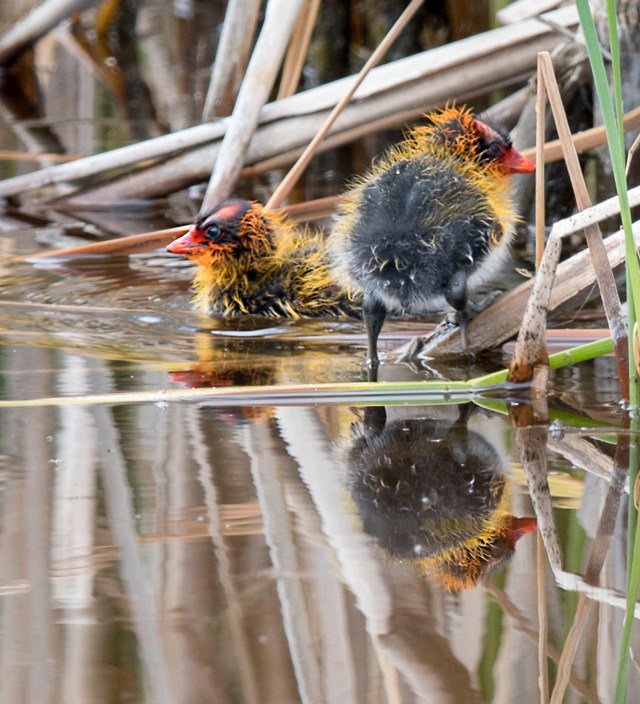
That is a question a team of biologists have been asking for quite some time and, as is typical in science, the answer was not what they first expected. Previous studies conducted by this same laboratory concluded that coot parents preferentially feed chicks that display brighter coloration. The goal of the present study was to determine why this was the case.
The researchers noted that coots lay between 8-10 eggs and these eggs hatch in the order they were laid. Additionally coots are nest predators and lay eggs in other coots nests. One hypothesis was that the chicks hatched from predatory eggs were the more brightly colored chicks and thus would have gotten fed more. This turned out to be false. The researchers discovered that the chicks hatched from the latter laid eggs were the more brightly colored. Typically chicks hatched latter in a brood have to catch-up to their larger siblings if they are to survive. The researcher noted that if these smaller and brightly colored latecomers survived the parents would use their coloration as a way to preferentially feed these chicks more and allow them to catch-up to their earlier siblings. 2
A wonderful survial strategy reveled in a nicely done study. Hat’s off to science and to the coot.


References:
1. University of California – Santa Cruz. “The mysterious case of the ornamented coot chicks has a surprising explanation: The bright colors of the chicks of American coots help their parents choose favorites, according to a new study.” ScienceDaily. ScienceDaily, 31 December 2019. www.sciencedaily.com/releases/2019/12/191231111817.htm.
2. Bruce E. Lyon, Daizaburo Shizuka. Extreme offspring ornamentation in American coots is favored by selection within families, not benefits to conspecific brood parasites. Proceedings of the National Academy of Sciences, 2019; 201913615 DOI: 10.1073/pnas.1913615117

Noisy yes, but oh so beautiful, especially in flight, a Black-billed Magpie sits quietly on a snowy afternoon. The magpies in our area are very skittish and difficult to sneak up on for a photograph. We see them all the time but even a quick look in their direction has them flying away.
Intelligent and pretty good looking and a fine way to brighten a cold snowy day.
 nature has no boss
You must be logged in to post a comment.