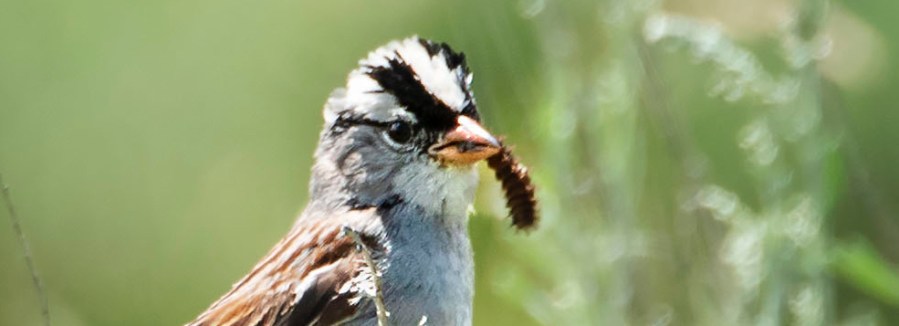
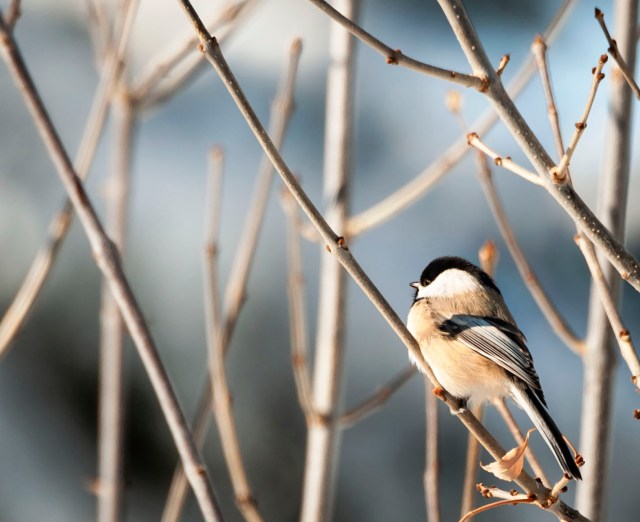
A common pesticide delays migration and causes significant weight loss in white crowned sparrows.

Neonicotinoids are the most commonly used class of pesticides in the world protecting crops from insects but not without untoward side effects including killing beneficial insects that pollinate the crops we need. Additionally this class of pesticides has been show to have negative effects on songbirds in laboratory studies.1 Migrating songbirds frequently forage and ingest seeds treated with these pesticides during their migrations. Until now the effects of neonicotinoids on free living wild birds had not been studied.

As reported by Kristine Liao in Audubon:

“A new study published online today in Science provides the first evidence that neonics harm songbird populations in the wild. University of Saskatchewan researchers found that White-crowned Sparrows that consumed small doses of a neonic called imidacloprid suffered rapid weight loss and delayed migration, both of which can hinder birds’ survival and ability to reproduce.”2

This is an interesting study where researches captured free-living White Crowned Sparrow and feed them them either a low dose, high dose pesticide or a control meal as well as fitting them with a tiny radio transmitter that allowed  the freed birds to be tracked over a 100,000 square-kilometer area.

The sparrows fed the highest dose lost on average 6% of their body weight and 17% of their fat reserves both of which are vital for fueling successful migrations.3 Sparrows who consumed the pesticide then delayed their migration between 2-4 days compared to the control fed birds.

As for the potential consequences of songbirds delaying their migration in response to pesticide intake, one of the studies authors, Bridget Stuchbury,was quoted in a report by Smithsonian as saying:

“that extended rest stops can leave birds—already disoriented by the toxic chemical—vulnerable to predators. At the same time, she explains, late arrival to a final migration destination may reduce a bird’s chances of finding a mate, particularly if it has a shorter breeding season.”

Neonicotinoids are considered cheap insurance against insect-pests for many crops including corn, canola and soybeans and one of the most widely-applied pesticides in the world. The scientific evidence is now clear that these pesticides have harmful effects on bees, fish and now bird populations. How much more evidence will be required before we stop using these chemical willy-nilly… Before, or after,  we loose innumerable bees, birds and fish?

References:
1. https://www.sciencemag.org/news/2019/09/common-pesticide-makes-migrating-birds-anorexic
2. https://www.audubon.org/news/a-widespread-pesticide-causes-weight-loss-and-delayed-migration-songbirds

3. A neonicotinoid insecticide reduces fueling and delays migration in songbirds. Margaret L. Eng, Bridget J. M. Stutchbury,  Christy A. Morrissey, Science  13 Sep 2019:Vol. 365, Issue 6458, pp. 1177-1180.  DOI: 10.1126/science.aaw9419

Decembers Light

December_pond
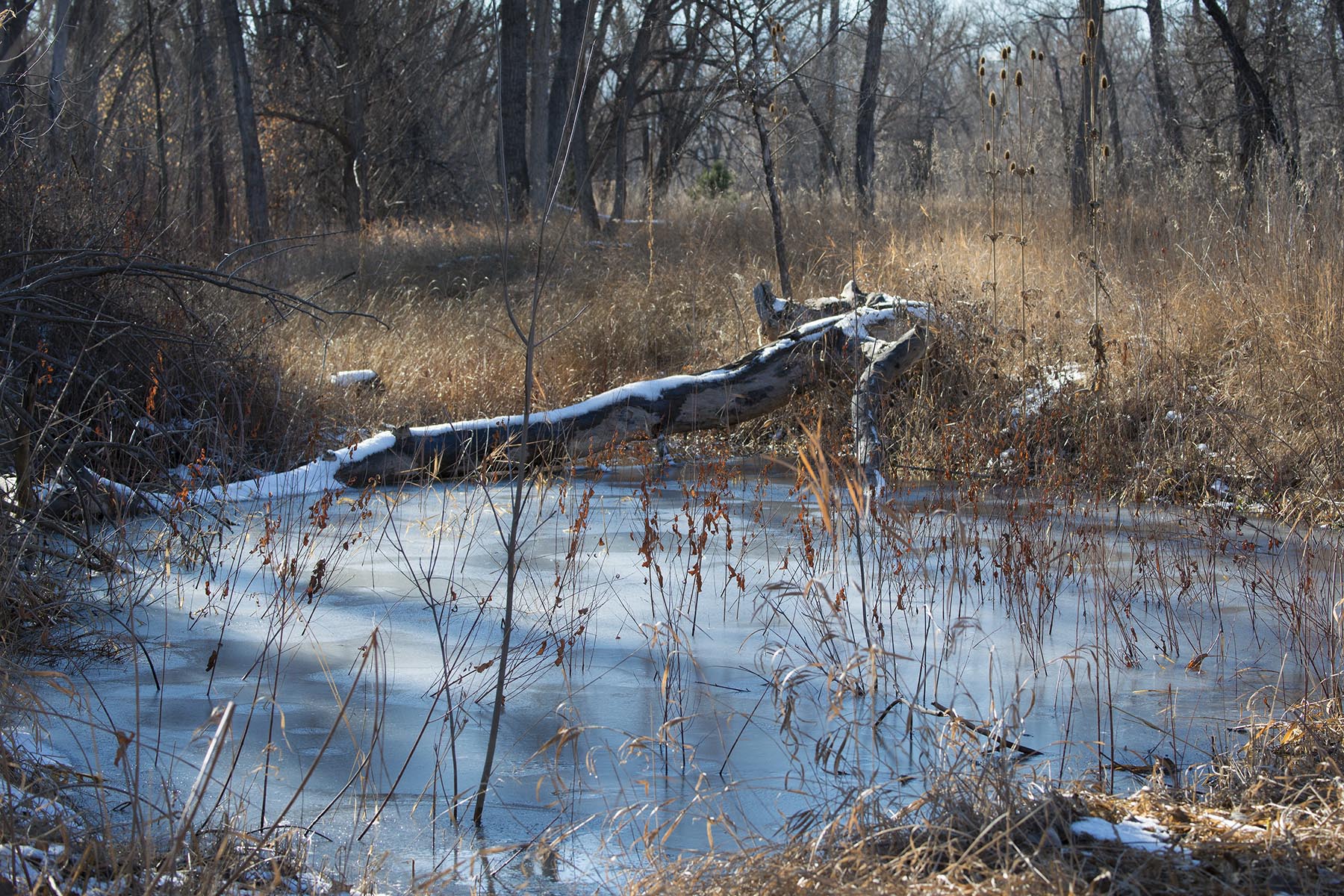
The mid-December sun, traveling low across southern sky casts long shadows on the icey blue face of a small pond and gently lights the landscape beyond. Decembers light is like no other and helps me keep track of the time like no wall calendar or wristwatch can.

Scruffy

Coopers_hawk_bw_1

On Saturday at mid-morning we spotted this Coopers hawk tidying up a bit on a broken old Cottonwood branch. He looked like he has had a bit of a rough time lately with his feathers looking downright scruffy. After a half hour or so of preening his feathers were back in fine order and he was off again hunting in nearby woods.

Decisions Decisions

A new study reported on in Science Daily suggests that complex decision making occurs in at least one single celled organism. 1

Perhaps our first thoughts when considering single celled organisms is that they are primitive relics of the past with simple physiologies and perhaps only programmed behaviors. However we must consider the simple fact that for several billions of years single cell organisms lived and thrived on the planet and evolved into innumerable species and eventually into multicellular organisms.

Recently a team of researches at Harvard Medical School replicated a century old experiment demonstrating   that  Stentor roeselii  exhibits a complex hierarchy of avoidance behaviors. The evolutionary advantage for the development of this complex avoidance behavior in Stentor roeselii can only be hypothesized but the authors offer this speculation in the paper:

“Such behavioral complexity may have had an evolutionary advantage in protist ecosystems, and the ciliate cortex may have provided mechanisms for implementing such behavior prior to the emergence of multicellularity.”  2

This is an interesting article not only for demonstrating that life, in all it’s forms, may exhibit behaviors we have yet to document but also for the fact that there may be great scientific value in replicating  other forgotten studies from decades past.

Additionally, studies like this one make it clearer that all life is indeed life — and that– is something worth pondering.

References:

  1. Harvard Medical School. (2019, December 5). New study hints at complex decision making in a single-cell organism. ScienceDaily. Retrieved December 11, 2019 from www.sciencedaily.com/releases/2019/12/191205113129.htm
  2. Joseph P. Dexter, Sudhakaran Prabakaran, Jeremy Gunawardena. A Complex Hierarchy of Avoidance Behaviors in a Single-Cell Eukaryote. Current Biology, 2019; DOI: 10.1016/j.cub.2019.10.059


Discoveries

Our world is vast and much is still to be discovered and described by science.

A recent article published in Science Daily reports on the discovery of 71 new species by researchers at the California Academy of Sciences in 2019. The article provides a nice overview of the species discovered and includes the following quote remaining us that there is much work to do to identify what we have on this wonderful planet. A nice short read if you can find the time.

“Despite decades of tirelessly scouring some of the most familiar and remote places on Earth,” says Shannon Bennett, PhD, and Academy Chief of Science, “biodiversity scientists estimate that more than 90% of nature’s species remain unknown. A rich diversity of plants and animals is what allows life on our planet to thrive: the interconnectedness of all living systems provides collective resilience in the face of our climate crisis. Each newly discovered species serves as an important reminder of the critical role we play in better understanding and preserving these precious ecosystems.”

References:

1.California Academy of Sciences. (2019, December 5). Scientists at the California Academy of Sciences describe 71 new species in 2019. ScienceDaily. Retrieved December 10, 2019 from http://www.sciencedaily.com/releases/2019/12/191205155818.htm

And just for fun a smattering of those species we already know.