
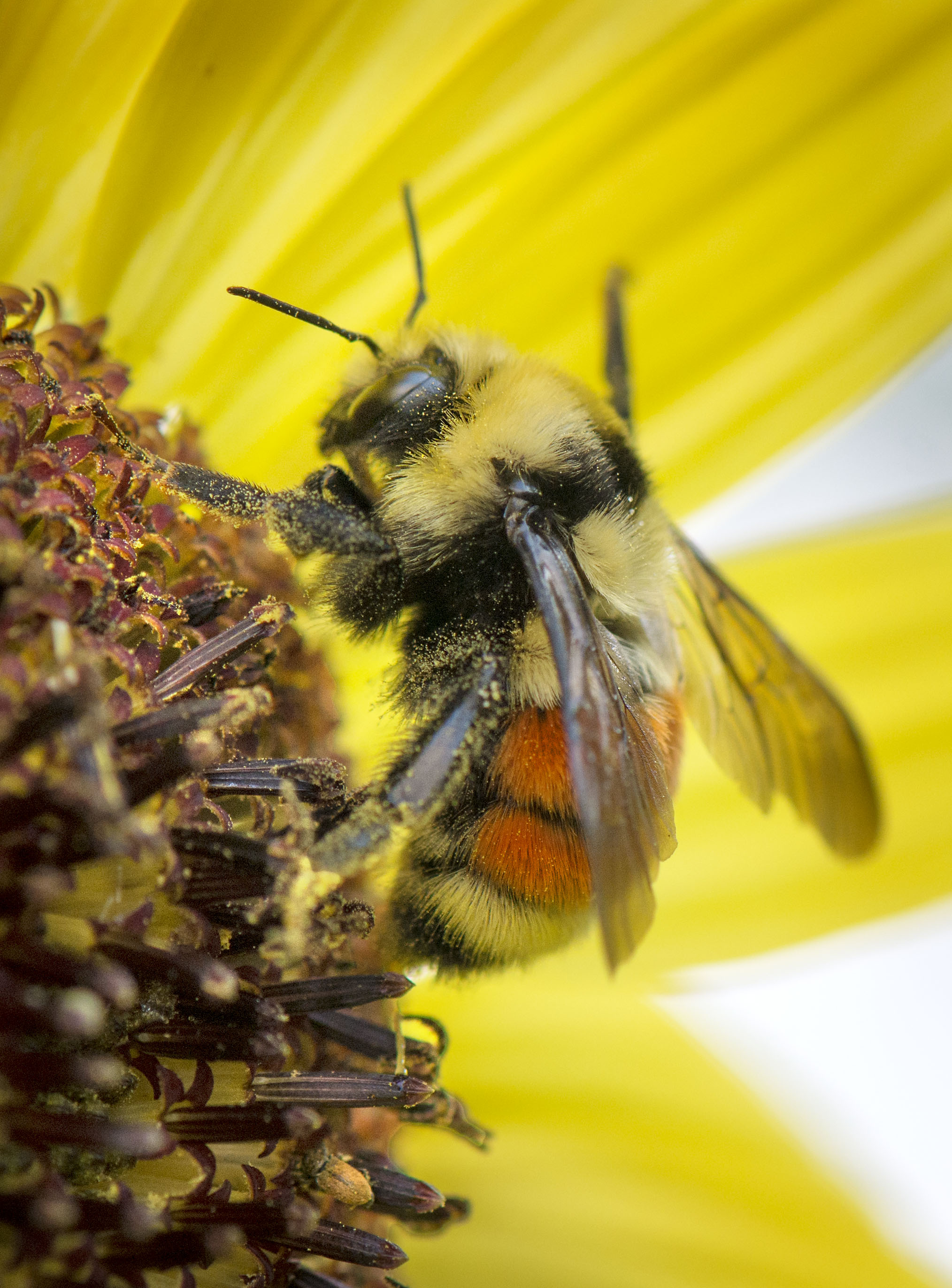
It’s always nice to have these bess buzzing about and who doesn’t like saying Bombus Ternarius.
From Wikipedia “Bombus ternarius, commonly known as the orange-belted bumblebee or tricoloured bumblebee,[2] is a yellow, orange and black bumblebee. It is a ground-nesting social insect whose colony cycle lasts only one season, common throughout the northeastern United States and parts of Canada.[3] The orange-belted bumblebee forages on Rubus, goldenrods, Vaccinium, and milkweeds found throughout the colony’s range. Like many other members of the genus, Bombus ternarius exhibits complex social structure with a reproductive queen caste and a multitude of sister workers with labor such as foraging, nursing, and nest maintenance divided among the subordinates.”
To read more:https://en.wikipedia.org/wiki/Bombus_ternarius
Just for fun ….Bombus!
 nature has no boss
Wow!
LikeLike
Hi and thanks. This is one of my favorite bees.
LikeLiked by 1 person
Such a pretty fella. Great composure in the yellow, Mike, like he was showing off just for you!
LikeLike
Hi Shannon, this little bee did look quite nice in the sunflowers. I am not sure they were showing off just for me but I might have been the only one looking that day.
LikeLiked by 1 person
Bombus! It really is a lovely and very apt name for a little bee, Mike. Such pretty colours and gathering even more citrus colours as he picks up the sunflower pollen!
LikeLike
HI and it is fun to say Bombus. Just a week or two latter and now these guys are nowhere to be sound as it has gotten much cooler and the darn squirrels attacked the sunflowers.
LikeLike
🐿🌻🐿🌻🐿🌻😊
LikeLiked by 1 person
“Bombus Ternarius!” shall be today’s rallying cry!
Beautiful photo, Mike.
LikeLike
Thanks Tracy, and Bombus might just be a good rallying call for a movement to elevate insects to the place they deserve in wildlife viewing.
LikeLiked by 1 person
I love this shot! Not recalling ever seeing a tri-color bee, but will be on the lookout now! Bombus Ternarius – could be a spell from Harry Potter or a house in Game of Thrones!
LikeLike
HI, I was amazed when I started looking at the bees this summer and found more variety in species than I knew existed. Its challenging to differentiate them but this Tri-colored was easy and quite a beautiful bee.
LikeLike
What a stunning beauty! Great shot.
LikeLike
Thanks Tanja, hope your day is going well.
LikeLiked by 1 person
I love these bees, but I don’t see a lot of them. Probably yet another under siege from neonicotinoids. Great shot, Mike, with wonderful detail right down to the pollen grains. 🙂
LikeLike
Hi Eliza, I think insect numbers and variety has decreased significantly in recent years across the board and like you wonder how much is due to pesticide use.
LikeLike
After writing that comment, I thought of your post when I actually saw one yesterday, but only one.
LikeLike
They are definitely lower in numbers than many other bees around here. What is amazing is that this year as I have been looking closer at the insects we have the sheer number of different bee species I have seen is pretty amazing. I can not even begin to correctly identify them all and would probably have to collect a sample to even begin and I don’t wish that upon those little bees.
LikeLiked by 1 person
Photos will do fine, I think! Once you start looking, the diversity is really amazing to see.
LikeLike
The tricks getting photos especially of the little guys who never seem t hold still. A bug net would make it easy.
LikeLiked by 1 person